
The Vertical Variances That Predict ICP Fit Accuracy
Different industries behave differently at the data level. Learn how vertical-specific patterns influence ICP fit accuracy, targeting precision, and outbound success.
INDUSTRY INSIGHTSLEAD QUALITY & DATA ACCURACYOUTBOUND STRATEGYB2B DATA STRATEGY
CapLeads Team
3/7/20264 min read

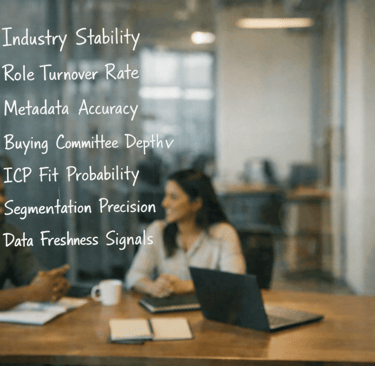
A common mistake in outbound strategy is assuming that an Ideal Customer Profile behaves consistently across industries. On paper, the ICP definition might look perfect: company size, executive role, technology stack, and hiring signals all match the criteria. But once campaigns launch, response rates and conversion patterns can vary dramatically depending on the vertical being targeted.
The reason is simple. Industries operate under different structural realities. Organizational hierarchies, decision-making patterns, employee turnover, and communication norms vary widely from one sector to another. These structural differences quietly influence how accurately a defined ICP will perform in practice.
Understanding vertical variance is one of the most overlooked aspects of outbound targeting.
ICP Definitions Look Stable, But Industries Are Not
When teams build ICP frameworks, they usually rely on static attributes: job titles, company size, revenue ranges, or funding stage. These attributes are useful, but they don’t capture how stable those attributes are inside different industries.
Some sectors maintain very stable leadership structures. Roles remain consistent, responsibilities change slowly, and contact information tends to stay valid for longer periods. In these environments, ICP targeting tends to produce reliable outreach performance because the structural conditions remain predictable.
Other industries behave very differently. Roles shift frequently, departments reorganize often, and responsibilities can vary significantly between companies with the same title structure. In these environments, the same ICP criteria may produce dramatically different outcomes from one campaign to another.
The ICP definition itself may be correct. The environment surrounding that ICP may not be stable.
Vertical Structure Shapes Decision-Making Paths
Beyond contact accuracy, industry structure also influences how buying decisions are made.
Some sectors rely heavily on centralized leadership. A small group of executives controls most purchasing decisions, and targeting those roles directly can generate high-quality conversations.
Other sectors rely on distributed influence. Multiple departments participate in evaluation, technical validation, compliance checks, and budgeting approval. In these environments, targeting only the executive layer often misses the operational stakeholders who influence final decisions.
These differences mean the same ICP role can represent very different levels of authority depending on the vertical.
Understanding these patterns helps teams avoid misinterpreting campaign performance. Low engagement may not indicate a poor ICP definition. It may indicate that the industry distributes influence differently.
Data Stability Varies by Industry
Another factor that influences ICP accuracy is how stable company data remains within a sector.
Industries with steady hiring patterns and slow organizational change tend to produce cleaner contact datasets. Titles remain consistent, departments evolve slowly, and employee tenure tends to be longer. As a result, outreach targeting remains aligned with the intended decision-makers.
In contrast, industries experiencing rapid growth, consolidation, or restructuring often generate unstable datasets. Titles change frequently, departments merge or split, and new operational roles appear regularly. Over time, these shifts can cause ICP targeting frameworks to drift away from the real decision-makers inside the organization.
For teams running outbound at scale, recognizing these differences becomes essential. Even the most accurate segmentation model will degrade if the industry environment itself changes faster than the dataset can be updated.
Behavioral Norms Influence Engagement
Beyond structural factors, each industry also develops its own communication culture.
Some sectors operate in environments where cold outreach is common and accepted. Decision-makers frequently receive proposals, product introductions, and partnership requests. In these environments, outbound campaigns often generate steady engagement because the outreach format aligns with existing industry norms.
Other sectors operate in much more closed communication ecosystems. New vendor relationships may emerge primarily through referrals, partnerships, or procurement channels rather than direct outreach. Even perfectly targeted ICP campaigns may experience lower response rates simply because the industry rarely engages through cold communication channels.
These behavioral differences can significantly impact how teams evaluate campaign performance.
Why Vertical Variance Must Be Part of ICP Strategy
Outbound success rarely depends on targeting accuracy alone. It depends on how well targeting aligns with the operational behavior of the industries being approached.
Teams that incorporate vertical variance into their ICP strategy gain a significant advantage. Instead of assuming uniform behavior across sectors, they adjust expectations, segmentation logic, and messaging strategies to match how each industry actually operates.
This is where reliable segmentation becomes critical. When targeting frameworks are built on structured datasets, it becomes easier to compare how ICPs perform across different sectors and adjust strategies accordingly. Access to structured industry segmentation — such as the Industrials companies database — helps teams evaluate how targeting conditions differ between vertical environments without relying on guesswork.
The Real Takeaway
ICP frameworks are not universal formulas. They operate inside dynamic industry ecosystems that shape how roles behave, how decisions are made, and how communication flows between companies.
When teams treat industries as interchangeable environments, ICP accuracy becomes unpredictable. Campaign performance begins to fluctuate, not because targeting logic failed, but because the surrounding industry conditions were never considered.
Understanding vertical variance restores predictability. When targeting models align with the structural realities of each sector, outbound campaigns become far easier to interpret, optimize, and scale.
Reliable outbound doesn’t come from static ICP definitions. It comes from aligning targeting with the industries those ICPs actually live in.
When the structure of a market is understood, outreach performance becomes measurable and consistent. When industry variance is ignored, even the best targeting models begin to drift away from real decision-making environments.
Related Post:
Why CRM Metadata Conflicts Corrupt Segmentation
The Lifecycle Management Mistakes That Block Deals
How Scoring Drift Creates False High-Priority Leads
Why Strong Scoring Depends on Field Completeness
The Multi-Signal Scoring Framework That Actually Works
How Inconsistent Metadata Breaks Your Segmentation Logic
Why Metadata Drift Happens Inside Large Lead Lists
The Contact-Level Clues Buried Inside Metadata Fields
How Company Expansion Alters Contact Accuracy
Why Lifecycle Drift Skews Segmentation Over Time
The Stage-Based Patterns That Predict Reply Probability
How Source Diversity Boosts Lead Accuracy at Scale
Why Multi-Source Data Requires Stricter Deduplication
The Blending Rules That Prevent Data Integrity Loss
How Bad Data Bloats Sending Volume With No Returns
Why SDR Teams Burn Out When Lead Data Is Faulty
The Compounding Waste Caused by Outdated Lead Lists
How Data Drift Disrupts Revenue Decision-Making
Why Revenue Systems Require Continuous Data Validation
The Data Signals That Reveal Structural Revenue Weakness
How Over-Automation Creates Pipeline Noise
Why SDR Judgment Beats Automation in High-Stakes Accounts
The Blind Spots Inside Automation-First Outbound Systems
How System-Level Data Drift Derails Reliable Email Sending
Why Modern Outbound Systems Rely on Data Interconnectivity
The Data Dependencies Most Founders Never See
How Industry Turnover Drives Bounce Rate Differences
Why High-Churn Markets Produce Unstable Email Data
The Bounce Risk Patterns Hidden Inside Each Industry
How Industry-Specific Roles Influence Email Behavior
Why Certain Verticals Prefer Multi-Step Messaging
The Outbound Timing Patterns Hidden Inside Each Industry
How Sector Stability Predicts Long-Term Data Freshness
Why Fast-Decay Verticals Require More Frequent Validation
The Industry-Level Signals That Reveal Accelerated Data Aging
Why AI Becomes Unreliable With Aged Lead Lists
The AI Pipeline Behind Modern B2B Data Processing
Why LLM-Assisted Validation Requires Clean Metadata
Connect
Get verified leads that drive real results for your business today.
www.capleads.org
© 2025. All rights reserved.
Serving clients worldwide.
CapLeads provides verified B2B datasets with accurate contacts and direct phone numbers. Our data helps startups and sales teams reach C-level executives in FinTech, SaaS, Consulting, and other industries.