
Why AI Becomes Unreliable With Aged Lead Lists
AI models rely on accurate data to produce reliable outputs. Learn why aged lead lists distort AI scoring, targeting, and outreach predictions in modern B2B systems.
INDUSTRY INSIGHTSLEAD QUALITY & DATA ACCURACYOUTBOUND STRATEGYB2B DATA STRATEGY
CapLeads Team
3/6/20264 min read
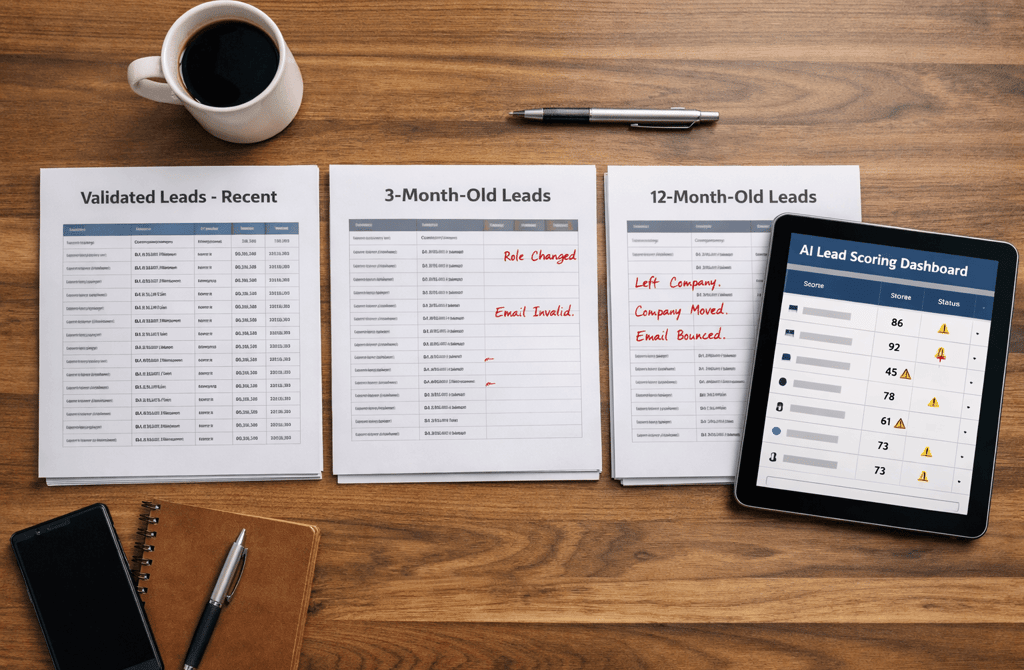
AI has quickly become a core component of modern outbound systems. From lead scoring to ICP modeling and intent prediction, many teams now rely on machine learning to decide who to contact, when to contact them, and how to prioritize outreach.
But there’s a problem most teams underestimate.
AI systems are only as reliable as the data they analyze. When the lead lists feeding these models begin to age, the accuracy of AI-driven decisions quietly deteriorates. The outputs still look sophisticated—scores, predictions, segmentation insights—but underneath, the model is working with signals that no longer reflect reality.
In other words, aged lead data doesn’t just weaken outbound performance—it actively misguides AI systems.
AI Models Depend on Stable Data Signals
AI models identify patterns by analyzing relationships between fields such as job titles, company size, industry, hiring trends, and engagement signals. Over time, the model learns which patterns correlate with replies, conversions, and pipeline movement.
This process works well when the underlying data remains consistent.
But B2B data is not static. Companies restructure. Employees change roles. Departments evolve. Entire organizations pivot into new markets.
When these changes happen, older lead records become disconnected from the real-world conditions the AI model originally learned from.
A contact who once fit the ICP perfectly may now sit in a different department, hold a different title, or work for a company that has doubled in size since the record was captured. The model doesn’t know this unless the data is refreshed.
So the AI continues to score the lead as a strong fit—even though the conditions that once made it accurate have already changed.
Data Aging Distorts AI Predictions
When enough records in a dataset age, the model begins making decisions based on distorted signals.
Lead scoring becomes unreliable. Segmentation logic drifts. Intent predictions become noisy.
The result is a subtle but dangerous shift: AI recommendations begin pointing teams toward the wrong prospects.
Outbound teams often interpret this as a messaging issue. They adjust subject lines, rewrite frameworks, or experiment with personalization angles. But the real problem sits deeper in the system.
The model itself is working from outdated assumptions.
This is why teams sometimes experience the confusing situation where AI predictions look correct on paper but campaigns still underperform in practice.
Metadata Drift Compounds the Problem
Aged data doesn’t just affect contact fields. It also disrupts metadata patterns that AI models rely on.
Fields like department structure, reporting hierarchy, company growth stage, and hiring velocity help models infer buyer readiness. But these signals evolve continuously.
For example, a company that appeared stable in a dataset six months ago may now be undergoing rapid expansion or restructuring. Those changes alter the probability that certain roles are involved in buying decisions.
When the dataset isn’t updated, the AI continues using outdated metadata relationships to generate predictions.
Over time, this creates a widening gap between AI predictions and actual market behavior.
Automation Magnifies Data Aging Effects
One reason aged data becomes so dangerous in AI-driven outbound systems is scale.
Automation allows models to process thousands of leads simultaneously. If the underlying dataset contains stale information, those errors multiply across every prediction, prioritization decision, and sequence trigger.
Instead of misguiding one campaign, the system can misdirect entire outbound programs.
For example, an AI model might recommend prioritizing a segment of companies that once showed strong reply patterns. But if those companies have since experienced role turnover or organizational changes, the signal no longer holds.
The model will continue prioritizing them until the dataset is refreshed.
This is one reason advanced outbound teams treat data recency as a core system input. A model trained on stale data can appear sophisticated while producing increasingly unreliable recommendations.
Teams targeting FinTech companies for B2B outreach often see this effect clearly because fast-moving financial technology firms experience rapid role shifts and organizational growth. Without frequent data refresh cycles, AI predictions quickly lose accuracy in these environments.
Clean Data Stabilizes AI Performance
AI becomes powerful when its inputs remain stable and current.
When lead lists are refreshed regularly, the model receives accurate feedback about which patterns still produce engagement. This allows the system to refine predictions instead of reinforcing outdated assumptions.
In practice, this means:
Lead scoring reflects real ICP fit
Segmentation aligns with current organizational structures
Intent models track actual buying signals
Campaign prioritization becomes more reliable
The difference is subtle but important. Instead of correcting for bad predictions, teams can trust the system to surface the right prospects.
What This Means for AI-Driven Outbound
AI tools often promise better targeting, smarter scoring, and predictive outreach strategies. These benefits are real—but they depend entirely on the quality and freshness of the underlying data.
Without strong data discipline, AI becomes less of an optimization layer and more of a distortion engine.
Outdated lead lists cause models to reinforce patterns that no longer exist.
Fresh, validated data allows AI to detect new patterns as markets evolve.
Bottom Line
AI doesn’t fail because algorithms are weak. It fails when the data environment feeding those algorithms stops reflecting reality.
Aged lead lists quietly erode prediction accuracy long before teams realize what’s happening.
When datasets stay current, AI becomes a powerful guide for outbound decisions.
When the data ages, even the smartest models begin steering outreach in the wrong direction.
Related Post:
Why CRM Metadata Conflicts Corrupt Segmentation
The Lifecycle Management Mistakes That Block Deals
How Scoring Drift Creates False High-Priority Leads
Why Strong Scoring Depends on Field Completeness
The Multi-Signal Scoring Framework That Actually Works
How Inconsistent Metadata Breaks Your Segmentation Logic
Why Metadata Drift Happens Inside Large Lead Lists
The Contact-Level Clues Buried Inside Metadata Fields
How Company Expansion Alters Contact Accuracy
Why Lifecycle Drift Skews Segmentation Over Time
The Stage-Based Patterns That Predict Reply Probability
How Source Diversity Boosts Lead Accuracy at Scale
Why Multi-Source Data Requires Stricter Deduplication
The Blending Rules That Prevent Data Integrity Loss
How Bad Data Bloats Sending Volume With No Returns
Why SDR Teams Burn Out When Lead Data Is Faulty
The Compounding Waste Caused by Outdated Lead Lists
How Data Drift Disrupts Revenue Decision-Making
Why Revenue Systems Require Continuous Data Validation
The Data Signals That Reveal Structural Revenue Weakness
How Over-Automation Creates Pipeline Noise
Why SDR Judgment Beats Automation in High-Stakes Accounts
The Blind Spots Inside Automation-First Outbound Systems
How System-Level Data Drift Derails Reliable Email Sending
Why Modern Outbound Systems Rely on Data Interconnectivity
The Data Dependencies Most Founders Never See
How Industry Turnover Drives Bounce Rate Differences
Why High-Churn Markets Produce Unstable Email Data
The Bounce Risk Patterns Hidden Inside Each Industry
How Industry-Specific Roles Influence Email Behavior
Why Certain Verticals Prefer Multi-Step Messaging
The Outbound Timing Patterns Hidden Inside Each Industry
How Sector Stability Predicts Long-Term Data Freshness
Why Fast-Decay Verticals Require More Frequent Validation
The Industry-Level Signals That Reveal Accelerated Data Aging
Connect
Get verified leads that drive real results for your business today.
www.capleads.org
© 2025. All rights reserved.
Serving clients worldwide.
CapLeads provides verified B2B datasets with accurate contacts and direct phone numbers. Our data helps startups and sales teams reach C-level executives in FinTech, SaaS, Consulting, and other industries.