
Why Weak Architecture Triggers Spam Filters Faster
Spam filters react faster when email architecture is weak. Learn how poor domain setup and routing amplify risk signals and push outbound into spam.
INDUSTRY INSIGHTSLEAD QUALITY & DATA ACCURACYOUTBOUND STRATEGYB2B DATA STRATEGY
CapLeads Team
2/10/20263 min read
Spam filters don’t wait for catastrophic failure.
They react to early signals—often long before teams realize anything is wrong.
This is why weak email architecture doesn’t just cause deliverability issues. It accelerates them. Small irregularities that would normally pass unnoticed suddenly trigger defensive responses from inbox providers. The system doesn’t break loudly. It tightens quietly—and fast.
Spam filters prioritize trust pathways, not intent
Inbox providers don’t judge emails in isolation. They evaluate whether a sender’s infrastructure behaves predictably over time.
When architecture is strong, minor inconsistencies are contextualized. Authentication aligns. Routing patterns are stable. Historical behavior supports benign interpretation. Filters allow more margin.
When architecture is weak, that margin disappears.
A single inconsistency—misaligned authentication, unstable sending paths, or irregular handoffs—forces filters to assume higher risk earlier in the decision process.
Weak architecture lowers the tolerance threshold
Spam filtering systems operate on thresholds, not absolutes. They continuously score risk and decide how much deviation is acceptable before intervention.
Poor architecture lowers those thresholds.
Without consistent authentication and stable infrastructure signals, filters become less forgiving. They don’t wait to see how a campaign behaves. They react preemptively. Messages are reclassified, throttled, or diverted faster than teams expect.
This is why some senders experience sudden spam placement even when volume and copy haven’t changed.
Authentication gaps accelerate negative interpretation
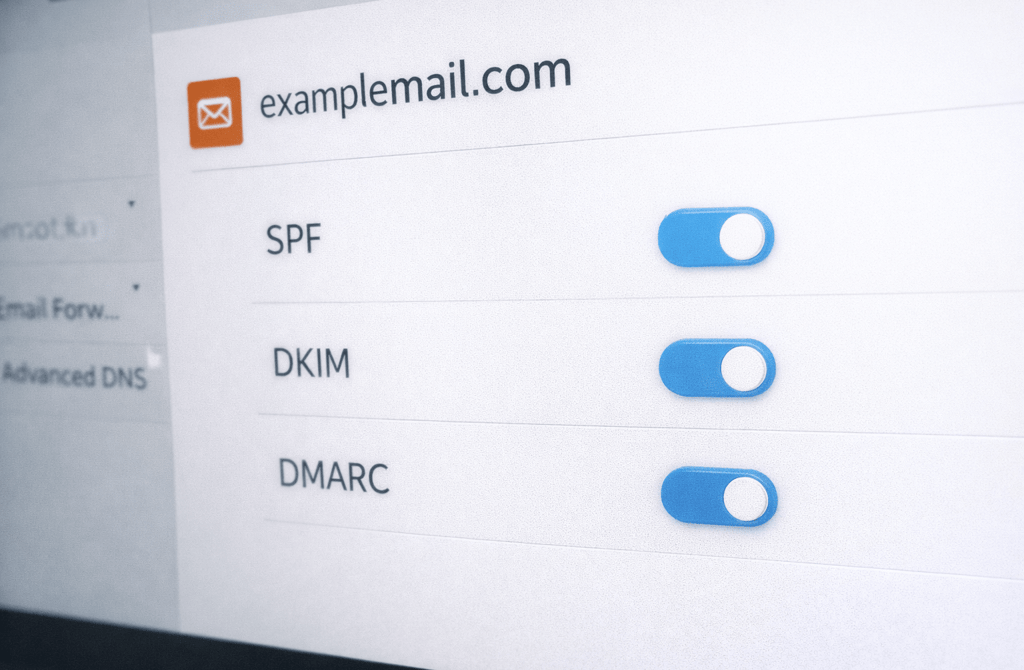
SPF, DKIM, and DMARC aren’t just technical checkboxes. They shape how quickly inbox providers can trust what they’re seeing.
When these signals are missing, incomplete, or inconsistently enforced, filters have to infer intent using weaker data. That inference happens earlier—and more conservatively.
Instead of observing engagement trends over time, filters rely on risk heuristics. The result is faster classification into lower-trust categories, even when actual behavior hasn’t yet crossed traditional red lines.
Speed matters more than severity
One of the most misunderstood aspects of spam filtering is timing.
Weak architecture doesn’t necessarily produce stronger negative signals—it produces earlier ones. Filters don’t need overwhelming evidence when foundational trust is missing. They need less.
This explains why teams with shaky infrastructure often feel blindsided. They expect gradual degradation. Instead, classification shifts abruptly because the system never granted them full tolerance to begin with.
Why teams misread the root cause
Because spam filter reactions happen upstream, symptoms appear disconnected from cause.
Teams notice:
Sudden inbox placement drops
Faster throttling
Inconsistent delivery across domains
What they don’t see is the early decision point where weak architecture reduced the evaluation window. By the time results are visible, the system has already made its call.
This leads to reactive fixes—changing copy, lowering volume, swapping lists—while the underlying architectural weakness continues to trigger fast-path filtering.
Strong architecture buys time
Time is the hidden advantage of sound infrastructure.
When authentication is aligned and routing behavior is consistent, spam filters observe before acting. They allow patterns to develop. They evaluate intent through behavior rather than assumption.
This doesn’t mean strong architecture prevents filtering. It means filtering decisions are based on sustained evidence, not early suspicion.
In outbound systems, time equals recoverability. Weak architecture removes that buffer.
What this means
Spam filters don’t suddenly become aggressive. They become cautious faster when trust signals are weak.
If your infrastructure lacks consistency, inbox providers don’t wait for confirmation. They respond early, restrict quickly, and correct slowly. That speed is what makes weak architecture so dangerous.
Reliable outbound doesn’t depend on avoiding mistakes entirely. It depends on building systems that earn enough trust to withstand them—long enough for reality to be evaluated instead of assumed.
Related Post:
How Better Data Completeness Improves Email Relevance
The Subtle Signals Automation Fails to Interpret
Why Human Oversight Is Essential for Accurate B2B Data
How Automated Tools Miss High-Risk Email Patterns
The Quality Gap Between Algorithmic and Human Validation
Why Human Validators Still Outperform AI for Lead Safety
The Duplicate Detection Rules Every Founder Should Use
How Spam-Trap Hits Destroy Domain Reputation Instantly
Why High-Risk Emails Slip Through Cheap Validation Tools
The Real Reason Duplicate Leads Hurt Personalization Accuracy
How Risky Email Patterns Reveal Broken Data Providers
How Industry Structure Influences Email Risk Levels
Why Certain Sectors Experience Faster Data Decay Cycles
The Hidden Validation Gaps Inside Niche Industry Lists
How Industry Turnover Impacts Lead Freshness
Why Validation Complexity Increases in Specialized Markets
How Revenue Misclassification Creates Fake ICP Matches
Why Geo Inaccuracies Lower Your Reply Rate
The Size Signals That Predict Whether an Account Is Worth Targeting
How Bad Location Data Breaks Personalization Attempts
Why Company Growth Rates Matter for Accurate Targeting
Why Testing B2B Lead Data Matters Before You Buy
How Department Shifts Impact Your Cold Email Results
Why Title Ambiguity Creates Hidden Pipeline Waste
The Hidden Problems Caused by Outdated Job Roles
How Poor Infrastructure Amplifies Minor Data Issues
Connect
Get verified leads that drive real results for your business today.
www.capleads.org
© 2025. All rights reserved.
Serving clients worldwide.
CapLeads provides verified B2B datasets with accurate contacts and direct phone numbers. Our data helps startups and sales teams reach C-level executives in FinTech, SaaS, Consulting, and other industries.