The Truth About Niche Email Lists Sold Online, Are They Safe?
Niche email lists look hyper-targeted, but most are risky, outdated, or unverified. Here’s what founders must know before buying niche data online.
FOUNDER GUIDESB2B LEAD BUYING GUIDEB2B LEAD QUALITYEMAIL DELIVERABILITY & VALIDATION
CapLeads Team
11/24/20253 min read
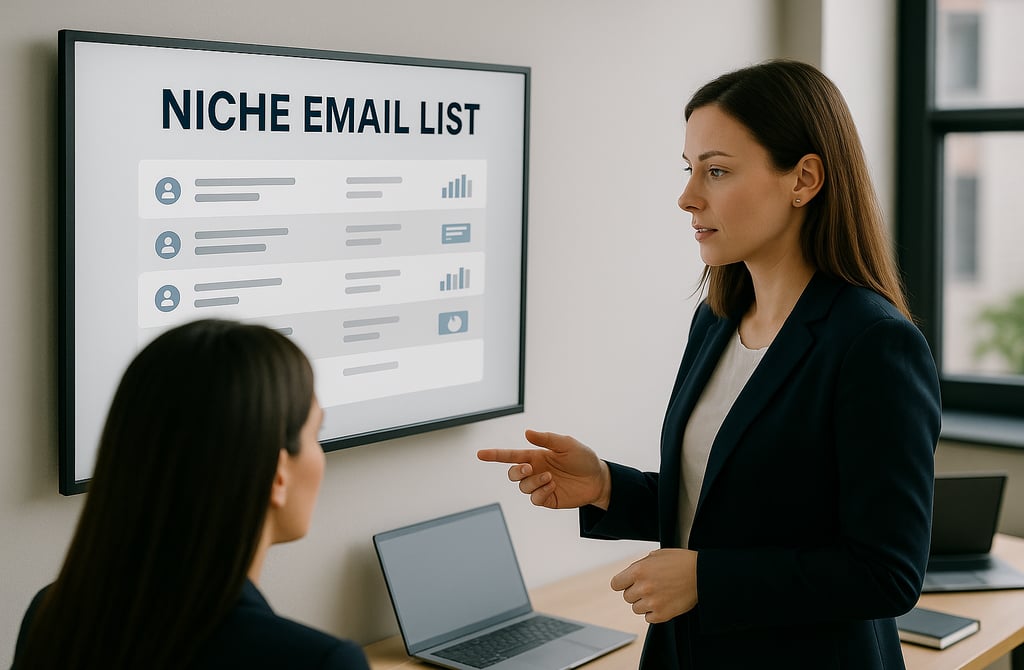
Niche email lists look tempting.
They’re marketed as “hyper-targeted,” “industry-specific,” and “perfect for your ICP.”
But the reality? Most founders only discover the risks after they buy one.
Before you spend a dollar on niche data, here’s the truth about what you’re really getting — and whether these lists are actually safe to use.
Niche Lists Aren’t Always as ‘Niche’ as They Look
The biggest assumption founders make is this:
If it’s niche, it must be high quality.
But many niche lists sold online are just generic bulk databases repackaged with a new label. They’re filtered by one or two keywords and presented as “exclusive” when the underlying data hasn’t been validated in years.
The result?
Outdated job titles, irrelevant companies, and contacts that don’t match your ICP at all.
A niche label doesn’t guarantee accuracy — it only guarantees marketing.
The Danger No One Talks About: High Bounce Rates
Even a niche list can destroy your sender reputation if it’s not validated.
Founders usually assume niche = clean.
That’s the trap.
Most of these lists include:
Old records from companies that no longer operate
Emails collected from outdated public sources
Contacts who left their roles months or years ago
Catch-all domains and scraped addresses
You send a campaign, bounces spike, and your domain is suddenly flagged.
Once that happens, even good outreach stops working.
The Real Problem: These Lists Are Sold Over and Over
Even when niche lists are legit segments, they’re usually resold hundreds of times.
That means:
You’re emailing prospects who already received the same outreach from everyone else who bought the same list.
Prospects get fatigued.
Replies drop.
Deliverability drops even more.
By the time you get the list, the best value has already been extracted from it.
Some Niche Lists Are Scraped — Not Verified
A lot of online sellers don’t have real validation processes.
They rely on scraping tools, basic enrichment, and outdated databases.
And when founders buy these lists, they assume someone actually checked:
The company exists
The contact still works there
The email is valid
The decision-maker fits the niche
The data was updated recently
Most of the time?
None of that happened.
Niche scraping isn’t niche validation.
A Small, Clean List Outperforms a Big ‘Niche’ One
If your goal is real conversations, a smaller list that’s verified and ICP-matched will always beat a large niche list sold on a marketplace.
Clean data gets you:
More opens
More replies
A protected domain
Real opportunities with real people
A niche list full of outdated contacts gives you the opposite — high bounce rates, spam placement, wasted outreach time, and frustrated founders.
Final Thoughts
Niche email lists sound safer than bulk lists — but most are simply repackaged data with the same risks. The label isn’t the problem; the lack of validation is.
Reliable data protects your sender reputation and improves your outreach.
Niche lists with outdated or scraped contacts put your entire campaign at risk.
Clean, accurate B2B leads make your outbound predictable.
Cheap niche lists filled with old data make it fail — fast.
Related Posts
Email Outreach Service Pricing: What It Really Costs in 2025–2026
How Email Outreach Services Help Agencies Scale Faster
How to Tell if B2B Leads Are Actually Verified Most Aren’t
Why Data Freshness Matters More Than Lead Quantity in 2026
The Hidden Dangers of Outdated Email Lists And How to Spot Them
How Lead Validation Works: Inside a Modern Data Verification Stack
7 Ways Cheap Leads Destroy Your Domain Reputation
Why Bounce Rate Spikes Happen And How Clean Data Prevents Them
What a Verified Lead Really Means in 2026
How Bad Data Quietly Raises Your CAC by 30–60%
The Quality Checklist Every B2B Lead Must Pass Before You Buy
The Lifecycle of a High-Quality B2B Lead From Source to Inbox
How to Buy B2B Leads Without Getting Scammed in 2026
The Ultimate Lead Buyer’s Checklist: 15 Things to Audit Before Paying
10 Red Flags That Mean You Should Not Buy From a Lead Provider
How Buyers Can Protect Themselves From Fake or Recycled Data
Why Your Lead Provider Should Show Validation Proof — Not Promises
The Smartest Way to Evaluate a B2B Contact List Before Using It
What Buyers Overlook When Choosing a Lead Provider (But Shouldn’t)
How to Audit a B2B Lead List for Accuracy Before Sending Email
Why You Shouldn’t Buy “Unlimited Leads” Packages
Connect
Get verified leads that drive real results for your business today.
www.capleads.org
© 2025. All rights reserved.
Serving clients worldwide.
CapLeads provides verified B2B datasets with accurate contacts and direct phone numbers. Our data helps startups and sales teams reach C-level executives in FinTech, SaaS, Consulting, and other industries.