The Quality Checklist Every B2B Lead Must Pass Before You Buy
Not all B2B leads are created equal. Before you buy, every lead must pass a strict quality checklist to protect your budget, deliverability, and results. Learn the key criteria that guarantee reliable, verified data.
B2B LEADSSALES & PROSPECTING CHANNELSDATA QUALITY & VERIFICATIONLEAD BUYING GUIDES
CapLeads Team
11/23/20253 min read
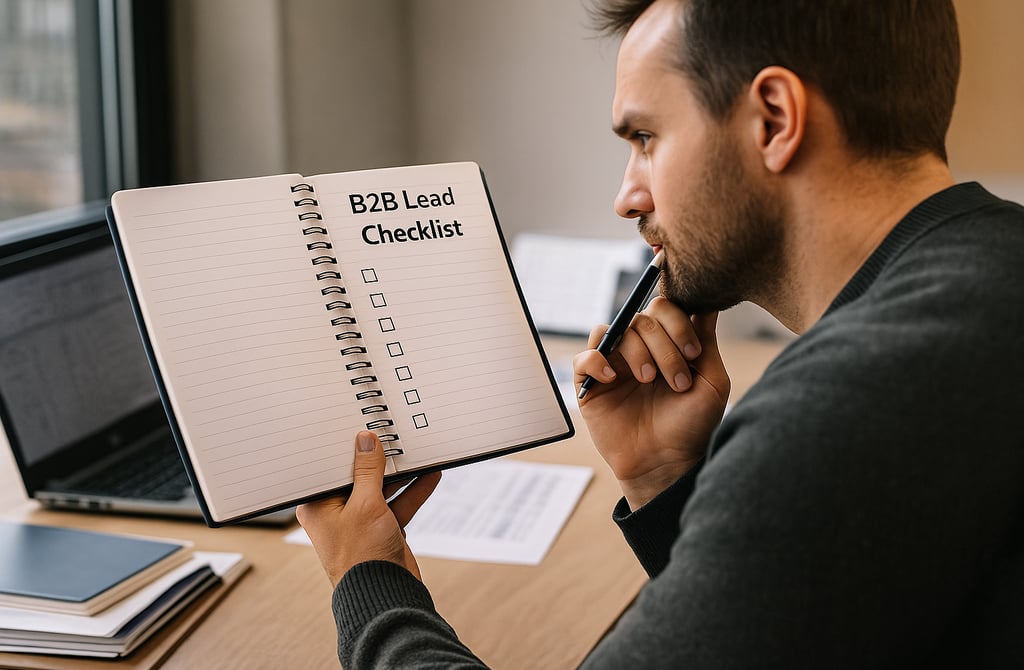
Most founders buy leads the same way they buy software — check a few features, look at the price, trust the pitch, and hope the results follow.
But buying B2B leads doesn’t work like that.
The difference between a good list and a bad one isn’t obvious until after you’ve paid…
and by then, your domain, outreach, and CAC have already absorbed the damage.
Before you buy any dataset, each individual lead needs to pass a quality checklist — not just the vendor.
Here’s the checklist smart buyers follow.
1. The Lead Must Come From a Real Person (Not a Forgotten Inbox)
A valid inbox doesn’t always mean a real, functioning contact.
Before paying, make sure the lead belongs to:
someone still employed
someone with an active role
someone who regularly uses that inbox
If the person behind the email is gone or inactive, the lead is worthless no matter how “valid” it looks.
2. The Domain Must Be Stable and Accepting Mail
A good lead lives on a domain that:
responds consistently
accepts third-party messages
isn’t misconfigured or dormant
If the domain is unstable, the lead is a risk — not an opportunity.
3. The Email Format Must Match Real Corporate Patterns
Fake, automated, or mass-generated emails often follow suspicious patterns.
A high-quality lead should reflect:
a realistic naming convention
a legitimate corporate structure
consistency with other contacts from the same company
Low-quality data often fails this basic pattern check.
4. The Lead Must Not Be Recycled or Resold Too Many Times
If the same contact has been passed around dozens of buyers, three things happen:
the inbox becomes exhausted
reply rates drop
deliverability risks increase
A fresh dataset is always safer than a mass-resold one.
5. It Must Pass a “Recency” Check
The most underrated quality factor:
When was this lead last validated?
A lead checked 12 months ago = outdated.
A lead checked 3–6 months ago = unstable.
A lead checked recently = genuinely verified.
Recency matters more than validation type.
6. The Lead Must Fit the ICP You Actually Sell To
This sounds obvious — but it’s the #1 mismatch in lead buying.
A “quality” lead is only quality if it fits your ICP:
company size
job role
seniority
buying authority
A lead that looks perfect on paper but doesn’t fit your ICP will tank reply rates.
7. The Lead Must Not Be a Role-Based or Shared Inbox
Shared inboxes slow everything down.
They:
get checked less frequently
have lower engagement
aren’t tied to a single decision-maker
A real prospect always beats a group address.
8. The Lead Must Not Trigger Common Risk Signals
Risk signals include:
inconsistent server behavior
unusually slow responses
patterns associated with low engagement
inboxes nearing deactivation
A proper list will filter these long before you see them.
9. The Vendor Must Be Able to Prove Verification, Not Just Claim It
Any provider can say “our leads are verified.”
A quality dataset comes with:
timestamps
methodology
refresh cycle
verification layers
transparency
If the vendor can’t show how the lead was verified, treat it as unverified.
Final Thoughts
Most founders evaluate the vendor when buying leads — but the real risk hides inside the individual contacts.
A lead that passes this checklist is far more likely to convert, reply, and protect your outreach.
Clean, well-vetted data makes your outreach predictable and efficient.
Outdated or low-quality data does the opposite — it quietly hurts performance long before you notice.
Related Posts
How Verified Leads Turn Cold Email Into a Predictable Sales Machine
Manual vs Automated Validation: Why Human-Verified Data Wins
How Verified Data Helps Startups Reduce Marketing Waste
Best B2B Lead Sources in 2026: What Founders Should Know
How to Buy B2B Leads Safely in 2026 (Founder’s Guide)
Why 98 Percent of B2B Leads Are Outdated in 2026
The ROI of Buying Leads vs Hiring SDRs in 2026
Cold Email: DIY vs Email Outreach Services — Which Gets More Replies?
What Email Outreach Services Actually Do: How They Work, What You Get & Why They Convert
How Email Outreach Services Generate Sales Conversations Faster
Email Outreach Service Pricing: What It Really Costs in 2025–2026
How Email Outreach Services Help Agencies Scale Faster
How to Tell if B2B Leads Are Actually Verified Most Aren’t
Why Data Freshness Matters More Than Lead Quantity in 2026
The Hidden Dangers of Outdated Email Lists And How to Spot Them
How Lead Validation Works: Inside a Modern Data Verification Stack
7 Ways Cheap Leads Destroy Your Domain Reputation
Why Bounce Rate Spikes Happen And How Clean Data Prevents Them
What a Verified Lead Really Means in 2026
How Bad Data Quietly Raises Your CAC by 30–60%
Connect
Get verified leads that drive real results for your business today.
www.capleads.org
© 2025. All rights reserved.
Serving clients worldwide.
CapLeads provides verified B2B datasets with accurate contacts and direct phone numbers. Our data helps startups and sales teams reach C-level executives in FinTech, SaaS, Consulting, and other industries.