What Buyers Overlook When Choosing a Lead Provider (But Shouldn’t)
Learn the overlooked factors buyers miss when choosing a lead provider. Discover the hidden details, data signals, and provider behaviors that reveal whether a B2B list is safe, accurate, and worth paying for.
DATA QUALITY & VERIFICATIONB2B LEAD VERIFICATIONLEAD BUYING GUIDEBUYER AWARENESS
CapLeads Team
11/24/20253 min read
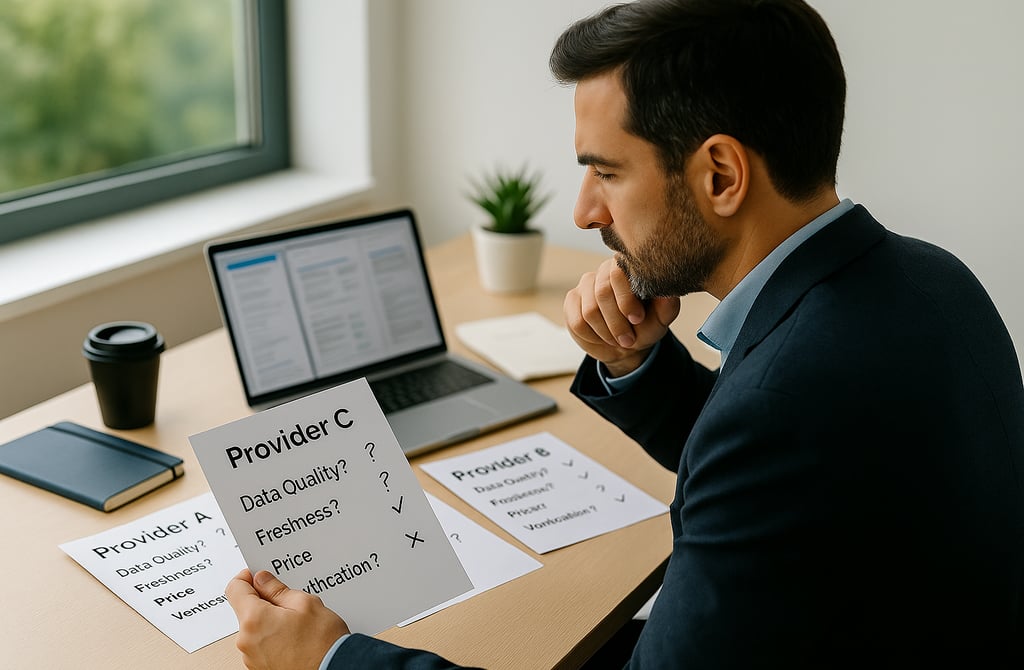
Most founders don’t purposely choose the wrong lead provider — it happens because they overlook the small details that matter. And in B2B data, it’s always the quiet details that decide whether your outreach succeeds or quietly wrecks your domain.
When you buy a list, you’re not just buying email contacts.
You’re buying the risk that comes with them — bounce rates, domain health, accuracy, and whether the provider actually verified anything at all.
Here are the areas buyers rarely check, but absolutely should.
1. Verification Method (Most Buyers Don’t Ask)
Nearly every provider claims “verified leads,” but very few explain how they verified them.
Real verification happens through structured checks, timestamps, and risk scoring.
If a provider can’t clearly explain their process, it usually means they don’t have one.
This single oversight is why so many founders end up with catch-all emails disguised as “valid.”
2. Data Freshness (The Silent Deliverability Killer)
Freshness is more important than quantity.
Most buyers don’t think to ask when the list was last validated — but outdated emails are the #1 cause of sudden bounce spikes.
If the data hasn’t been checked recently, your deliverability will suffer before the first reply even lands.
3. ICP Alignment (The Most Common Blind Spot)
A lot of clean lists still fail simply because they don’t match the ICP.
Buyers often skip checking:
job relevance
company size
decision-maker level
A list can be 100% valid and still deliver near-zero responses if the roles don’t align with your target.
4. Data Source Transparency
Most buyers never ask where the data came from — and shady providers take full advantage of that.
A good provider is transparent about whether the data came from:
public sources
scraping
partnerships
enrichment tools
manual research
If the provider keeps things vague, there’s a reason.
5. The Sample Test (Almost Nobody Does This)
A sample tells you everything — accuracy, risk levels, relevance, formatting, duplicates, even deliverability hints.
But most buyers skip this step because they trust the provider’s pitch.
A trustworthy provider will never hide the sample.
A shady one will make excuses for it.
6. Domain Reputation Signals (Quiet but Critical)
A lot of bad data comes from domains that are inactive, expired, or suspicious. Buyers often don’t check this, and it leads to immediate deliverability problems.
Simple checks could reveal:
inactive company websites
mismatched LinkedIn/website/email info
companies that haven’t updated anything in years
These signals predict trouble long before your campaign goes out.
7. Catch-All Handling (Huge Blind Spot)
Not all providers classify catch-all emails correctly — some just lump them into “valid.”
Buyers almost never ask about this.
But it’s extremely important, because catch-all domains behave unpredictably and can inflate bounce rates if not separated properly.
Final Thought
Choosing a lead provider shouldn’t be guesswork.
When you evaluate the deeper details — verification, freshness, ICP alignment, transparency, and risk — your outbound becomes far more predictable and safer for your domain.
Most buyers overlook these things.
The smart ones don’t.
Related Posts
Email Outreach Service Pricing: What It Really Costs in 2025–2026
How Email Outreach Services Help Agencies Scale Faster
How to Tell if B2B Leads Are Actually Verified Most Aren’t
Why Data Freshness Matters More Than Lead Quantity in 2026
The Hidden Dangers of Outdated Email Lists And How to Spot Them
How Lead Validation Works: Inside a Modern Data Verification Stack
7 Ways Cheap Leads Destroy Your Domain Reputation
Why Bounce Rate Spikes Happen And How Clean Data Prevents Them
What a Verified Lead Really Means in 2026
How Bad Data Quietly Raises Your CAC by 30–60%
The Quality Checklist Every B2B Lead Must Pass Before You Buy
The Lifecycle of a High-Quality B2B Lead From Source to Inbox
How to Buy B2B Leads Without Getting Scammed in 2026
The Ultimate Lead Buyer’s Checklist: 15 Things to Audit Before Paying
10 Red Flags That Mean You Should Not Buy From a Lead Provider
How Buyers Can Protect Themselves From Fake or Recycled Data
Why Your Lead Provider Should Show Validation Proof — Not Promises
The Smartest Way to Evaluate a B2B Contact List Before Using It
Connect
Get verified leads that drive real results for your business today.
www.capleads.org
© 2025. All rights reserved.
Serving clients worldwide.
CapLeads provides verified B2B datasets with accurate contacts and direct phone numbers. Our data helps startups and sales teams reach C-level executives in FinTech, SaaS, Consulting, and other industries.