
Why Bounce Rate Spikes Happen And How Clean Data Prevents Them
Bounce rate spikes can ruin deliverability overnight. Learn the real causes behind sudden bounce increases and how clean, verified data prevents domain damage before it starts.
B2B LEADSLEAD QUALITYEMAIL DELIVERABILITYCOLD EMAIL INFRASTRUCTURE
CapLeads Team
11/23/20253 min read
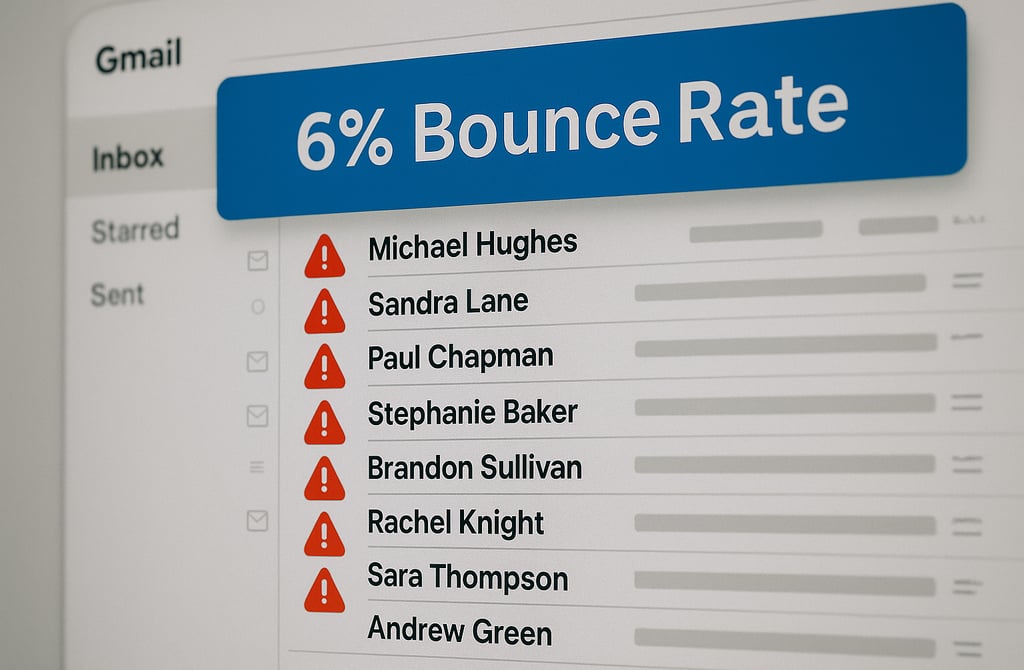
Bounce rates don’t rise gradually — they spike.
One day your emails deliver fine… the next day your bounce rate jumps to 4%, 6%, even 10% — and everything starts sliding downhill.
Most founders panic when this happens.
But bounce spikes aren’t random. They follow patterns. And almost every spike can be traced back to one root issue:
Bad data.
Cheap lists, outdated exports, recycled contacts, and unverified emails silently push your bounce rate up until your domain reputation takes the hit.
Here’s why bounce spikes really happen — and how clean, validated data keeps your sender reputation from collapsing.
1. Old Leads Quietly Turn Into Hard Bounces
Emails age fast.
People leave companies.
Domains shut down.
Teams reorganize.
Servers change settings.
If your list is more than a few months old, you’re guaranteed to have:
dead inboxes
retired domains
employees who no longer exist in the system
Those turn into hard bounces — the worst kind for reputation — and they almost always come in clusters, which is why your bounce rate spikes all at once.
2. Hidden Spam Traps Trigger Instant Deliverability Drops
Spam traps don’t bounce immediately.
Some only fire when a sender hits a certain threshold of:
frequency
sending pattern
domain warmup level
That’s why your bounce rate can jump out of nowhere.
Cheap lists often contain:
recycled traps
scraped traps
pristine traps placed intentionally
One hit is bad.
Multiple hits create instant catastrophic bounce spikes.
3. Catch-All Domains Inflate Your Bounce Rate Without Warning
Catch-all servers accept mail even when the inbox doesn’t exist.
So email validators report:
“Safe to send.”
But when you actually send the campaign, the mail server rejects it later — usually in batches.
That’s why bounce spikes often appear hours after sending, not immediately.
Only clean data that includes catch-all risk scoring protects you here.
4. Mixing New Emails With Old Data Breaks Your Sending Pattern
If your list is a mix of:
months-old emails
recycled contacts
…your bounce rate will ALWAYS jump.
Why?
Because outdated segments behave differently from new ones — and inbox providers read that inconsistency as “suspicious behavior.”
Your domain looks unstable, and bounce rates spike as a result.
5. Sending Too Fast to Unverified Leads Triggers Server-Level Blocks
Sometimes the inbox never existed.
Sometimes it exists but the server rejects cold traffic.
Sometimes the server blocks bulk volume all at once.
When you send to unverified leads quickly, the receiving server returns a wave of:
“user not found”
“mailbox unavailable”
“blocked connection”
These errors hit in groups — and your bounce rate shoots up instantly.
Clean data prevents this entire chain reaction.
6. Your Warmup System Can’t Fix Bad Data
Founders think warmup tools can protect them from bounce spikes.
They can’t.
Warmup handles sending behavior.
Clean data handles sending safety.
If you feed a warmup system:
invalids
traps
stale leads
unverified data
…it can’t save your domain.
Bounce spikes happen because of data — not because your warmup was weak.
7. Email Providers Flag Patterns Long Before You Notice Them
Gmail, Outlook, and corporate servers detect patterns before you do.
Bounce spikes often happen after inbox providers have already labeled your domain as:
inconsistent
risky
low-quality sender
engaging the wrong audiences
What feels “sudden” to you has already been happening quietly in the backend.
Clean, validated, recent data prevents these early negative signals from building up.
Final Thoughts
Bounce rate spikes feel random, but they’re never random.
They’re the direct result of sending to data that’s outdated, unverified, or low-quality.
Clean, verified data keeps your bounce rate stable and your domain reputation safe.
Bad data does the opposite — it creates sudden bounce spikes that wreck campaigns before they start.
Related Posts
Why SDR Teams Fail Without Verified B2B Data
How Verified Email Lists Improve Deliverability and Cut CAC
The Real Difference Between Verified Data and Cheap Bulk Lists
How to Avoid Outdated Leads: The Complete Clean-Data Checklist
Best Industries to Target Using Verified B2B Leads
How Verified Leads Turn Cold Email Into a Predictable Sales Machine
Manual vs Automated Validation: Why Human-Verified Data Wins
How Verified Data Helps Startups Reduce Marketing Waste
Best B2B Lead Sources in 2026: What Founders Should Know
How to Buy B2B Leads Safely in 2026 (Founder’s Guide)
Why 98 Percent of B2B Leads Are Outdated in 2026
The ROI of Buying Leads vs Hiring SDRs in 2026
Cold Email: DIY vs Email Outreach Services — Which Gets More Replies?
What Email Outreach Services Actually Do: How They Work, What You Get & Why They Convert
How Email Outreach Services Generate Sales Conversations Faster
Email Outreach Service Pricing: What It Really Costs in 2025–2026
How Email Outreach Services Help Agencies Scale Faster
How to Tell if B2B Leads Are Actually Verified Most Aren’t
Why Data Freshness Matters More Than Lead Quantity in 2026
The Hidden Dangers of Outdated Email Lists And How to Spot Them
How Lead Validation Works: Inside a Modern Data Verification Stack
7 Ways Cheap Leads Destroy Your Domain Reputation
Connect
Get verified leads that drive real results for your business today.
www.capleads.org
© 2025. All rights reserved.
Serving clients worldwide.
CapLeads provides verified B2B datasets with accurate contacts and direct phone numbers. Our data helps startups and sales teams reach C-level executives in FinTech, SaaS, Consulting, and other industries.