How Bad Data Quietly Raises Your CAC by 30–60%
Bad data silently increases your customer acquisition cost by 30–60%. Learn how outdated, unverified, or low-quality leads damage campaigns, drain budgets, and lower conversion efficiency — and how clean data keeps CAC under control.
B2B LEADSLEAD QUALITY INSIGHTSSALES & PROSPECTING CHANNELSMARKETING PERFORMANCE
CapLeads Team
11/23/20253 min read
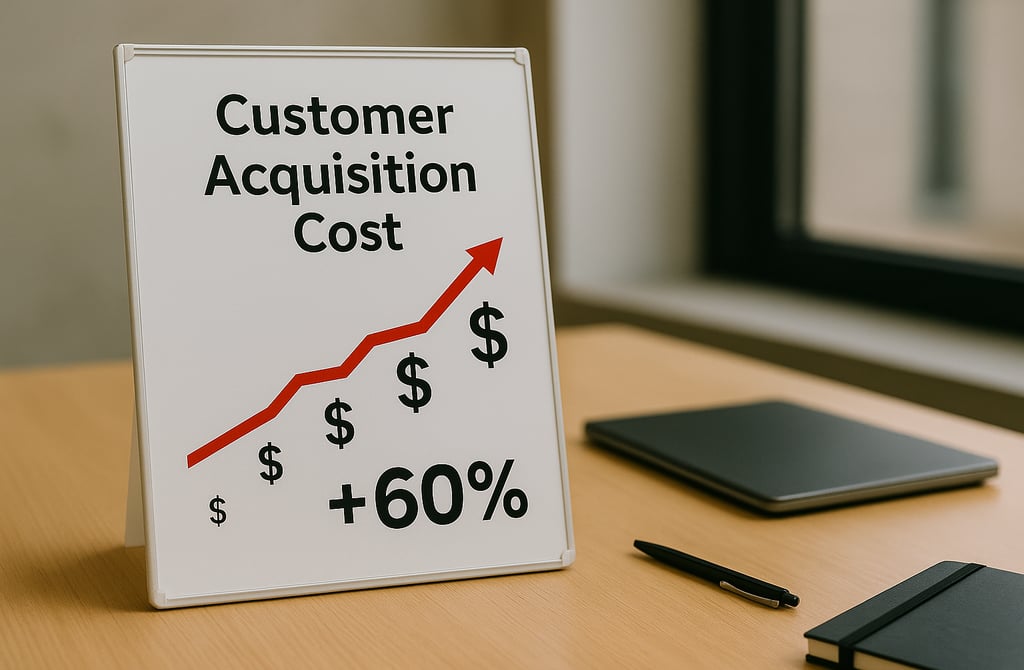
Most founders think CAC rises because ads get more expensive or outbound gets saturated.
But in reality, one of the biggest reasons CAC quietly creeps upward — often by 30–60% — is far simpler:
Your data is bad, and you don’t notice it until the bill arrives.
Bad data doesn’t cause one dramatic failure.
It slowly erodes performance in the background while your spending stays the same.
By the time you realize something’s off, you’ve already paid for the damage.
Here’s how it happens.
Bad Data Makes Every Outreach Touch More Expensive
When the contacts you rely on are outdated, recycled, or barely validated, your outreach engine burns money without moving forward.
You’re still paying for:
email tools
seats
sending volume
writers
schedulers
SDR time
ads
follow-ups
But fewer people respond because fewer people actually receive what you sent.
Suddenly, your CAC doesn’t increase because your cost went up —
it increases because efficiency went down.
Low-Quality Leads Make Your Funnel Look Worse Than It Really Is
Bad data doesn’t just lower your reply rate.
It distorts all your funnel metrics.
Your:
cost per reply,
cost per meeting,
cost per SQL
all rise — even though nothing changed in your offer.
It’s not your product.
It’s not your messaging.
It’s the dataset holding everything back.
Founders often blame the strategy…
when the real issue is the list.
Your Team Works Harder for Less Output
Whether you run outbound or inbound support, your team’s workload stays the same.
But when the list is full of:
outdated inboxes,
ex-employees,
role accounts,
recycled data,
stale segments
you’re paying people to chase contacts who can’t convert.
“What happens when your team is working, but the list isn’t?”
Your CAC quietly balloons — because labor becomes the most expensive wasted resource in the system.
Campaigns Take Longer to “Warm Up” — Burning More Budget
With clean data, you get signal fast:
replies
clicks
opens
negative signals
meeting requests
With bad data, campaigns need:
more time
more follow-ups
more split tests
more segments
more tweaks
This adds direct cost (tools, time) and opportunity cost (delayed pipeline).
Every extra week you spend fixing a campaign adds to CAC — even if you don’t notice it immediately.
Bad Data Damages Deliverability — And That Raises CAC Further
This is the part founders underestimate:
Bad data → higher bounce rate → lower inbox placement → fewer prospects receive emails → CAC spikes.
And the worst part?
It doesn’t happen all at once.
Your inboxing gets slightly worse week by week.
Then suddenly, even clean data underperforms because your sender reputation is damaged.
CAC jumps again — not because your leads are bad now, but because the previous bad leads poisoned your domain.
You Need More Spend to Get the Same Output
Here’s the final blow.
When your data is poor:
ad audiences underperform
outbound lists shrink faster
your targeting loses precision
your messaging lands in the wrong inboxes
personalization breaks
intent signals disappear
So you spend more to get back to where you started.
That’s how CAC quietly inflates by 30–60% without any obvious trigger.
Nothing “big” went wrong.
Everything “small” went wrong at the same time.
Final Thoughts
Bad data doesn’t feel like a crisis — it feels like a slow leak.
Your spending stays the same, but conversions slip, teams work harder, and results feel inconsistent.
Clean, verified, fresh data lowers CAC by keeping every touch efficient and predictable.
Outdated data does the opposite — it quietly multiplies your acquisition cost long before you realize you’re overspending.
Related Posts
How Verified Leads Turn Cold Email Into a Predictable Sales Machine
Manual vs Automated Validation: Why Human-Verified Data Wins
How Verified Data Helps Startups Reduce Marketing Waste
Best B2B Lead Sources in 2026: What Founders Should Know
How to Buy B2B Leads Safely in 2026 (Founder’s Guide)
Why 98 Percent of B2B Leads Are Outdated in 2026
The ROI of Buying Leads vs Hiring SDRs in 2026
Cold Email: DIY vs Email Outreach Services — Which Gets More Replies?
What Email Outreach Services Actually Do: How They Work, What You Get & Why They Convert
How Email Outreach Services Generate Sales Conversations Faster
Email Outreach Service Pricing: What It Really Costs in 2025–2026
How Email Outreach Services Help Agencies Scale Faster
How to Tell if B2B Leads Are Actually Verified Most Aren’t
Why Data Freshness Matters More Than Lead Quantity in 2026
The Hidden Dangers of Outdated Email Lists And How to Spot Them
How Lead Validation Works: Inside a Modern Data Verification Stack
7 Ways Cheap Leads Destroy Your Domain Reputation
Why Bounce Rate Spikes Happen And How Clean Data Prevents Them
What a Verified Lead Really Means in 2026
Connect
Get verified leads that drive real results for your business today.
www.capleads.org
© 2025. All rights reserved.
Serving clients worldwide.
CapLeads provides verified B2B datasets with accurate contacts and direct phone numbers. Our data helps startups and sales teams reach C-level executives in FinTech, SaaS, Consulting, and other industries.