Why Your Lead Provider Should Show Validation Proof — Not Promises
Learn why validation proof matters more than promises when buying B2B leads. Understand the real checks, evidence, and data signals that separate genuine providers from unreliable ones.
B2B LEAD BUYINGBUYER AWARENESSDATA QUALITY & VERIFICATIONEMAIL DELIVERABILITY
CapLeads Team
11/23/20253 min read
Every provider claims their leads are “validated,” “clean,” or “high accuracy.”
But unless they can prove it, those words mean nothing — and in most cases, they’re just sales fluff used to make outdated or unchecked data look good.
In 2026, validation proof matters more than ever.
Email filters are stricter, domain reputations are fragile, and bad data can ruin an outbound operation fast. Buyers need evidence, not empty claims.
Here’s why validation proof separates real data providers from unreliable ones — and how you can protect yourself before you buy.
1. Promises Don’t Prevent Bounces — Proof Does
A seller saying:
“Everything is validated”
“Zero bounces”
“100% accuracy”
…does nothing to protect your domain.
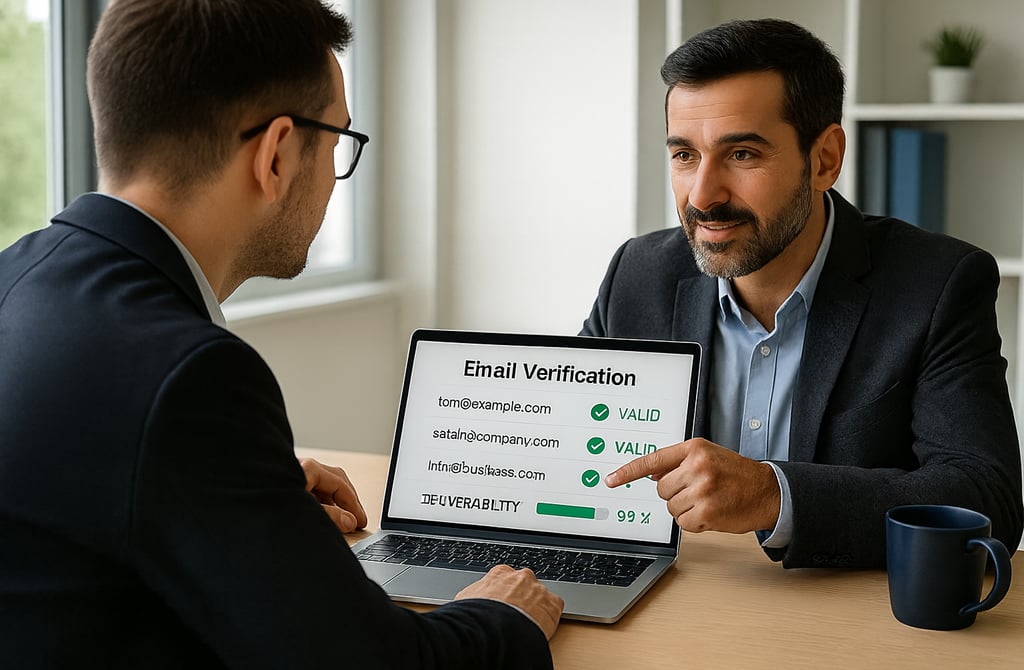
Validation proof, on the other hand, shows you:
risk levels
verification timestamps
domain health signals
invalid flags
catch-all status
Proof gives you insight.
Promises give you risk.
2. Proof Shows How Recently the Data Was Checked
Freshness is everything.
A provider should be able to show:
when the emails were last verified
how often the dataset is refreshed
whether the domain is still active
if the role is still current
If they can’t show recency, their data may be months or years outdated — even if they “promise” it’s fresh.
3. Evidence Reveals the True Risk Levels
Proper validation doesn’t just say “valid.”
It shows layers.
Real proof includes:
valid
invalid
risky
catch-all
role-based
disposable
full inbox
A provider who only shows “Valid” or “Invalid” is hiding the real picture.
4. Proof Stops You From Paying for Automated Junk
Some vendors use automated tools that produce:
fake names
made-up emails
AI-generated roles
synthetic companies
You can only detect this if they show validation checks that clearly reflect:
SMTP responses
domain status
MX records
mailbox behavior
Automation is easy to hide with “promises.”
It can’t hide from proof.
5. Validation Proof Confirms the Company Is Real
An email can be “valid” even if:
the company no longer exists
the domain is abandoned
the employee left years ago
Proof reveals:
active domains
working websites
updated company records
validation timestamps
A provider who won’t show this might be selling a list that hasn’t been cleaned in years.
6. Proof Shows That Segmentation Was Actually Done
When a provider segments by:
location
industry
seniority
job role
…proof shows the fields were checked, not just copy-pasted.
If they can’t show evidence of segmentation checks, the list may be generic bulk data instead of targeted leads.
7. Real Verification Reports Show How They Treat Catch-All Emails
Catch-all domains aren’t fake — but they ARE misleading.
Proof shows:
how many catch-alls are included
how they’re classified
how they affect risk level
how deliverability might be impacted
Promises ignore this.
Proof forces transparency.
8. Proof Confirms They Didn’t Just Reuse an Old List
Recycled data will fail spot-checks instantly.
Validation proof helps you see:
stale emails
outdated job titles
inactive domains
inconsistent fields
If the provider refuses to show proof, the list is probably reused or untouched.
9. Validation Evidence Helps You Predict Deliverability
Deliverability depends heavily on:
verification depth
domain health
email type
risk classification
When a provider gives you a proof report, you immediately know whether the list will:
protect your sender reputation
hurt your domain
need additional filtering
Promises can’t tell you this.
Proof can.
10. Proof Builds Trust — Promises Create Doubt
When a vendor is confident in their data, they show you:
screenshots
sample reports
timestamps
A provider who refuses proof is telling you everything you need to know — even if they don’t say it out loud.
Final Thought
Validation proof is the difference between a provider who checks their data and one who simply claims they do. When you see real evidence, you know the data has been screened, updated, and prepared correctly — and your outbound becomes far more predictable.
Proof-based providers give you accurate data, lower risk, and stronger campaign stability.
Promise-based providers leave you guessing, exposed, and vulnerable to bad results.
Related Posts
The ROI of Buying Leads vs Hiring SDRs in 2026
Cold Email: DIY vs Email Outreach Services — Which Gets More Replies?
What Email Outreach Services Actually Do: How They Work, What You Get & Why They Convert
How Email Outreach Services Generate Sales Conversations Faster
Email Outreach Service Pricing: What It Really Costs in 2025–2026
How Email Outreach Services Help Agencies Scale Faster
How to Tell if B2B Leads Are Actually Verified Most Aren’t
Why Data Freshness Matters More Than Lead Quantity in 2026
The Hidden Dangers of Outdated Email Lists And How to Spot Them
How Lead Validation Works: Inside a Modern Data Verification Stack
7 Ways Cheap Leads Destroy Your Domain Reputation
Why Bounce Rate Spikes Happen And How Clean Data Prevents Them
What a Verified Lead Really Means in 2026
How Bad Data Quietly Raises Your CAC by 30–60%
The Quality Checklist Every B2B Lead Must Pass Before You Buy
The Lifecycle of a High-Quality B2B Lead From Source to Inbox
How to Buy B2B Leads Without Getting Scammed in 2026
The Ultimate Lead Buyer’s Checklist: 15 Things to Audit Before Paying
10 Red Flags That Mean You Should Not Buy From a Lead Provider
How Buyers Can Protect Themselves From Fake or Recycled Data
Connect
Get verified leads that drive real results for your business today.
www.capleads.org
© 2025. All rights reserved.
Serving clients worldwide.
CapLeads provides verified B2B datasets with accurate contacts and direct phone numbers. Our data helps startups and sales teams reach C-level executives in FinTech, SaaS, Consulting, and other industries.