10 Red Flags That Mean You Should Not Buy From a Lead Provider
Learn the 10 biggest red flags to watch out for when buying B2B leads. Avoid bad vendors, low-quality data, risky lists, and expensive mistakes before you spend anything.
B2B LEAD BUYINGBUYER AWARENESSDATA QUALITY & VERIFICATIONBUYING GUIDES
CapLeads Team
11/23/20253 min read
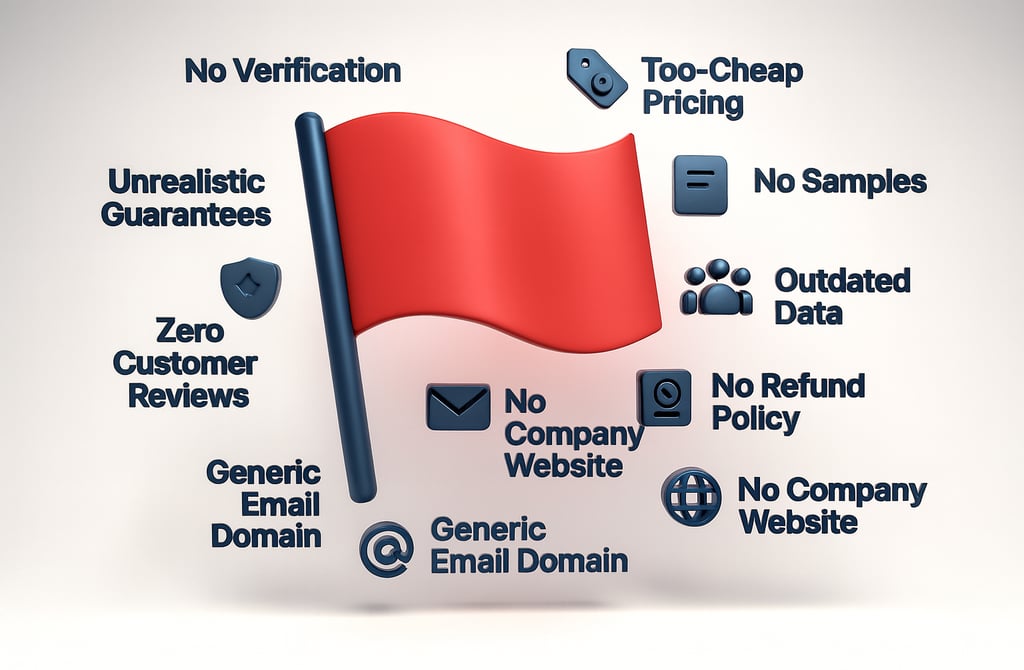
Most founders think the biggest red flags in buying B2B leads are obvious — cheap pricing, no samples, no verification. But those are the beginner traps.
The deeper problems come from how a provider thinks, operates, and sources their data behind the scenes.
These 10 red flags expose the vendors who look legitimate on the surface but fall apart once you inspect their process. Watch for these — they’re the signs professionals use to identify unreliable data providers.
1. They Can’t Explain Their Data Workflow Step-by-Step
Every serious provider should be able to walk you through:
how they source
how they clean
how they verify
how they categorize
how they update
If their explanation is vague, rushed, or overly “technical” without substance, it means they don’t have a real workflow — just a list.
2. They Don’t Ask Anything About Your ICP
A good provider cares about:
role relevance
ideal industries
seniority
company size
exclusions
If they jump straight into “How many leads do you want?” without asking who you’re targeting, they’re selling volume — not accuracy.
That’s a major red flag.
3. They Sell Every Type of Lead to Every Buyer
Legit providers specialize.
Bad providers say they can deliver:
all roles
all countries
all segments
A vendor with no specialization is almost always reselling someone else’s database.
4. They Push High Volume Instead of Precision
If they keep emphasizing:
“We have millions of contacts”
“We can deliver 50,000 instantly”
“Bigger lists give better results”
…it means they don’t care about accuracy or relevance — just size.
Good data companies focus on quality, not quantity.
5. AI-Generated Leads or AI-Filled Fields
In 2026, this became a massive issue.
If you notice:
identical formatting on every contact
generic-sounding names
unrealistic job titles
perfect consistency in every field
…it’s a sign the provider is using AI to “fill in the blanks” rather than sourcing real data.
AI-fabricated leads destroy campaigns.
6. No Process for Removing Dead or Dormant Companies
Most low-level providers check emails —
but ignore whether the company still exists.
Red flag signs:
leads from companies that shut down
domains no longer active
old brands still listed as current
employees of companies that no longer operate
If they don’t prune dead companies, their entire database decays.
7. They Don’t Understand Primary vs. Secondary Data
This one separates amateurs from real operators.
If they can’t explain the difference between:
Primary data (directly sourced)
Secondary data (aggregated or repurposed)
…it means they don’t understand data integrity.
A vendor who can’t define this shouldn’t be trusted with your outreach.
8. They Refuse to Discuss Catch-All Domains
High-quality providers track:
risk distribution
how they treat them
how they verify them
A bad provider either:
doesn’t know what catch-alls are
or avoids the topic
or pretends all catch-alls are “valid”
This is a huge red flag and a major deliverability risk.
9. They Send the Same Sample to Every Buyer
If the sample looks:
too polished
too consistent
too generic
unrelated to your industry
…it’s staged.
A real vendor produces samples based on your ICP.
A fake vendor has one “demo list” they send to everyone.
10. Spot-Check Reality Doesn’t Match
Pick 3–5 leads at random and check:
LinkedIn profile
job title
employer
seniority
employment status
If any of these are wrong:
the data is outdated
the role is inaccurate
the list was auto-generated
or the provider didn’t verify manually
Bad data always reveals itself under spot-checking.
Final Thought
The most dangerous lead providers aren’t the obvious scammers — they’re the ones who sound credible but fail the deeper operational and data-quality checks. When you learn how to spot these red flags early, you protect your domain, your outreach, and your budget.
Rushed buying decisions lead to misaligned data, low accuracy, and weak targeting.
Careful evaluation gives you clean inputs, stronger campaigns, and results built on real information.
Related Posts
The ROI of Buying Leads vs Hiring SDRs in 2026
Cold Email: DIY vs Email Outreach Services — Which Gets More Replies?
What Email Outreach Services Actually Do: How They Work, What You Get & Why They Convert
How Email Outreach Services Generate Sales Conversations Faster
Email Outreach Service Pricing: What It Really Costs in 2025–2026
How Email Outreach Services Help Agencies Scale Faster
How to Tell if B2B Leads Are Actually Verified Most Aren’t
Why Data Freshness Matters More Than Lead Quantity in 2026
The Hidden Dangers of Outdated Email Lists And How to Spot Them
How Lead Validation Works: Inside a Modern Data Verification Stack
7 Ways Cheap Leads Destroy Your Domain Reputation
Why Bounce Rate Spikes Happen And How Clean Data Prevents Them
What a Verified Lead Really Means in 2026
How Bad Data Quietly Raises Your CAC by 30–60%
The Quality Checklist Every B2B Lead Must Pass Before You Buy
The Lifecycle of a High-Quality B2B Lead From Source to Inbox
How to Buy B2B Leads Without Getting Scammed in 2026
The Ultimate Lead Buyer’s Checklist: 15 Things to Audit Before Paying
Connect
Get verified leads that drive real results for your business today.
www.capleads.org
© 2025. All rights reserved.
Serving clients worldwide.
CapLeads provides verified B2B datasets with accurate contacts and direct phone numbers. Our data helps startups and sales teams reach C-level executives in FinTech, SaaS, Consulting, and other industries.