How to Buy B2B Leads Without Getting Scammed in 2026
Follow the journey of a high-quality B2B lead—from initial source, to validation, to segmentation, to final inbox delivery. Learn how clean data flows through each stage and why it determines your outbound results.
B2B LEAD BUYINGBUYER AWARENESSDATA QUALITY & VERIFICATIONBUYING GUIDES
CapLeads Team
11/23/20253 min read
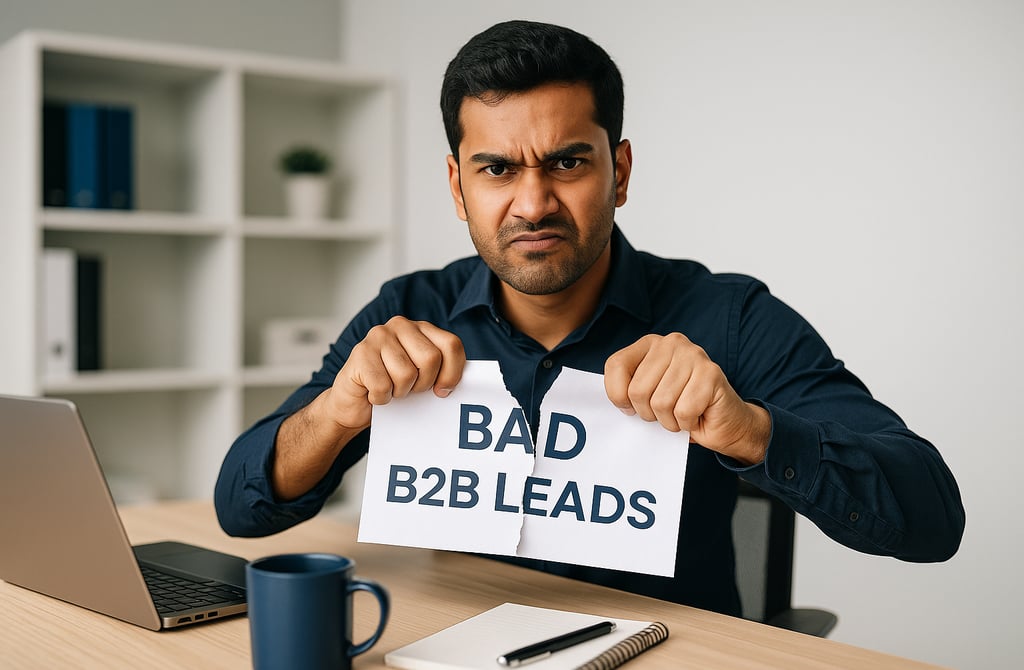
Buying B2B leads should help you grow faster — not drain your budget, kill your domain, or bury your outreach in spam.
But in 2026, the lead-buying space is full of shady vendors, fake databases, recycled lists, and “10,000 leads for $10” scams that leave founders frustrated and burned.
This guide shows you how to protect yourself, spot the red flags, and buy B2B leads safely without getting scammed — especially as the industry shifts in 2026.
1. If the Price Looks Too Good, It’s a Scam
The biggest giveaway is unrealistic pricing.
Scammers love selling:
“10,000 verified leads for $20”
“Unlimited B2B contacts for one payment”
“Full database access — lifetime deal”
High-quality data takes work — real sourcing, real verification, real maintenance.
If the price feels impossible, it’s because the data is either:
stolen
outdated
scraped without validation
duplicated
or completely fake
In 2026, pricing transparency matters more than ever.
2. Always Ask: “Where Did These Leads Come From?”
You don’t need the vendor’s secret method.
You just need to know if the source is legit.
Look out for vague claims like:
“exclusive database”
“proprietary scraping engine”
“AI-generated contacts”
If they can’t explain the general source, don’t buy.
A legitimate provider will always tell you:
the type of sources
how they extract
how they verify
and what level of accuracy you can expect
Anything less is a risk.
3. Never Trust “Pre-Verified” Leads Without Proof
Scam vendors love saying:
“all emails validated”
“zero bounces”
No real provider can make guarantees like that — not in 2026 and not ever.
A real vendor will:
show their verification method
explain the risk levels
provide samples
be honest about catch-alls
and give realistic expectations
If someone promises perfection, they’re lying.
4. Always Request a Sample — and Actually Test It
A real seller has no problem giving samples.
A scammer will:
avoid samples
send irrelevant companies
send 2–3 random emails
or claim they “can’t because of privacy”
Test the sample with:
a verification tool
a bounce checker
your own domain (with low sending volume)
One sample can save your domain reputation.
5. Watch Out for Vendors Who Refuse Segmentation
Scam sellers love selling one giant mixed bag of junk.
If they say:
“leads are not categorized”
“we don’t filter by industry”
“all roles included”
…it means they didn’t do the work.
Quality lead providers can always segment by:
job role
location
company size
seniority
If they can’t segment, they’re not legit.
6. Beware of Vendors With Zero Accountability
Good providers stand behind their data.
Scammers disappear as soon as they’re paid.
Red flags:
no refund policy
no company info
no customer support
no website, only a chat handle
only accepts crypto
uses generic Gmail emails
If they can't be contacted after the sale, it's not a business — it’s a scam operation.
7. Avoid Fiverr-Style Marketplace Sellers Offering Bulk Lists
In 2026, marketplaces are flooded with:
recycled lists
spam traps
mixed databases copied from LinkedIn
AI-hallucinated contacts
These are the fastest way to:
damage your domain
trigger spam filters
destroy deliverability
waste your outreach tools
If the vendor can't explain their process, avoid it.
8. Work Only With Vendors Who Validate Leads Manually AND Technically
Verification in 2026 needs both:
technical checks (bounce, SMTP, domain health)
manual review (role accuracy, duplicate removal, correct industry)
Scammers do none of this.
They run a basic email checker and call it a day.
A real provider will always validate multiple layers.
Final Thought
Buying B2B leads in 2026 doesn’t have to feel risky — as long as you know how to spot red flags and demand transparency before paying for anything. When you buy from vendors who validate, segment, and explain their process, your outreach becomes safer and more predictable.
A smart buying process protects your budget and your domain reputation.
Rushing into cheap lists guarantees deliverability issues, wasted spend, and campaigns that never take off.
Related Posts
How Verified Leads Turn Cold Email Into a Predictable Sales Machine
Manual vs Automated Validation: Why Human-Verified Data Wins
How Verified Data Helps Startups Reduce Marketing Waste
Best B2B Lead Sources in 2026: What Founders Should Know
How to Buy B2B Leads Safely in 2026 (Founder’s Guide)
Why 98 Percent of B2B Leads Are Outdated in 2026
The ROI of Buying Leads vs Hiring SDRs in 2026
Cold Email: DIY vs Email Outreach Services — Which Gets More Replies?
What Email Outreach Services Actually Do: How They Work, What You Get & Why They Convert
How Email Outreach Services Generate Sales Conversations Faster
Email Outreach Service Pricing: What It Really Costs in 2025–2026
How Email Outreach Services Help Agencies Scale Faster
How to Tell if B2B Leads Are Actually Verified Most Aren’t
Why Data Freshness Matters More Than Lead Quantity in 2026
The Hidden Dangers of Outdated Email Lists And How to Spot Them
How Lead Validation Works: Inside a Modern Data Verification Stack
7 Ways Cheap Leads Destroy Your Domain Reputation
Why Bounce Rate Spikes Happen And How Clean Data Prevents Them
What a Verified Lead Really Means in 2026
How Bad Data Quietly Raises Your CAC by 30–60%
The Quality Checklist Every B2B Lead Must Pass Before You Buy
Connect
Get verified leads that drive real results for your business today.
www.capleads.org
© 2025. All rights reserved.
Serving clients worldwide.
CapLeads provides verified B2B datasets with accurate contacts and direct phone numbers. Our data helps startups and sales teams reach C-level executives in FinTech, SaaS, Consulting, and other industries.