
Why Industry-Specific B2B Leads Convert Better Than Generic Lists
Industry-specific B2B leads outperform generic lists because they match your ICP, intent, and buyer context. Here’s why targeting by industry converts faster.
FOUNDER GUIDESB2B LEAD BUYING GUIDEB2B LEAD QUALITYTARGETING & ICP
CapLeads Team
11/24/20253 min read
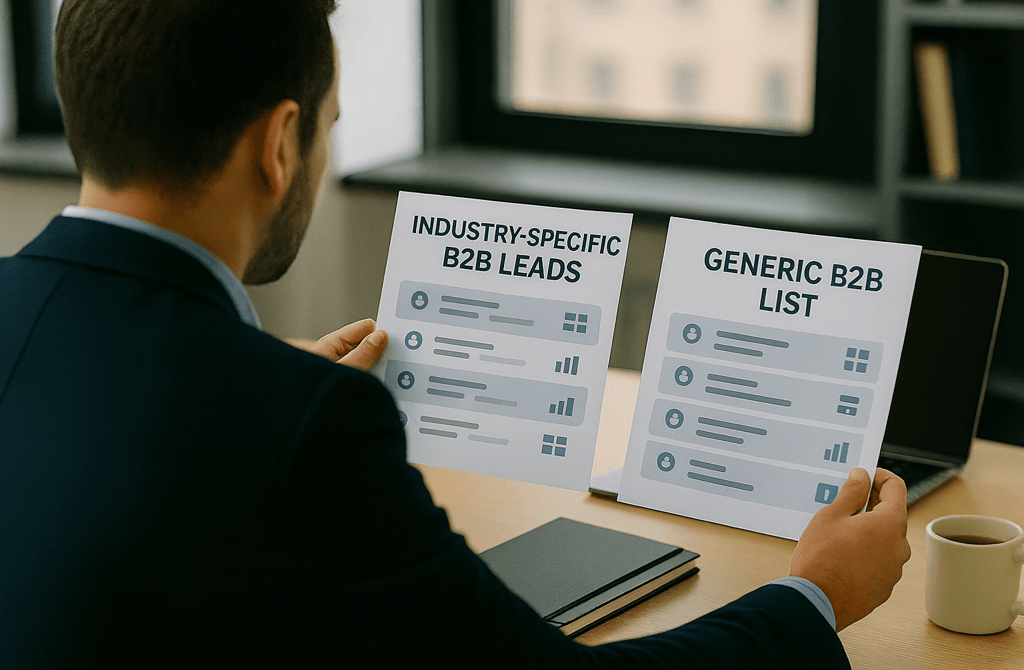
If you’ve ever bought a generic B2B list, you already know the feeling: lots of contacts, lots of volume… and almost zero meaningful responses.
But the moment you switch to industry-specific data, everything changes — replies get warmer, conversations start faster, and deals move with less friction.
This isn’t a coincidence.
Industry-specific leads convert better because they remove the blind spots generic lists create.
Here’s why founders who switch to targeted data immediately see a lift in performance.
Generic Lists Don’t Understand Your ICP — They Just Dump Contacts
A generic list is built on one idea: quantity over context.
Those leads may come from:
different industries
different revenue ranges
different problems
different tools and workflows
different levels of urgency
When you email all of them with the same message, 90% of them simply don’t relate to what you’re offering.
And when your message doesn’t match the prospect’s world, you lose the conversion immediately — before the conversation even starts.
Industry-Specific Leads Match the Prospect’s Real Problems
Industry-specific lists convert better because relevance is built in.
A finance CTO, a construction operations manager, and a healthcare director might all have the same job title —
but their problems, budgets, tools, and purchase behavior are completely different.
Industry-specific data gives you:
prospects with similar workflows
shared challenges
similar buying cycles
identical terminology
predictable triggers
This lets you write messaging that feels custom, not generic.
People respond to messages that speak their language.
Better Targeting Leads to Stronger Deliverability
Deliverability dies when you email the wrong crowd.
Generic lists create:
high bounce rates
low engagement
spam placements
domain reputation drops
But industry-specific contacts — especially validated ones — behave differently:
they open more
they reply more
they forward more
they mark fewer messages as spam
Email providers notice engagement patterns.
Higher relevance directly improves inboxing.
Better inboxing = better conversions.
Industry-Specific Leads Close Faster Because They’re Already in the Right Context
A buyer inside your niche doesn’t need a long introduction.
They already understand:
the problem
the urgency
the situation
the value of solving it
Founders don’t waste time educating them from zero.
You go straight into exploring fit, not explaining the basics.
That’s why niche leads always book meetings faster — less friction, less explanation, more action.
Generic Lists Waste Money — Industry Lists Protect It
A generic list might give you thousands of contacts,
but if only 4–7% are actually relevant, the rest of your spend is wasted.
Industry-specific data flips that equation:
fewer bad addresses
fewer non-ICP contacts
fewer random industries
fewer dead companies
Every email you send is more likely to hit someone who can actually buy.
Good targeting doesn’t just improve conversion —
it protects your budget.
Final Thoughts
Generic B2B lists try to impress with volume, but volume never equals conversions. Industry-specific leads convert better because they match the buyer’s world, their problems, and their buying behavior.
Accurate, niche-targeted data improves deliverability, boosts engagement, and moves deals forward faster.
Generic lists do the opposite — they slow everything down and kill your outreach momentum.
Clean, industry-specific B2B leads make your outbound predictable.
Generic lists filled with random industries make it fail — fast.
Related Posts
The Hidden Dangers of Outdated Email Lists And How to Spot Them
How Lead Validation Works: Inside a Modern Data Verification Stack
7 Ways Cheap Leads Destroy Your Domain Reputation
Why Bounce Rate Spikes Happen And How Clean Data Prevents Them
What a Verified Lead Really Means in 2026
How Bad Data Quietly Raises Your CAC by 30–60%
The Quality Checklist Every B2B Lead Must Pass Before You Buy
The Lifecycle of a High-Quality B2B Lead From Source to Inbox
How to Buy B2B Leads Without Getting Scammed in 2026
The Ultimate Lead Buyer’s Checklist: 15 Things to Audit Before Paying
10 Red Flags That Mean You Should Not Buy From a Lead Provider
How Buyers Can Protect Themselves From Fake or Recycled Data
Why Your Lead Provider Should Show Validation Proof — Not Promises
The Smartest Way to Evaluate a B2B Contact List Before Using It
What Buyers Overlook When Choosing a Lead Provider (But Shouldn’t)
How to Audit a B2B Lead List for Accuracy Before Sending Email
Why You Shouldn’t Buy “Unlimited Leads” Packages
The Truth About “Niche Email Lists” Sold Online — Are They Safe?
Connect
Get verified leads that drive real results for your business today.
www.capleads.org
© 2025. All rights reserved.
Serving clients worldwide.
CapLeads provides verified B2B datasets with accurate contacts and direct phone numbers. Our data helps startups and sales teams reach C-level executives in FinTech, SaaS, Consulting, and other industries.