
The Vertical Differences That Influence Data Freshness
Data freshness isn’t universal across industries. Learn which vertical differences cause lead data to age faster and why refresh timing must change by sector.
INDUSTRY INSIGHTSLEAD QUALITY & DATA ACCURACYOUTBOUND STRATEGYB2B DATA STRATEGY
CapLeads Team
12/16/20253 min read
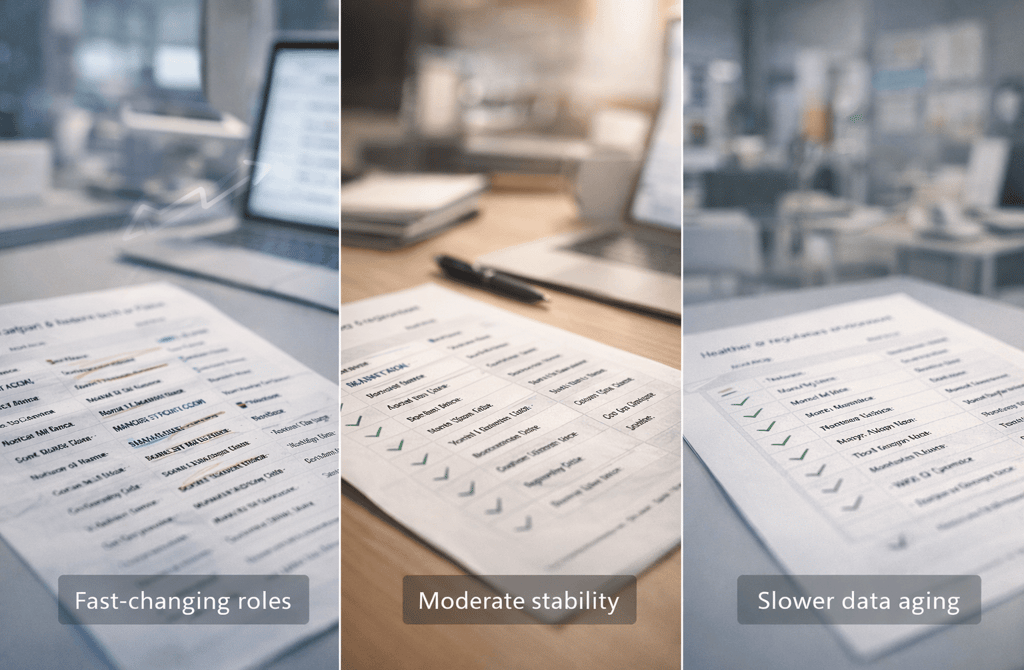
Data freshness is often treated as a universal clock. Teams assume leads age at roughly the same pace, so they apply the same refresh cycles across every campaign and industry. In practice, data freshness is shaped heavily by vertical-specific behavior, not just time.
The same dataset can remain usable for months in one industry and become unreliable in weeks in another. When outbound teams ignore these differences, they end up refreshing the wrong lists, trusting stale contacts, and misreading performance signals.
1. Freshness Is About Change Frequency, Not Time Passed
Freshness doesn’t degrade simply because days go by. It degrades when something changes.
Role changes, internal restructuring, shifting responsibilities, and company movement all affect whether a lead is still accurate and relevant. Industries differ dramatically in how often these changes occur.
High-velocity industries generate constant movement. Lower-velocity industries change slowly and predictably. Treating both the same creates unnecessary waste in one case and hidden risk in the other.
2. High-Movement Verticals Lose Freshness Quickly
Some industries naturally produce fast data aging.
Technology, SaaS, and growth-driven service sectors experience frequent hiring, role expansion, and internal reshuffling. Titles evolve rapidly, and responsibility boundaries are fluid. Even when email addresses remain valid, the meaning of the role often changes.
In these verticals, freshness loss isn’t always visible through bounce rates. Contacts may still receive emails, but relevance erodes quietly. Teams that rely on surface-level validation miss this decay entirely.
3. Moderate-Movement Verticals Create Uneven Freshness
Professional services, agencies, and mid-market firms often sit in the middle.
Roles are relatively stable, but not fixed. Responsibility shifts happen gradually. Some contacts remain accurate for long periods, while others drift just enough to break targeting assumptions.
This creates uneven freshness patterns. Parts of a list stay reliable, while other parts quietly degrade. Teams that apply blanket refresh rules either over-clean good data or under-clean risky segments.
Understanding which roles and companies move faster inside these verticals matters more than applying one rule across the board.
4. Low-Movement Verticals Preserve Freshness Longer
Regulated and traditional industries behave differently.
Healthcare, manufacturing, and infrastructure-heavy sectors tend to have clearer hierarchies and slower role movement. Titles are standardized, authority is formalized, and job changes are less frequent.
As a result, lead data in these verticals retains freshness longer, assuming it was accurate at the time of collection. Refresh cycles can be longer without introducing the same level of risk found in high-movement industries.
Outbound teams that refresh too aggressively here often waste time and budget without gaining meaningful accuracy improvements.
5. Why Freshness Problems Are Often Invisible
Most teams track freshness indirectly through bounce rates or delivery metrics. That only captures one failure mode.
Freshness loss often shows up as:
declining reply relevance
stalled conversations
increased “not the right person” responses
Because emails still deliver, teams assume the data is fresh. They adjust copy, cadence, or volume instead of addressing the underlying freshness mismatch.
By the time the issue becomes obvious, performance has already suffered.
6. Adjusting Freshness Strategy by Vertical
Effective outbound teams don’t chase a single definition of “fresh.”
They shorten refresh windows in high-movement industries. They segment by role volatility inside moderate verticals. They extend refresh cycles in stable sectors where change is slow and predictable.
This approach reduces unnecessary data work while protecting campaigns from silent decay. More importantly, it aligns outbound expectations with how each industry actually behaves.
Final Thought
Data freshness isn’t just about recency — it’s about how often reality changes underneath the data.
Outbound becomes more reliable when freshness strategy reflects vertical behavior instead of assuming every industry ages at the same pace.
Related Posts
Why Titles & Departments Matter More Than Personalization
The Hidden Patterns in Leads That Always Reply
Why Some Industries Email Back Faster Than Others
How Buying Behavior Data Influences Outbound Results
The Real Meaning of Verified in B2B Lead Data
Why Multi-Signal Data Outperforms Basic Email Lists
The Micro-Data Points That Predict Reply Probability
Why Data Completeness Makes Outbound Easier to Scale
How Company Lifecycle Stage Impacts Deliverability
The Common Data Gaps That Break Founder-Led Outreach
The Hidden Indicators That Tell You a Lead Is Worth Emailing
Why Mapping the Buying Committee Boosts Reply Rates
Why AI Needs Clean Inputs to Improve Lead Accuracy
The Hidden AI Errors Caused by Dirty Data
How AI Enhances Lead Processing Without Replacing Humans
Why AI Models Break When Metadata Is Incomplete
Why Each Industry Produces Completely Different Lead Data
The Vertical Data Behaviors Most Outbound Teams Miss
How B2B Data Signals Change Depending on the Industry
Why Industry Structure Shapes Lead Accuracy Patterns
Connect
Get verified leads that drive real results for your business today.
www.capleads.org
© 2025. All rights reserved.
Serving clients worldwide.
CapLeads provides verified B2B datasets with accurate contacts and direct phone numbers. Our data helps startups and sales teams reach C-level executives in FinTech, SaaS, Consulting, and other industries.