
Why Some Industries Email Back Faster Than Others
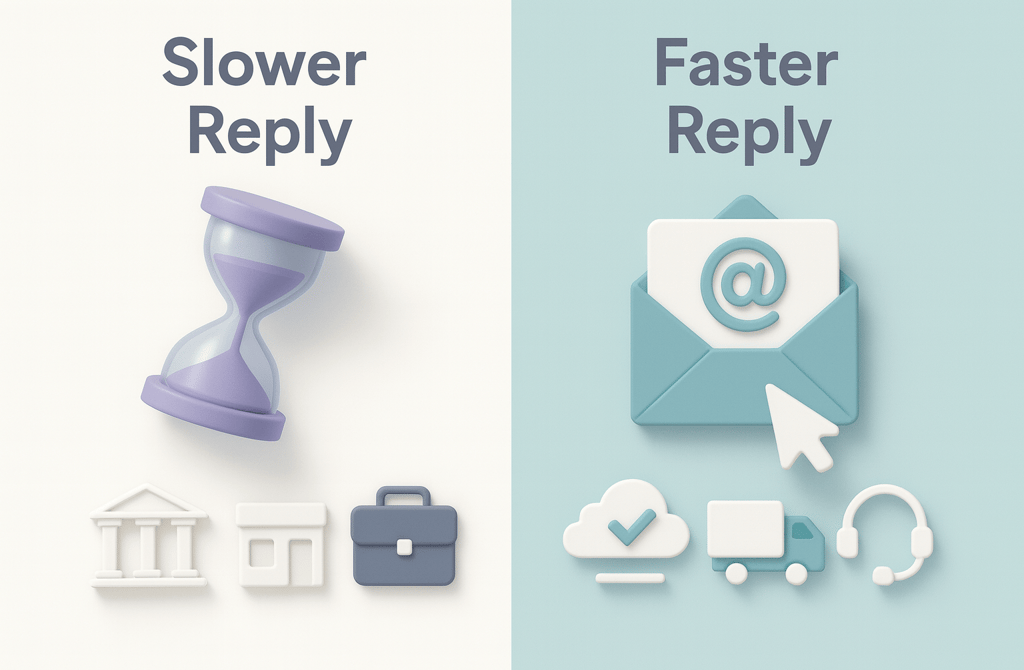
Some industries respond to outbound emails faster than others. This post explains how operational pace, buying cycles, and data decay shape reply speed.
INDUSTRY INSIGHTSLEAD QUALITY & DATA ACCURACYOUTBOUND STRATEGYB2B DATA STRATEGY
CapLeads Team
12/13/20252 min read
Outbound teams often assume reply speed is controlled by copy, follow-ups, or personalization.
In reality, reply speed is heavily influenced by industry behavior.
Some industries reply within hours. Others take days or never respond at all — even when the message is relevant. This isn’t accidental. It’s driven by how different industries operate internally, how decisions are made, and how email fits into daily workflows.
Once you understand these differences, slow replies stop being frustrating and start being predictable.
1. Operational Pace Dictates Reply Speed
Industries with fast-moving operations tend to reply faster.
These industries usually:
Handle frequent inbound requests
Make decisions quickly
Operate in competitive or time-sensitive environments
Logistics, SaaS, marketing services, and eCommerce-related businesses often respond faster because email is part of how work moves forward. Delays directly affect revenue or delivery.
Slower industries operate at a different rhythm. Decisions take longer, approvals are layered, and urgency is lower.
2. Buying Cycles Shape Email Behavior
Fast-reply industries usually have shorter buying cycles.
They are:
Used to evaluating vendors quickly
Comfortable with exploratory conversations
Accustomed to switching tools or partners
Slower industries often follow rigid procurement processes. Emails may be read, discussed internally, and parked until the “right time.” Reply speed reflects process, not interest.
This is why follow-ups don’t always accelerate responses in slower sectors.
3. Inbox Monitoring Varies by Industry
In some industries, inboxes are actively monitored throughout the day.
In others:
Email is secondary to meetings
Communication happens through internal systems
External emails are screened or deprioritized
Industries with heavy regulation, compliance requirements, or legacy structures often treat email cautiously. That slows down replies regardless of message quality.
4. Decision-Maker Accessibility Is Uneven
Reply speed also depends on how accessible decision-makers are.
In faster industries:
Decision-makers manage their own inbox
External communication is expected
Replies are part of daily work
In slower industries:
Gatekeepers filter emails
Decision-makers are insulated
Replies require internal alignment
Even a perfect message won’t move faster than the organization’s structure allows.
5. Data Accuracy Matters More in Slow Industries
Slow industries are less forgiving of inaccurate data.
If:
The role is slightly off
The department is incorrect
The company context feels generic
The email is more likely to be ignored entirely.
Fast-moving industries may still reply despite small mismatches. Slower industries expect higher relevance before engaging.
6. Reply Speed Is an Industry Signal, Not a Copy Problem
One of the biggest outbound mistakes is treating reply speed as a universal metric.
A slow reply doesn’t always mean poor targeting.
A fast reply doesn’t always mean high intent.
Reply speed reflects:
Industry norms
Internal workflows
Decision complexity
Risk tolerance
When teams benchmark all industries against the same reply expectations, frustration follows.
Final Thought
Some industries reply faster because their operations demand it. Others move slowly because their structures require caution.
Clean data makes outbound predictable.
Outdated or mismatched data makes reply speed feel random.
When you align targeting, expectations, and data quality with industry behavior, reply speed stops being a mystery — it becomes a signal you can plan around.
Related Pos
Why Email Volume Doesn't Fix Data Problems
How Data Scoring Boosts Deliverability
Why Domain Reputation Depends on Your Lead Data Quality
The Data-Driven Way to Increase Cold Email ROI
Why Your Inbox Placement Is Linked to Lead Validation
How Data Recency Improves Reply Intent
Why Clean Lists Outperform Personalization Tricks
Why Lead Segmentation Matters More Than List Size
The Real Science Behind Targeting the Right Decision-Maker
Why Role-Based Targeting Beats Mass Prospecting
How Company Health Signals Predict Your Cold Email Success
The Data Behind High-Intent Prospects Most People Miss
Why Industry Fit Decides Whether Your Cold Email Works
What Pipeline-Ready Lead Data Actually Looks Like
The Silent Impact of Company Size Accuracy in Outreach
Why Titles & Departments Matter More Than Personalization
The Hidden Patterns in Leads That Always Reply
Connect
Get verified leads that drive real results for your business today.
www.capleads.org
© 2025. All rights reserved.
Serving clients worldwide.
CapLeads provides verified B2B datasets with accurate contacts and direct phone numbers. Our data helps startups and sales teams reach C-level executives in FinTech, SaaS, Consulting, and other industries.