
How Buying Behavior Data Influences Outbound Results
Buying behavior data explains why some leads convert faster than others. This post shows how past purchasing patterns shape outbound reply and conversion rates.
INDUSTRY INSIGHTSLEAD QUALITY & DATA ACCURACYOUTBOUND STRATEGYB2B DATA STRATEGY
CapLeads Team
12/13/20252 min read
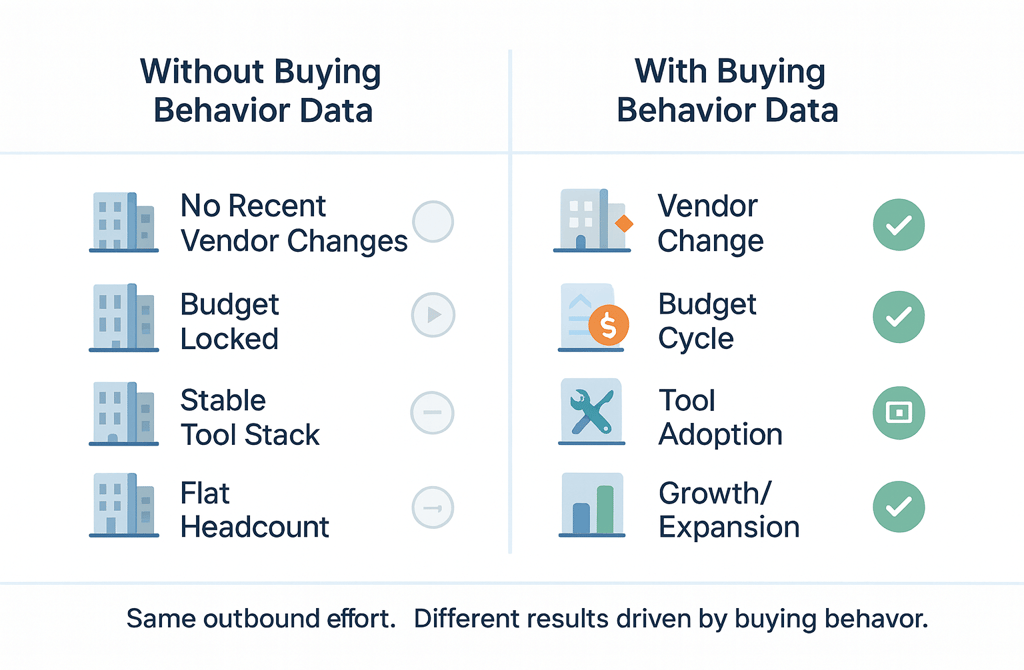
Two outbound campaigns can look identical on paper.
Same ICP.
Same roles.
Same messaging.
Same volume.
Yet one campaign produces replies, meetings, and deals — while the other stalls completely.
The difference usually isn’t copy or cadence. It’s buying behavior data.
Outbound results are heavily influenced by whether the companies you contact are already showing signs of change, movement, or readiness to buy.
1. Buying Behavior Explains Why Similar Leads Perform Differently
Firmographics tell you who a company is.
Buying behavior tells you what they’re doing.
Two companies can share the same size, industry, and titles — but behave very differently when contacted. One may be actively evaluating vendors. The other may be maintaining the status quo.
Outbound doesn’t create buying intent. It collides with it.
When buying behavior data is absent, outreach relies on guesswork. When it’s present, results become easier to predict.
2. Vendor Movement Signals Openness to Change
Companies that recently changed vendors behave differently in outbound.
Vendor movement indicates:
Willingness to evaluate alternatives
Familiarity with sales conversations
Lower friction around switching tools or partners
Outbound messages land differently when a company has already demonstrated change behavior. Without this signal, even relevant offers can feel mistimed.
3. Budget Cycles Shape Engagement Outcomes
Budget timing influences outbound far more than most teams realize.
Companies with:
Locked budgets
Long approval cycles
Fixed annual planning
Are structurally less likely to respond, even if interest exists.
Buying behavior data that reflects budget cycles helps explain why some leads reply positively while others run silent. The message may be fine — the timing isn’t.
4. Tool Adoption Reveals Buying Readiness
Organizations that regularly adopt new tools are easier to engage.
Frequent tool adoption suggests:
Internal comfort with onboarding
Faster evaluation processes
Fewer blockers to change
Outbound performs better when it aligns with this behavior. Stable, unchanged tool stacks often signal resistance to new vendors, regardless of message quality.
5. Growth Signals Increase Outbound Efficiency
Hiring, expansion, and internal growth create natural buying pressure.
Growing companies:
Encounter new problems
Re-evaluate existing systems
Allocate budget to support scale
Outbound results improve when messages reach companies already navigating change. Buying behavior data helps surface these moments instead of relying on static lists.
6. Same Effort, Different Results
Outbound teams often increase volume when results drop.
But volume doesn’t fix misalignment.
Buying behavior data explains why:
Some leads convert with minimal effort
Others never move despite repeated follow-ups
The outbound effort stays the same.
The results change because the underlying behavior is different.
Final Thought
Outbound works best when it intersects with movement, not when it tries to create it.
Clean data makes outbound predictable by revealing who is actually in a buying mindset.
Outdated or behavior-blind data makes outbound feel random, no matter how good the copy looks.
When buying behavior data is part of your targeting, outbound stops being a numbers game and starts behaving like a system.
Related Pos
Why Email Volume Doesn't Fix Data Problems
How Data Scoring Boosts Deliverability
Why Domain Reputation Depends on Your Lead Data Quality
The Data-Driven Way to Increase Cold Email ROI
Why Your Inbox Placement Is Linked to Lead Validation
How Data Recency Improves Reply Intent
Why Clean Lists Outperform Personalization Tricks
Why Lead Segmentation Matters More Than List Size
The Real Science Behind Targeting the Right Decision-Maker
Why Role-Based Targeting Beats Mass Prospecting
How Company Health Signals Predict Your Cold Email Success
The Data Behind High-Intent Prospects Most People Miss
Why Industry Fit Decides Whether Your Cold Email Works
What Pipeline-Ready Lead Data Actually Looks Like
The Silent Impact of Company Size Accuracy in Outreach
Why Titles & Departments Matter More Than Personalization
The Hidden Patterns in Leads That Always Reply
Why Some Industries Email Back Faster Than Others
Connect
Get verified leads that drive real results for your business today.
www.capleads.org
© 2025. All rights reserved.
Serving clients worldwide.
CapLeads provides verified B2B datasets with accurate contacts and direct phone numbers. Our data helps startups and sales teams reach C-level executives in FinTech, SaaS, Consulting, and other industries.