
The Real Meaning of Verified in B2B Lead Data
“Verified” is often misunderstood in B2B lead data. This post explains what verification actually means, what it doesn’t, and why it impacts outbound results.
INDUSTRY INSIGHTSLEAD QUALITY & DATA ACCURACYOUTBOUND STRATEGYB2B DATA STRATEGY
CapLeads Team
12/13/20253 min read
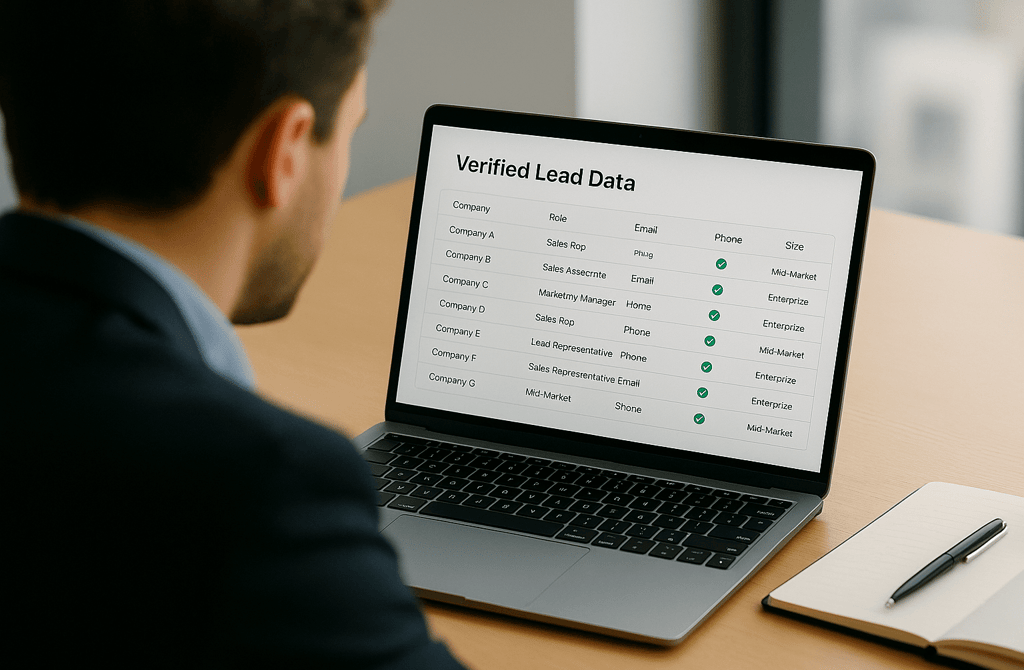
“Verified” is one of the most overused — and misunderstood — words in B2B lead data.
Many providers use it as a blanket label, implying that a lead is accurate, usable, and ready for outbound. In reality, verification is not a single event. It’s a set of checks across multiple data points, and misunderstanding that difference is why so many outbound campaigns fail quietly.
To use verified data properly, you need to understand what verification actually covers — and what it doesn’t.
1. Verified Does Not Mean One Thing
The biggest misconception is treating verification as a binary state.
A lead isn’t simply “verified” or “not verified.” Each component of a lead can be verified independently, and each one affects outbound performance differently.
This includes:
Email validity
Phone reachability
Job title accuracy
Company status
Company size and industry alignment
When providers collapse all of this into a single “verified” badge, buyers lose visibility into what was actually checked.
2. Email Verification Is Only the Starting Point
Most providers verify email addresses. That’s necessary — but it’s not sufficient.
Email verification usually confirms:
Correct format
Active domain
Mailbox existence at the time of checking
It does not guarantee:
That the person still holds the role
That the inbox is actively monitored
That the contact is relevant to your offer
Outbound success drops when email verification is mistaken for lead accuracy as a whole.
3. Role and Company Accuracy Matter Just as Much
A verified email attached to the wrong role is still a bad lead.
Role verification ensures:
The title is current
The department matches the message
The contact has decision relevance
Company verification confirms:
The business is active
The size is accurate
The industry classification hasn’t drifted
These checks determine whether a message feels relevant when it lands — not just whether it lands at all.
4. Verification Is Time-Sensitive
Verification decays.
A lead verified months ago may no longer be accurate today due to:
Role changes
Company restructuring
Layoffs or hiring surges
Tool or vendor changes
This is why “verified” without a timestamp or refresh logic is incomplete information. Verification is a snapshot, not a permanent state.
5. Verified Data Still Needs Context
Even perfectly verified data won’t perform well if it’s used without context.
Verification confirms correctness.
It does not confirm intent, readiness, or timing.
Outbound works best when verified data is combined with:
Buying behavior signals
Company movement
Growth or budget changes
Without context, verified leads can still underperform — not because they’re wrong, but because they’re mistimed.
6. Why Misunderstanding Verification Hurts Outbound
When teams assume “verified” means “ready,” they:
Overestimate list quality
Blame copy instead of data gaps
Increase volume instead of fixing targeting
Miss why some campaigns quietly stall
Understanding what was actually verified allows teams to set realistic expectations and design better outbound systems.
Final Thought
“Verified” is not a badge — it’s a process.
Clean data makes outbound predictable when verification is applied across email, role, and company accuracy with proper timing.
Outdated or shallow verification turns “verified” into a misleading label that masks deeper data issues.
When you know what verification really means, outbound stops feeling inconsistent — and starts behaving like a system you can trust.
Related Pos
Why Email Volume Doesn't Fix Data Problems
How Data Scoring Boosts Deliverability
Why Domain Reputation Depends on Your Lead Data Quality
The Data-Driven Way to Increase Cold Email ROI
Why Your Inbox Placement Is Linked to Lead Validation
How Data Recency Improves Reply Intent
Why Clean Lists Outperform Personalization Tricks
Why Lead Segmentation Matters More Than List Size
The Real Science Behind Targeting the Right Decision-Maker
Why Role-Based Targeting Beats Mass Prospecting
How Company Health Signals Predict Your Cold Email Success
The Data Behind High-Intent Prospects Most People Miss
Why Industry Fit Decides Whether Your Cold Email Works
What Pipeline-Ready Lead Data Actually Looks Like
The Silent Impact of Company Size Accuracy in Outreach
Why Titles & Departments Matter More Than Personalization
The Hidden Patterns in Leads That Always Reply
Why Some Industries Email Back Faster Than Others
How Buying Behavior Data Influences Outbound Results
Connect
Get verified leads that drive real results for your business today.
www.capleads.org
© 2025. All rights reserved.
Serving clients worldwide.
CapLeads provides verified B2B datasets with accurate contacts and direct phone numbers. Our data helps startups and sales teams reach C-level executives in FinTech, SaaS, Consulting, and other industries.