
Why Data Completeness Makes Outbound Easier to Scale
Outbound breaks when data is incomplete. Learn why full contact records make outbound easier to scale without increasing effort or risk.
INDUSTRY INSIGHTSLEAD QUALITY & DATA ACCURACYOUTBOUND STRATEGYB2B DATA STRATEGY
CapLeads Team
12/14/20252 min read

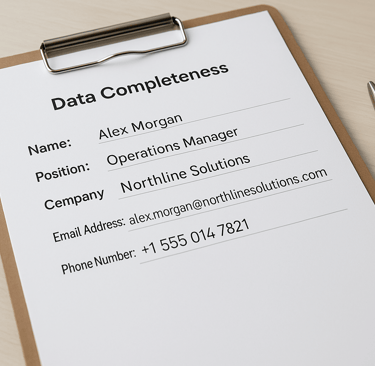
Scaling outbound isn’t about sending more emails.
It’s about reducing friction as volume increases. Most outbound systems don’t break because of copy or tooling—they break because incomplete data creates operational drag that compounds with scale.
Data completeness is what allows outbound to grow without becoming fragile.
1. What Data Completeness Really Means
Data completeness isn’t just having an email address.
It means every record includes the core fields required to execute, route, personalize, and measure outreach without manual intervention. When fields are missing, teams slow down, work around gaps, or make assumptions that reduce performance.
At small volumes, this is manageable.
At scale, it’s where outbound starts leaking efficiency.
2. Incomplete Data Forces Manual Decisions
Every missing field creates a question.
Who is this person?
Are they the right role?
Does this company fit our target?
When teams have to answer these questions manually, outbound stops being a system and becomes a series of one-off decisions. That doesn’t scale.
Complete data allows outreach to move forward without hesitation or rework.
3. Routing and Segmentation Depend on Completeness
Automation only works when inputs are consistent.
If job titles, departments, or company details are missing, segmentation rules fail. Leads fall into catch-all buckets, and messaging becomes generic to compensate.
With complete data:
Leads route correctly
Segments stay clean
Messaging stays relevant at higher volumes
This is what makes scale possible without sacrificing relevance.
4. Personalization Breaks Without Full Records
Personalization isn’t just name insertion.
It depends on having enough context to shape the message correctly. Missing fields force teams to either skip personalization or guess, both of which reduce trust.
Complete records ensure:
Openers make sense
Value props align
Calls to action feel appropriate
As volume increases, this consistency matters more than clever copy.
5. Measurement Requires Complete Inputs
You can’t optimize what you can’t measure.
Missing fields make it difficult to understand what’s actually working. Reply rates blur together across mismatched segments, and insights become unreliable.
Complete data allows teams to:
Compare like-for-like segments
Identify real performance drivers
Scale what works with confidence
This is how outbound becomes predictable instead of reactive.
6. Why Completeness Reduces Risk at Scale
More volume means more exposure.
Incomplete data increases the chance of:
Spam complaints
Deliverability issues
Damaged sender reputation
Completeness acts as a stabilizer. It reduces the number of edge cases that appear as outbound grows.
Final Thought
Scaling outbound isn’t about working harder or sending faster.
It’s about removing the small inefficiencies that multiply with volume.
Clean data makes outbound predictable.
Incomplete records turn scale into chaos long before volume becomes a strength.
Related Pos
How Data Recency Improves Reply Intent
Why Clean Lists Outperform Personalization Tricks
Why Lead Segmentation Matters More Than List Size
The Real Science Behind Targeting the Right Decision-Maker
Why Role-Based Targeting Beats Mass Prospecting
How Company Health Signals Predict Your Cold Email Success
The Data Behind High-Intent Prospects Most People Miss
Why Industry Fit Decides Whether Your Cold Email Works
What Pipeline-Ready Lead Data Actually Looks Like
The Silent Impact of Company Size Accuracy in Outreach
Why Titles & Departments Matter More Than Personalization
The Hidden Patterns in Leads That Always Reply
Why Some Industries Email Back Faster Than Others
How Buying Behavior Data Influences Outbound Results
The Real Meaning of Verified in B2B Lead Data
Why Multi-Signal Data Outperforms Basic Email Lists
The Micro-Data Points That Predict Reply Probability
Connect
Get verified leads that drive real results for your business today.
www.capleads.org
© 2025. All rights reserved.
Serving clients worldwide.
CapLeads provides verified B2B datasets with accurate contacts and direct phone numbers. Our data helps startups and sales teams reach C-level executives in FinTech, SaaS, Consulting, and other industries.