
Why Each Industry Produces Completely Different Lead Data
Different industries produce very different lead data. Learn how vertical structure, hiring patterns, and role stability impact data accuracy, freshness, and outbound performance.
INDUSTRY INSIGHTSLEAD QUALITY & DATA ACCURACYOUTBOUND STRATEGYB2B DATA STRATEGY
CapLeads Team
12/16/20252 min read
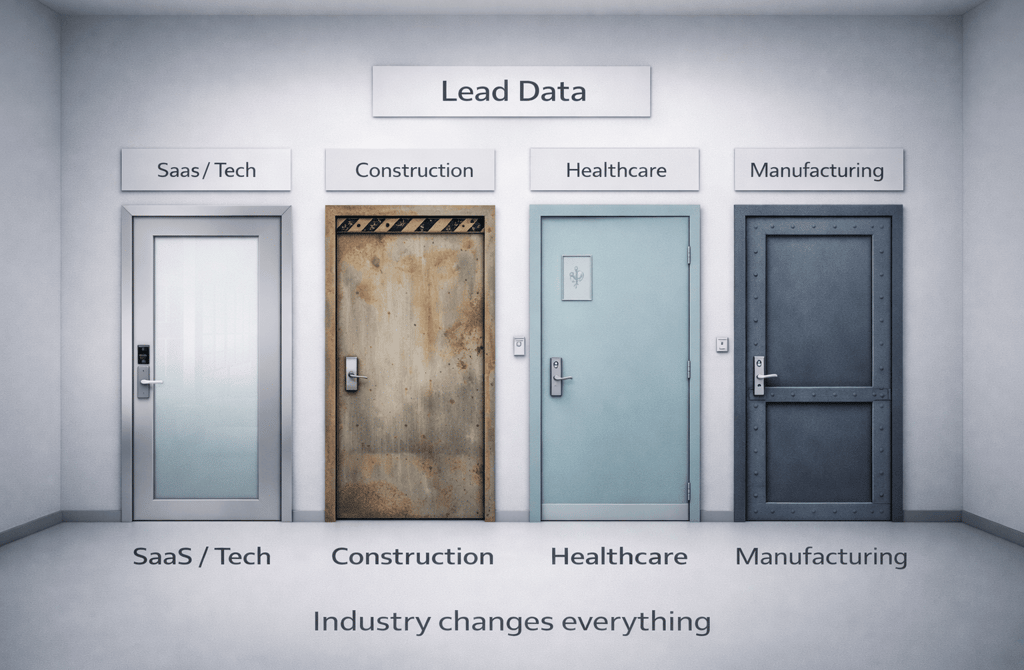
Many founders assume lead data is neutral — that a contact is a contact, regardless of industry. In reality, industry structure fundamentally shapes how accurate, fresh, and usable lead data actually is.
This is why the same outreach strategy can work in one vertical and completely fail in another. The problem isn’t your copy. It’s how the data behaves underneath.
1. Industry Shapes How Fast Data Decays
Some industries experience constant role movement. Others barely change at all.
SaaS and tech roles churn quickly. Titles evolve, teams restructure, and contacts go stale fast. Healthcare and regulated industries tend to have slower movement and clearer role definitions. Construction and field-based sectors often have fragmented org charts and inconsistent digital footprints.
The result is that the same lead source produces very different outcomes depending on where it’s applied.
2. Job Stability Determines Contact Accuracy
When job stability is low, email validity and title accuracy suffer.
Industries with high hiring velocity, frequent restructuring, and short tenure cycles produce lead lists that degrade rapidly — sometimes in weeks. Industries with longer employee tenure, regulated role requirements, and slower organizational change maintain usable data for much longer.
This isn’t about data quality at the source. It’s about how long that quality survives once collected.
3. Buying Committees Aren’t Equal Across Verticals
Some industries buy as individuals. Others buy as groups.
Professional services and SaaS may allow single-decision-maker outreach. Manufacturing, healthcare, and enterprise sectors often involve layered buying committees.
If your data doesn’t reflect this reality — missing roles, departments, or seniority context — outreach breaks even if the emails are technically valid.
4. Why One-Size-Fits-All Lead Data Fails
Generic lead lists ignore role volatility, industry-specific decay speed, and buying committee complexity.
That’s why outbound feels unpredictable for many founders. The system isn’t broken — the data assumptions are wrong.
Effective outbound starts by recognizing that industry context is not optional metadata. It’s the foundation.
Final Thought
Industries don’t just respond differently to outbound — they produce fundamentally different data behaviors. Treating all lead data the same guarantees wasted volume and misleading results.
Industry-aware data creates consistency because it reflects how companies actually operate.
Ignoring how each vertical behaves guarantees wasted sends and distorted outbound results.
Related Posts
Why Titles & Departments Matter More Than Personalization
The Hidden Patterns in Leads That Always Reply
Why Some Industries Email Back Faster Than Others
How Buying Behavior Data Influences Outbound Results
The Real Meaning of Verified in B2B Lead Data
Why Multi-Signal Data Outperforms Basic Email Lists
The Micro-Data Points That Predict Reply Probability
Why Data Completeness Makes Outbound Easier to Scale
How Company Lifecycle Stage Impacts Deliverability
The Common Data Gaps That Break Founder-Led Outreach
The Hidden Indicators That Tell You a Lead Is Worth Emailing
Why Mapping the Buying Committee Boosts Reply Rates
Why AI Needs Clean Inputs to Improve Lead Accuracy
The Hidden AI Errors Caused by Dirty Data
How AI Enhances Lead Processing Without Replacing Humans
Why AI Models Break When Metadata Is Incomplete
Connect
Get verified leads that drive real results for your business today.
www.capleads.org
© 2025. All rights reserved.
Serving clients worldwide.
CapLeads provides verified B2B datasets with accurate contacts and direct phone numbers. Our data helps startups and sales teams reach C-level executives in FinTech, SaaS, Consulting, and other industries.