
The Micro-Data Points That Predict Reply Probability
Small data details drive big reply differences. Learn which micro-data points actually influence reply probability and how ignoring them quietly kills outbound performance.
INDUSTRY INSIGHTSLEAD QUALITY & DATA ACCURACYOUTBOUND STRATEGYB2B DATA STRATEGY
CapLeads Team
12/14/20252 min read
Most outbound campaigns fail quietly.
Not because the offer is bad.
Not because the copy is terrible.
They fail because tiny data mismatches stack up until the message becomes irrelevant.
Reply probability isn’t driven by big, obvious data fields. It’s shaped by micro-data points that determine whether your message feels meant for the person reading it.
Here’s what actually moves reply rates.
Why Micro-Data Matters More Than Personalization
Personalization is visible.
Data accuracy is invisible.
You can write a perfect opening line, but if the underlying data is slightly off, the prospect feels the mismatch instantly. Humans are good at detecting relevance—and even better at ignoring messages that feel generic or misaligned.
Micro-data points decide whether your message lands in the “worth replying to” bucket or gets mentally filtered out.
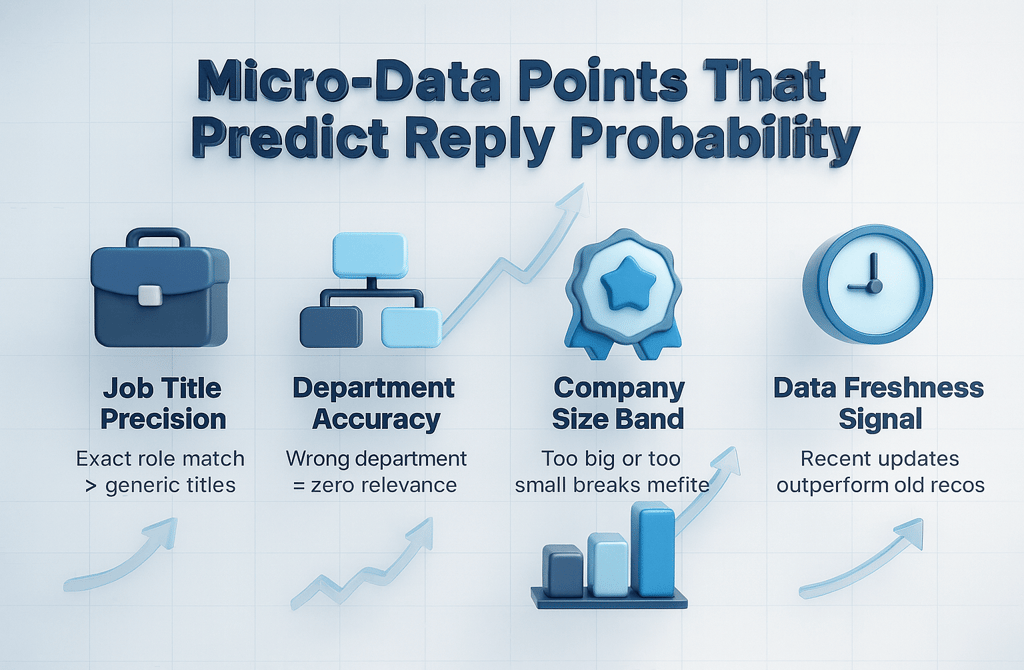
1. Job Title Precision
Job titles aren’t interchangeable.
“Head of Marketing” and “Marketing Manager” may sound similar, but they often signal very different authority levels, responsibilities, and priorities.
When the title is too generic:
The message feels templated
The value proposition misses the mark
The prospect assumes mass outreach
Exact title alignment increases reply probability because the reader immediately recognizes themselves in the message.
2. Department Accuracy
Wrong department equals zero relevance.
Even a perfect message sent to the wrong function fails. A finance-focused message sent to operations won’t convert, no matter how well written it is.
Department accuracy ensures:
The pain point actually exists
The language resonates
The call to action makes sense
This is one of the fastest ways micro-data errors kill replies.
3. Company Size Band
Company size shapes context.
Processes, budgets, decision speed, and priorities change dramatically as companies grow. Messaging that works for a 20-person startup often fails at a 500-person organization.
If your data pushes a company into the wrong size band:
Your assumptions feel off
Your solution sounds irrelevant
Your outreach feels disconnected
Reply probability increases when size-based context matches the message.
4. Seniority Level
Authority mismatch creates friction.
Messaging meant for decision-makers sent to individual contributors feels awkward. Messaging designed for operators sent to executives feels shallow.
When seniority is accurate:
The tone feels natural
The ask feels appropriate
The reader doesn’t need to forward or ignore
This alignment quietly increases response rates without changing a single word of copy.
5. Data Freshness Signal
Old data erodes trust.
Outdated titles, role changes, or company shifts signal that the sender hasn’t done their homework—even if the message itself looks polished.
Fresh data:
Reduces skepticism
Increases perceived intent
Signals relevance and effort
Reply probability drops sharply when the data feels stale, even if everything else is correct.
Why These Details Compound
Each micro-data point on its own feels small.
But together, they determine whether your outreach feels intentional or automated. Reply probability isn’t a single lever—it’s the result of multiple small accuracy signals stacking in your favor.
This is why high-volume outbound fails without clean, precise data underneath it.
Final Thought
Outbound doesn’t fail because people hate email.
It fails because data mismatches break relevance before the message is even read.
Clean data makes outbound predictable.
Outdated micro-data points quietly collapse reply probability before conversations ever start.
Related Pos
How Data Recency Improves Reply Intent
Why Clean Lists Outperform Personalization Tricks
Why Lead Segmentation Matters More Than List Size
The Real Science Behind Targeting the Right Decision-Maker
Why Role-Based Targeting Beats Mass Prospecting
How Company Health Signals Predict Your Cold Email Success
The Data Behind High-Intent Prospects Most People Miss
Why Industry Fit Decides Whether Your Cold Email Works
What Pipeline-Ready Lead Data Actually Looks Like
The Silent Impact of Company Size Accuracy in Outreach
Why Titles & Departments Matter More Than Personalization
The Hidden Patterns in Leads That Always Reply
Why Some Industries Email Back Faster Than Others
How Buying Behavior Data Influences Outbound Results
The Real Meaning of Verified in B2B Lead Data
Why Multi-Signal Data Outperforms Basic Email Lists
Connect
Get verified leads that drive real results for your business today.
www.capleads.org
© 2025. All rights reserved.
Serving clients worldwide.
CapLeads provides verified B2B datasets with accurate contacts and direct phone numbers. Our data helps startups and sales teams reach C-level executives in FinTech, SaaS, Consulting, and other industries.