
Why Inconsistent Targeting Raises Spam Filter Suspicion
Spam filters track audience consistency, not just volume. Learn how inconsistent targeting patterns trigger risk signals and reduce inbox trust.
INDUSTRY INSIGHTSLEAD QUALITY & DATA ACCURACYOUTBOUND STRATEGYB2B DATA STRATEGY
CapLeads Team
2/11/20263 min read
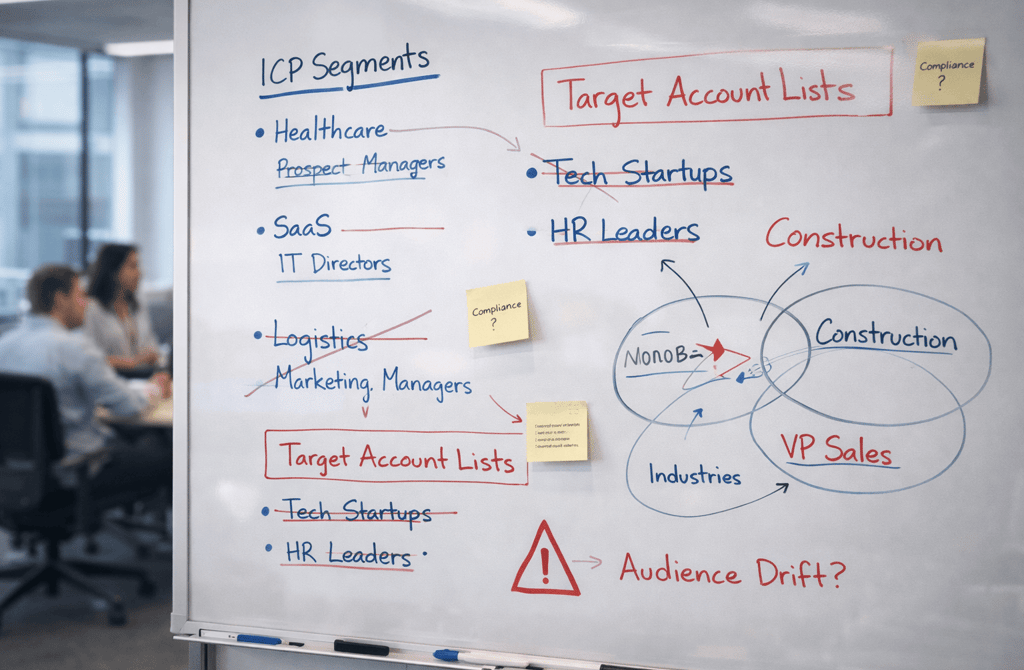

Spam filters don’t think in personas.
They think in patterns.
When targeting shifts too often, too loosely, or without a visible logic trail, inbox systems don’t interpret it as experimentation. They interpret it as loss of control.
And loss of control is one of the fastest ways to raise suspicion—long before bounce rates spike or complaints appear.
Spam filters model “who you talk to,” not just “how you send”
Every sender develops a behavioral fingerprint over time. That fingerprint includes volume, cadence, engagement—but it also includes audience shape.
Inbox providers learn:
Which roles consistently engage or ignore
How narrow or broad your targeting tends to be
This isn’t stored as a clean rule. It’s learned probabilistically. The system builds expectations around who your emails are meant for.
When targeting stays consistent, those expectations stabilize.
When targeting shifts erratically, the model starts to degrade.
Inconsistent targeting looks like identity drift
From the outside, inconsistent targeting doesn’t look strategic. It looks like a sender that doesn’t know who it’s supposed to be emailing.
One week you’re emailing:
SaaS IT directors
The next week:
Healthcare operations
Then construction HR
Then agencies
Then founders
Even if each segment is valid on its own, the combined pattern creates confusion.
Spam systems don’t evaluate intent. They evaluate coherence.
And incoherent audience behavior resembles scraped lists, recycled data, or compromised sending practices—even when that isn’t true.
Filters penalize ambiguity more than mistakes
A focused sender that occasionally misses the mark is still predictable.
An unfocused sender—even with clean data—creates ambiguity.
Ambiguity forces spam filters into defensive mode because:
Negative feedback spreads across unrelated recipient groups
Role-level relevance weakens at scale
The system can’t tell why performance varies. So it assumes risk.
This is why some campaigns underperform even when bounce rates stay low and copy remains solid. The sender’s audience logic stopped making sense to the algorithm.
Audience inconsistency fragments engagement signals
Spam filters don’t look at opens or replies in isolation. They look at patterns within similar recipients.
When targeting is consistent, engagement signals reinforce each other.
When targeting jumps, signals fragment.
A reply from a VP in construction doesn’t strengthen trust with a SaaS CTO audience.
An ignore from HR doesn’t explain performance with finance leaders.
Instead of clarity, the algorithm sees noise.
Noise doesn’t always cause spam placement—but it does reduce confidence. And reduced confidence leads to throttling, delayed delivery, or quiet inbox suppression.
The risk compounds silently over time
Targeting inconsistency rarely causes immediate failure. It causes model erosion.
Over weeks:
Engagement becomes less predictive
Deliverability becomes less stable
Performance starts fluctuating without obvious cause
Teams respond by changing copy, adjusting cadence, or testing new sequences—adding even more variability.
From the filter’s perspective, the sender looks increasingly erratic.
By the time performance clearly drops, the root cause is no longer obvious. The damage happened earlier, when audience logic stopped being legible.
Consistency doesn’t mean narrow—it means explainable
This is the part many teams miss.
You don’t need tiny lists.
You don’t need single-industry focus forever.
What you need is explainable expansion.
Spam filters tolerate growth when:
New segments resemble old ones
Role logic stays consistent
They punish expansion when it feels random.
The system doesn’t need perfection. It needs to understand why today’s audience still makes sense compared to yesterday’s.
Bottom Line
Spam filters don’t flag inconsistent targeting because it’s aggressive—they flag it because it breaks their ability to model trust. When audience logic becomes fragmented, engagement signals lose meaning and risk assumptions take over.
When lead data is accurate and audience logic stays stable, inbox systems learn how to trust your sending behavior. That trust compounds quietly in the background.
When targeting jumps ahead of that trust—changing roles, industries, or intent too fast—filters stop giving your data the benefit of the doubt, even if the contacts themselves are valid.
Related Post:
Why Human Validators Still Outperform AI for Lead Safety
The Duplicate Detection Rules Every Founder Should Use
How Spam-Trap Hits Destroy Domain Reputation Instantly
Why High-Risk Emails Slip Through Cheap Validation Tools
The Real Reason Duplicate Leads Hurt Personalization Accuracy
How Risky Email Patterns Reveal Broken Data Providers
How Industry Structure Influences Email Risk Levels
Why Certain Sectors Experience Faster Data Decay Cycles
The Hidden Validation Gaps Inside Niche Industry Lists
How Industry Turnover Impacts Lead Freshness
Why Validation Complexity Increases in Specialized Markets
How Revenue Misclassification Creates Fake ICP Matches
Why Geo Inaccuracies Lower Your Reply Rate
The Size Signals That Predict Whether an Account Is Worth Targeting
How Bad Location Data Breaks Personalization Attempts
Why Company Growth Rates Matter for Accurate Targeting
Why Testing B2B Lead Data Matters Before You Buy
How Department Shifts Impact Your Cold Email Results
Why Title Ambiguity Creates Hidden Pipeline Waste
The Hidden Problems Caused by Outdated Job Roles
How Poor Infrastructure Amplifies Minor Data Issues
Why Weak Architecture Triggers Spam Filters Faster
The Domain Reputation Mechanics Founders Should Understand
How Spam Algorithms Interpret Sudden Send Volume Changes
Connect
Get verified leads that drive real results for your business today.
www.capleads.org
© 2025. All rights reserved.
Serving clients worldwide.
CapLeads provides verified B2B datasets with accurate contacts and direct phone numbers. Our data helps startups and sales teams reach C-level executives in FinTech, SaaS, Consulting, and other industries.