
Why Automated Systems Misjudge Role-Based Emails
Role-based email addresses often pass automated validation but still harm outreach campaigns. Learn why automated systems misjudge these contacts and how they affect deliverability.
INDUSTRY INSIGHTSLEAD QUALITY & DATA ACCURACYOUTBOUND STRATEGYB2B DATA STRATEGY
CapLeads Team
3/16/20264 min read
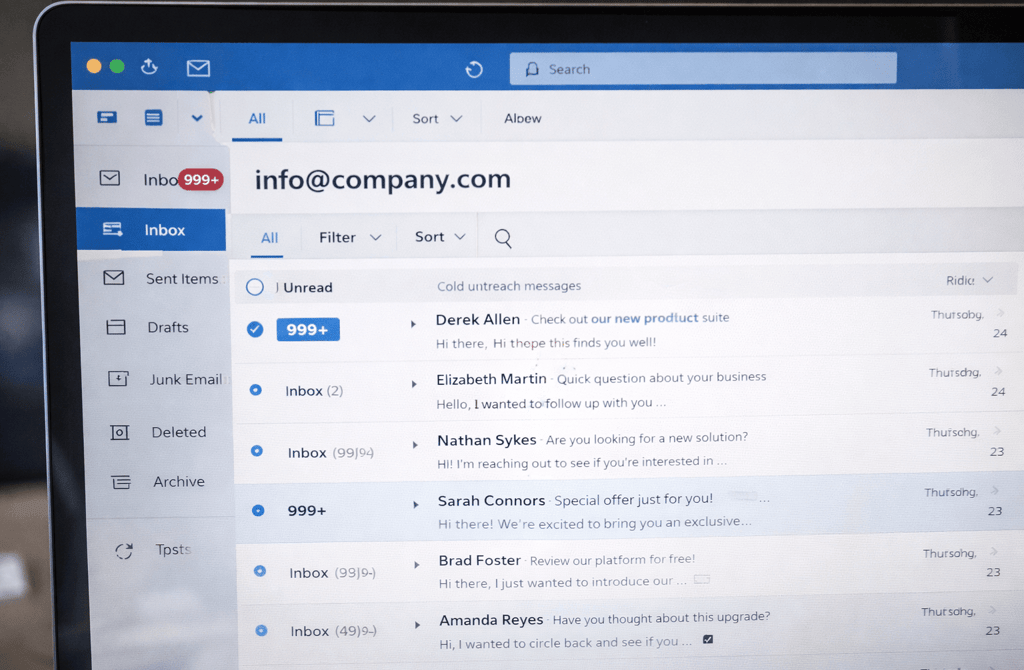
In many outbound workflows, email validation is treated as the final checkpoint before a contact enters a campaign. If a validation tool labels an address as deliverable, teams usually assume the contact is safe to include. This process works well for many individual inboxes, but it often breaks down when role-based emails enter the dataset.
Addresses like info@, admin@, support@, or sales@ exist across nearly every company domain. Automated validation tools frequently classify them as valid because the mailbox technically accepts messages. The problem is that technical deliverability does not guarantee that the inbox behaves like a normal contact.
Role-based addresses follow completely different usage patterns.
Why These Addresses Pass Automated Validation
From a system perspective, role-based emails appear perfectly legitimate. The domain exists, the mail server responds, and the inbox accepts incoming messages. Most validation tools rely on these technical checks to determine deliverability.
Because of this, addresses like info@company.com almost always pass automated verification.
However, the validation process rarely evaluates how the inbox is actually used. Many role-based accounts are shared between multiple employees, automatically filtered into internal ticket systems, or monitored only occasionally. Some are configured primarily for customer inquiries rather than external outreach.
Automation confirms that the mailbox exists, but it cannot determine whether the contact behaves like a real decision-maker inbox.
The Engagement Gap Automation Cannot Detect
The biggest issue with role-based addresses is not deliverability. It is engagement.
Shared inboxes often accumulate large volumes of messages from vendors, newsletters, system alerts, and customer requests. Outreach emails sent to these addresses rarely receive attention because they compete with dozens or hundreds of other incoming messages.
Even when a role-based inbox is actively monitored, the person reviewing it may not be responsible for evaluating vendors or responding to outbound proposals. As a result, these emails often receive no reply, no click, and no meaningful engagement signal.
Mailbox providers observe these patterns.
When campaigns consistently send to addresses that never engage, the sending domain gradually begins to look less trustworthy. Over time, this weak engagement profile can influence how mailbox providers treat future campaigns.
Why Human Review Spots the Problem Faster
Unlike automated systems, human reviewers immediately recognize the behavioral differences between personal and role-based inboxes.
When scanning a lead list, addresses such as info@ or admin@ stand out as generic entry points rather than individual contacts. These inboxes typically represent company gateways rather than specific people within the organization.
A reviewer can also evaluate whether the role-based address is likely to reach the correct department. In many cases, it becomes clear that the inbox functions primarily as a customer support channel rather than a business development contact.
This judgment call helps teams avoid adding contacts that technically validate but rarely contribute to campaign outcomes.
The Hidden Deliverability Risk
Role-based emails can quietly distort outbound performance metrics.
Because these addresses often remain technically deliverable, they do not necessarily trigger bounce warnings that would alert teams to a problem. Instead, they accumulate silently within campaigns, producing low reply rates and minimal engagement.
When this pattern repeats across multiple campaigns, mailbox providers begin adjusting reputation scores accordingly.
The result is a slow erosion of domain trust rather than an immediate technical failure.
For teams targeting industries with large operational inboxes, such as logistics or infrastructure companies, reviewing these records carefully becomes especially important. Lists built from logistics B2B lead data often contain numerous role-based contacts tied to dispatch or operations addresses, which can behave very differently from executive inboxes.
Removing or reviewing these entries before sending campaigns helps maintain healthier engagement signals.
What This Means
Email validation tools confirm whether a mailbox can technically receive messages. They do not determine whether that mailbox represents a meaningful contact.
Role-based inboxes highlight this gap clearly. They pass automated checks but frequently behave like communication gateways rather than decision-maker contacts.
Outbound systems perform best when the data feeding them reflects how companies actually communicate. When shared inboxes dominate a contact list, engagement signals weaken and reputation slowly declines.
Reliable outreach depends not just on whether an address exists, but on whether the inbox represents a real person who can respond.
Related Post:
The Outbound Timing Patterns Hidden Inside Each Industry
How Sector Stability Predicts Long-Term Data Freshness
Why Fast-Decay Verticals Require More Frequent Validation
The Industry-Level Signals That Reveal Accelerated Data Aging
Why AI Becomes Unreliable With Aged Lead Lists
The AI Pipeline Behind Modern B2B Data Processing
Why LLM-Assisted Validation Requires Clean Metadata
The Vertical Variances That Predict ICP Fit Accuracy
How Industry Complexity Impacts Lead Quality Signals
Why Some Verticals Have Stronger Multi-Contact Data
The Channel-Specific Validation Gaps Most Teams Never Notice
How Contact Recency Impacts Phone Outreach More Than Email
Why LinkedIn Signals Reveal Intent Email Can’t Detect
The Geographic Accuracy Patterns Hidden in Lead Lists
How Cultural Factors Influence B2B Data Consistency
Why Contact Fields Behave Differently Across Regions
The Pricing Logic Behind High-Demand Industries
How Industry Growth Trends Impact Lead Cost
Why Validation Depth Changes Lead Prices by Industry
How Lead Recency Influences Inbox Placement More Than Subject Lines
The Recency-Driven Framework High-Performing Outbound Teams Use
Why Lead Lists Decay Faster in Certain Industries
Why Providers Overclaim Their Validation Accuracy
How Verification Depth Determines Your Cold Email Success
The Deliverability Risks Hidden in “Instant Validation” Tools
The Infrastructure Fragility Hidden in Cheap Lead Lists
How Data Drift Creates Bounce Surges Over Time
Why Even “Valid” Emails Can Bounce If Recency Is Off
Why Most Companies Discover Data Drift Only After It Hurts Revenue
The Structural Problems That Arise When Data Is Left Unmaintained
How Contact Aging Creates Metadata Conflicts in Your CRM
Why Missing Metadata Lowers the Accuracy of Your Filters
The Enrichment Framework Behind High-Performing Outbound
How Company Size Errors Create Misleading Pipelines
How Manual Review Prevents Domain Reputation Damage
The Validation Conflicts You Only Notice With Human Eyes
Connect
Get verified leads that drive real results for your business today.
www.capleads.org
© 2025. All rights reserved.
Serving clients worldwide.
CapLeads provides verified B2B datasets with accurate contacts and direct phone numbers. Our data helps startups and sales teams reach C-level executives in FinTech, SaaS, Consulting, and other industries.