
The ICP Errors Caused by Data That Aged in the Background
Outdated background data quietly distorts your ICP. Here’s how aged records create targeting errors before teams realize anything is wrong.
INDUSTRY INSIGHTSLEAD QUALITY & DATA ACCURACYOUTBOUND STRATEGYB2B DATA STRATEGY
CapLeads Team
2/1/20263 min read

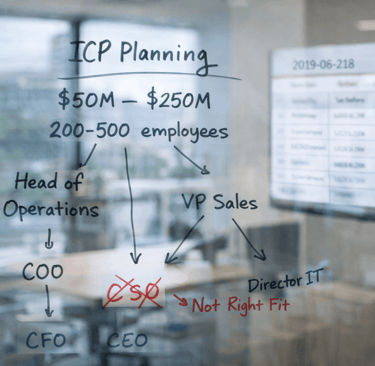
Most ICP mistakes aren’t the result of bad strategy.
They come from decisions made on information that used to be true and was never challenged again.
Teams revise positioning, adjust messaging, and refine segments—while the data supporting those decisions quietly ages behind the scenes. The ICP looks intentional. The logic feels sound. But the foundation has already shifted.
That’s how background decay creates front-stage errors.
Why ICP Drift Rarely Feels Like a Data Problem
When ICPs break, teams usually blame judgment.
They assume the market changed. Or buyers became harder to reach. Or messaging lost resonance. What they don’t suspect is the data they relied on when defining the ICP months ago.
Aged firmographics, stale role distributions, and outdated company states don’t scream “wrong.” They whisper just enough to pass unnoticed.
How Background Data Quietly Warps Targeting Logic
ICP work is layered.
It combines:
Company size assumptions
Role expectations
Industry behavior patterns
When background data ages, each of these layers drifts slightly. No single field breaks outright. But together, they reshape the ICP in subtle ways—tilting targeting toward accounts that look right but behave incorrectly.
The result is alignment on paper, friction in execution.
Why These Errors Surface Late
Background decay doesn’t immediately affect metrics.
Open rates may hold. Deliverability stays clean. Even replies can trickle in. This delays detection and reinforces confidence in the ICP.
By the time teams realize something is off, they’ve already:
Allocated volume to misaligned segments
Tuned messaging to compensate for weak responses
The ICP wasn’t challenged because nothing failed loudly enough.
The Difference Between ICP Refinement and ICP Corruption
Refinement is intentional.
Corruption is accidental.
Refinement adjusts inputs based on new insight.
Corruption happens when old inputs quietly continue influencing decisions they no longer deserve to shape.
Most ICP errors fall into the second category. They aren’t strategic misreads—they’re inherited inaccuracies.
Where Aged Data Does the Most Damage
Background data decay is especially dangerous in:
Role distribution assumptions (who actually owns decisions now)
Company lifecycle signals (growth vs contraction vs stagnation)
Industry behavior expectations that no longer hold
These don’t break targeting outright. They misdirect it—just enough to drain efficiency without triggering alarms.
Why Teams Overcorrect the Wrong Way
When ICPs underperform, teams rarely revisit the data beneath them.
Instead, they:
Widen segments
Loosen qualification rules
Increase outbound volume
This spreads effort thinner instead of fixing the source of distortion. The ICP becomes broader, not better.
That’s how background decay leads to visible waste.
How High-Discipline Teams Prevent ICP Drift
Teams that protect ICP accuracy don’t treat it as a static definition.
They:
Revalidate background fields before reworking messaging
Question assumptions that haven’t been touched in months
Treat data age as a risk factor, not an afterthought
They fix the inputs before revising the model.
What This Means
An ICP is only as accurate as the data quietly supporting it.
When background information stays current, targeting decisions compound in the right direction.
When it ages unnoticed, even well-reasoned ICPs begin steering effort off course.
Accurate data keeps ICP logic grounded in reality.
Aged data reshapes targeting long before teams realize it has drifted.
Related Post:
How Market Competition Influences Lead Pricing
Why Industry Complexity Drives Lead Cost Variation
The Cross-Industry Factors That Predict Lead Price
How Data Difficulty Impacts Lead Cost Across Verticals
Why Some Sectors Offer Better Lead Value Than Others
Why Outbound Falls Apart When Lead Lists Age Faster Than Your Campaigns
The Real Reason Fresh Data Makes Your Outreach Feel Easier
How a 90-Day Recency Window Changes Your Entire Cold Email Strategy
The Hidden Costs of Emailing Contacts Who Haven’t Been Validated Recently
Why Aged Leads Attract More Spam Filter Scrutiny
The Silent Errors That Occur When Providers Skip Manual Review
How Deep Validation Reveals Problems Basic Checkers Can’t Detect
The Multi-Step Verification Process Behind Reliable Lead Lists
Why Cheap Tools Miss the Most Dangerous Email Types
The Difference Between Syntax Checks and Real Verification
The Bounce Threshold That Signals a System-Level Problem
How Email Infrastructure Breaks When You Use Aged Lists
The Real Reason Bounce Spikes Destroy Send Reputation
Why High-Bounce Industries Need Stricter Data Filters
How Bounce Risk Changes Based on Lead Source Quality
The Drift Timeline That Shows When Lead Lists Lose Accuracy
How Decay Turns High-Quality Leads Into Wasted Volume
Why Job-Role Drift Makes Personalization Completely Wrong
Connect
Get verified leads that drive real results for your business today.
www.capleads.org
© 2025. All rights reserved.
Serving clients worldwide.
CapLeads provides verified B2B datasets with accurate contacts and direct phone numbers. Our data helps startups and sales teams reach C-level executives in FinTech, SaaS, Consulting, and other industries.