
Why Low-Intent Lists Train Inbox Providers Against You
Low-intent lead lists don’t just lower replies—they retrain inbox providers to distrust your emails. Learn how poor targeting creates negative engagement signals that damage deliverability over time.
INDUSTRY INSIGHTSLEAD QUALITY & DATA ACCURACYOUTBOUND STRATEGYB2B DATA STRATEGY
CapLeads Team
3/22/20264 min read
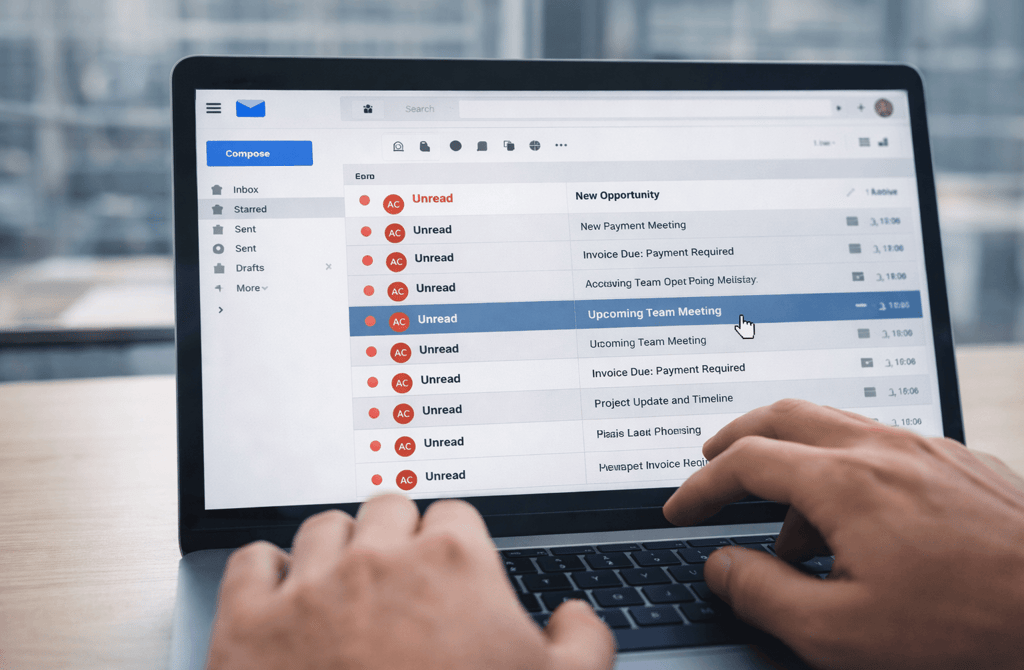
It rarely looks like a failure at first.
Your emails go out. Nothing breaks. No major bounce spike. No obvious warning signs. Just… silence.
That silence is where the damage starts.
Because to an inbox provider, silence isn’t neutral. It’s information.
Engagement Is Not a Result—It’s a Signal
Most outbound teams treat opens and replies as outcomes.
Inbox providers treat them as training data.
Every time your email lands in an inbox, the system watches what happens next:
Was it opened quickly?
Ignored completely?
Deleted without reading?
Left untouched for days?
These behaviors don’t just reflect performance. They reshape how future emails from you are handled.
Low-intent lists consistently produce the same pattern: no action.
And when that pattern repeats, inbox providers stop waiting for proof. They start predicting it.
How Low-Intent Lists Create Negative Learning Loops
Inbox systems are constantly updating their models.
They don’t just evaluate a campaign—they evaluate your sending behavior over time.
Here’s what happens when your list is filled with low-intent contacts:
1. Consistent Non-Engagement
When recipients repeatedly ignore your emails, the system learns that your messages are unlikely to matter. Future emails are deprioritized automatically.
2. Weak Interaction Signals
Even if a few people open, inconsistent engagement across the list signals instability. That inconsistency lowers trust.
3. Audience-Level Mismatch
If your recipients don’t logically align with your message, the system detects that mismatch through behavior—not content.
4. Gradual Suppression
You don’t get blocked instantly. Instead, your emails slowly move:
Primary → Promotions
Promotions → Spam
Spam → Invisible
This transition often goes unnoticed until performance collapses.
Why This Happens Even Without Complaints
A common assumption is that spam filters react mainly to complaints.
In reality, lack of engagement is often more influential.
If no one interacts with your emails:
There’s no positive signal to balance the system
Your reputation begins to decay passively
Future sends inherit that negative bias
You’re not being flagged as “spam.”
You’re being classified as “not worth attention.”
And that classification is harder to reverse.
The System Interprets Intent Through Behavior
Inbox providers don’t know your ICP.
They infer it.
If your campaigns consistently reach people who:
Don’t respond
Don’t open
Don’t engage
The system assumes your targeting is off—even if your message is relevant to someone else.
This is where list quality becomes critical.
Teams working with well-segmented construction industry lead data aligned to active project roles tend to generate more consistent engagement patterns. Not because their emails are better written, but because their recipients are contextually aligned with the message.
That alignment is what inbox systems recognize as intent.
Why Volume Makes It Worse
When engagement is low, increasing volume feels like the logical fix.
It’s not.
More volume simply amplifies the same negative signals:
More ignored emails
More non-engaged recipients
More data reinforcing the wrong pattern
From the system’s perspective, you’re becoming more confident in sending irrelevant emails.
That accelerates filtering.
The Long-Term Effect Most Teams Miss
Low-intent lists don’t just hurt a single campaign.
They reshape your sender profile.
Over time:
Your baseline deliverability drops
Even good segments perform worse
Recovery takes longer with each campaign
This is why some domains feel “burned” even after switching lists.
The system isn’t just evaluating your current audience—it remembers your past behavior.
What This Means for Outbound Strategy
If inbox providers are learning from your audience behavior, then your biggest lever isn’t messaging.
It’s who you choose to email.
Instead of asking:
“How do we get more replies?”
The better question becomes:
“What signals are our recipients sending back to the system?”
Because those signals determine whether your future emails even get seen.
Bottom Line
Low-intent lists don’t fail loudly—they fail silently.
But that silence trains inbox providers to expect nothing from you.
And once that expectation is set, every new campaign starts with less visibility, less trust, and less room to recover.
When your data consistently reaches people who are likely to engage, inbox systems begin to treat your emails as relevant by default.
When your list repeatedly produces indifference, those same systems learn to filter you out before your message has a chance to matter.
Related Post:
Why Contact Fields Behave Differently Across Regions
The Pricing Logic Behind High-Demand Industries
How Industry Growth Trends Impact Lead Cost
Why Validation Depth Changes Lead Prices by Industry
How Lead Recency Influences Inbox Placement More Than Subject Lines
The Recency-Driven Framework High-Performing Outbound Teams Use
Why Lead Lists Decay Faster in Certain Industries
Why Providers Overclaim Their Validation Accuracy
How Verification Depth Determines Your Cold Email Success
The Deliverability Risks Hidden in “Instant Validation” Tools
The Infrastructure Fragility Hidden in Cheap Lead Lists
How Data Drift Creates Bounce Surges Over Time
Why Even “Valid” Emails Can Bounce If Recency Is Off
Why Most Companies Discover Data Drift Only After It Hurts Revenue
The Structural Problems That Arise When Data Is Left Unmaintained
How Contact Aging Creates Metadata Conflicts in Your CRM
Why Missing Metadata Lowers the Accuracy of Your Filters
The Enrichment Framework Behind High-Performing Outbound
How Company Size Errors Create Misleading Pipelines
How Manual Review Prevents Domain Reputation Damage
The Validation Conflicts You Only Notice With Human Eyes
Why Automated Systems Misjudge Role-Based Emails
Why Sending to Spam Traps is Worse Than Hard Bounces
The Duplicate Clusters That Break Your Segmentation Flow
How Compromised Emails Drag Your Deliverability Down
The Vertical-Specific Risks Cheap Providers Ignore
How Industry Growth Rates Alter Lead Accuracy
Why Some Industries Generate More Role-Based Emails
The Hidden Errors Found in Multi-Site Organizations
How Company Data Drift Skews Account Prioritization
Why Revenue Accuracy Determines High-Intent Segments
How Role-Based Targeting Improves Deliverability
Why Department-Level Accuracy Is Non-Negotiable
The Title Signals That Reveal True Decision-Makers
How Bad Routing Logic Causes Deliverability Decline
Why Warming a Domain Isn’t Enough Without Proper Architecture
The Structural Email Errors Hidden in Most Outbound Systems
How Spam Filters Detect Risky Lead Quality Automatically
Connect
Get verified leads that drive real results for your business today.
www.capleads.org
© 2025. All rights reserved.
Serving clients worldwide.
CapLeads provides verified B2B datasets with accurate contacts and direct phone numbers. Our data helps startups and sales teams reach C-level executives in FinTech, SaaS, Consulting, and other industries.