
When More Leads Start Hurting Your Pipeline
Adding more leads should grow your pipeline—but there’s a point where volume starts to break targeting, deliverability, and conversion. Here’s where that shift happens and how to avoid it.
INDUSTRY INSIGHTSLEAD QUALITY & DATA ACCURACYOUTBOUND STRATEGYB2B DATA STRATEGY
CapLeads Team
3/30/20264 min read
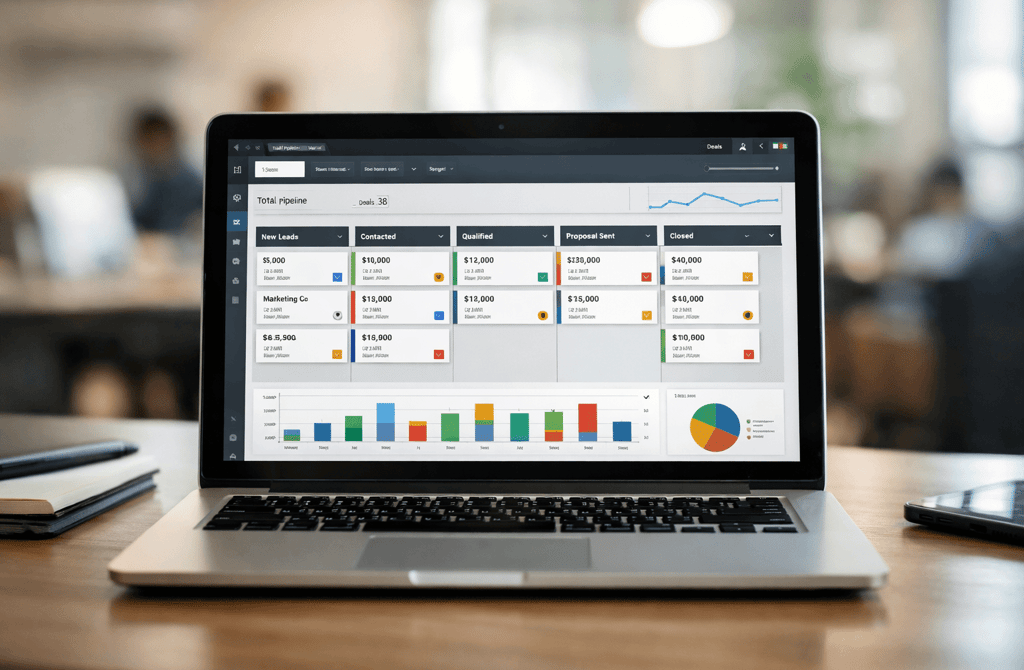
More leads feel like progress—until they quietly start breaking everything.
At the beginning, adding volume works. More contacts mean more emails sent, more calls made, more chances to hit something that converts. The pipeline looks fuller. Activity goes up. It feels like momentum.
But there’s a point where that same volume stops helping—and starts doing damage.
Most teams don’t notice when they cross that line.
The Illusion of Pipeline Growth
A bigger pipeline doesn’t always mean a healthier one.
When you add leads faster than your system can properly handle, you create a false sense of progress. Your CRM fills up. Your dashboards look active. But underneath that surface, something shifts.
Targeting gets looser
Messaging becomes less relevant
Follow-ups become inconsistent
Data quality starts slipping
You’re not actually building a pipeline—you’re inflating it.
And inflated pipelines don’t convert. They stall.
Where Volume Starts Breaking Things
There’s no exact number where this happens. It’s not about hitting 1,000 or 10,000 leads.
It’s about capacity vs quality.
When your lead volume exceeds your ability to:
properly segment
validate data
personalize outreach
manage replies
…that’s when the shift happens.
You start seeing early warning signs:
Reply rates drop without clear reason
Bounce rates slowly creep up
Conversations feel less relevant
SDRs spend more time sorting than selling
Nothing breaks instantly. It degrades quietly.
The Hidden Cost of “More”
More leads don’t just dilute performance—they multiply problems.
Every bad or misaligned lead:
wastes send volume
trains spam filters against you
clutters your CRM
Instead of improving outcomes, you’re increasing noise.
And noise has a cost.
It hides what’s actually working. It makes good segments harder to identify. It slows down decision-making because your data is no longer clean enough to trust.
At that point, adding more leads doesn’t increase opportunity—it spreads your effort thinner across weaker targets.
When Targeting Starts to Drift
One of the first things volume breaks is targeting discipline.
When teams push for more leads, they start widening filters:
“Let’s include smaller companies too”
“Let’s expand industries slightly”
“Let’s not be too strict on roles”
Individually, these changes seem small.
But combined, they shift your ICP without you realizing it.
Suddenly:
You’re emailing people who aren’t decision-makers
Your messaging feels off
Replies become less relevant or completely silent
It’s not that outreach stopped working.
It’s that you’re no longer talking to the right people.
The Deliverability Side No One Sees
Lead volume doesn’t just affect conversion—it affects whether your emails even land.
When you increase volume using weaker or less validated data:
bounce rates increase
engagement drops
spam signals rise
Inbox providers don’t know your intent. They only see patterns.
If your list quality drops, your domain reputation follows.
That’s why some teams think their copy stopped working—when in reality, their emails just stopped reaching real inboxes.
The CRM Problem Nobody Talks About
More leads also create internal friction.
Your CRM becomes harder to manage:
duplicates increase
outdated records stay active
prioritization becomes unclear
Sales teams start relying less on the system because it no longer reflects reality.
And once that trust is gone, pipeline management breaks down.
Now you’re not just dealing with bad leads—you’re dealing with bad decisions based on bad data.
The Real Inflection Point
The moment more leads start hurting your pipeline is simple:
When volume grows faster than your ability to maintain data integrity and targeting precision.
That’s the tipping point.
Before it:
more leads = more opportunity
After it:
more leads = more noise
The difference isn’t visible in lead count.
It’s visible in outcomes.
What High-Performing Teams Do Differently
The teams that scale outbound successfully don’t chase volume blindly.
They control it.
They focus on:
tight ICP definitions
strict data validation
controlled list expansion
consistent segmentation
They treat lead volume as something to earn, not something to maximize.
For industries like FinTech, where targeting accuracy and data sensitivity matter more than most, this becomes even more critical. Expanding volume without precision doesn’t just reduce performance—it creates risk. That’s why teams that rely on clean, structured datasets built for fintech outreach tend to scale more predictably than those relying on broad, generic lists.
Bottom Line
More leads feel like progress—but only up to a point.
After that, they start working against you.
The goal isn’t to have the biggest pipeline.
It’s to have the most reliable one.
Because once your data loses precision, everything built on top of it becomes unstable.
And once your pipeline is built on unstable data, growth stops being predictable—it becomes guesswork.
What This Means
Scaling outbound isn’t about pushing more volume into the system. It’s about knowing when to stop and protect what’s already working.
The teams that win aren’t the ones sending the most—they’re the ones maintaining control as they grow.
Because in the end, pipeline strength isn’t defined by how much you add…
…it’s defined by how much of it actually moves forward.
Related Post:
How Manual Review Prevents Domain Reputation Damage
The Validation Conflicts You Only Notice With Human Eyes
Why Automated Systems Misjudge Role-Based Emails
Why Sending to Spam Traps is Worse Than Hard Bounces
The Duplicate Clusters That Break Your Segmentation Flow
How Compromised Emails Drag Your Deliverability Down
The Vertical-Specific Risks Cheap Providers Ignore
How Industry Growth Rates Alter Lead Accuracy
Why Some Industries Generate More Role-Based Emails
The Hidden Errors Found in Multi-Site Organizations
How Company Data Drift Skews Account Prioritization
Why Revenue Accuracy Determines High-Intent Segments
How Role-Based Targeting Improves Deliverability
Why Department-Level Accuracy Is Non-Negotiable
The Title Signals That Reveal True Decision-Makers
How Bad Routing Logic Causes Deliverability Decline
Why Warming a Domain Isn’t Enough Without Proper Architecture
The Structural Email Errors Hidden in Most Outbound Systems
How Spam Filters Detect Risky Lead Quality Automatically
Why Low-Intent Lists Train Inbox Providers Against You
The Invisible Engagement Thresholds Behind Primary Placement
How ESPs Score the Long-Term Health of Your Domain
Why Reputation Damage Compounds Faster Than You Can Recover
The Risk Indicators That Reveal Whether Your Domain Is “Safe”
Which B2B Lead Generation Ideas Actually Deliver Results Today
How Companies Approach B2B Lead Generation
How B2B Teams Compare Lead Generation Channels in Practice
B2B sales process steps explained a simple, practical breakdown
B2B Sales Process Flowchart Example: From Lead to Close
Understanding B2B Sales Pipeline Stages: How Deals Actually Move
Cold Calling Script Example That Actually Works in B2B Sales
Cold calling opening lines that work
How to Keep Prospects Interested During a Cold Call
Outreach Messages That Actually Get Replies on LinkedIn
No Reply Yet? Follow-Up Messages That Restart Conversations on LinkedIn
Cold Call Timing in B2B: When Prospects Are Most Likely to Answer
Why Founders Delay Lead Buying and Slow Down Pipeline Growth
Connect
Get verified leads that drive real results for your business today.
www.capleads.org
© 2025. All rights reserved.
Serving clients worldwide.
CapLeads provides verified B2B datasets with accurate contacts and direct phone numbers. Our data helps startups and sales teams reach C-level executives in FinTech, SaaS, Consulting, and other industries.