
Outreach Messages That Actually Get Replies on LinkedIn
Write LinkedIn outreach messages that actually get replies. Real examples, proven structures, and what separates ignored messages from real conversations.
INDUSTRY INSIGHTSLEAD QUALITY & DATA ACCURACYOUTBOUND STRATEGYB2B DATA STRATEGY
CapLeads Team
3/27/20263 min read
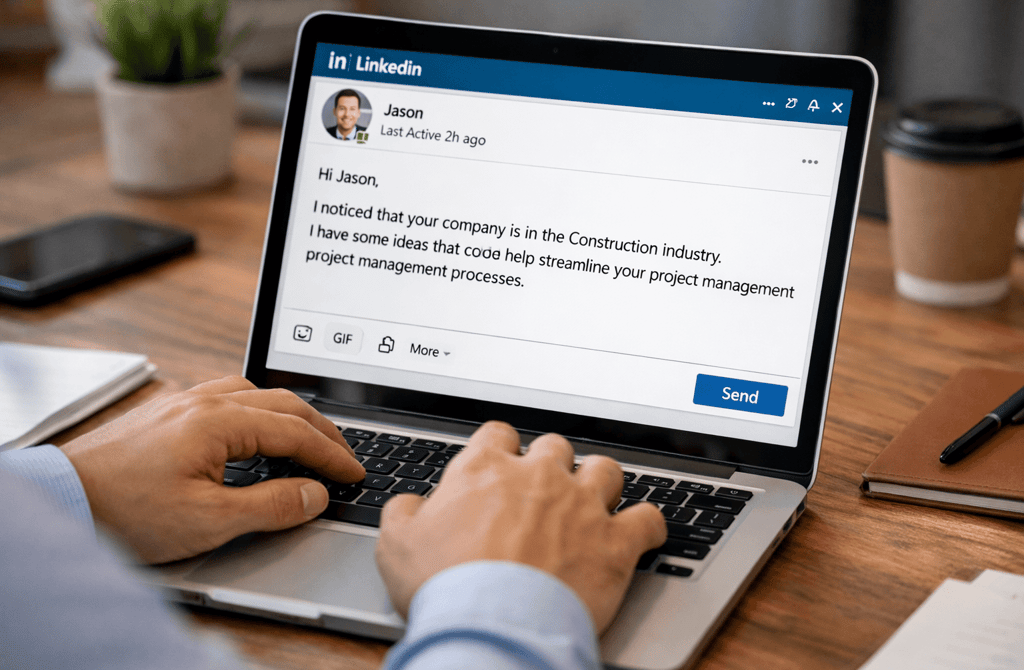

Most LinkedIn messages don’t fail because they’re poorly written. They fail because they feel predictable.
The moment a message looks like it was copied, templated, or sent in bulk, it gets ignored—regardless of how polished it is.
But when a message feels specific, timely, and easy to respond to, something different happens.
People reply.
Not because it’s perfect. Because it feels relevant.
What Makes a Message Worth Replying To
Before jumping into examples, it’s important to understand why some messages work.
Replies usually happen when:
the reason for reaching out is clear
there’s no pressure attached
That’s it.
Not length. Not cleverness. Not formatting.
Outreach Message Examples That Actually Work
These aren’t scripts to copy. They’re patterns that show how real conversations start.
Example 1: Context-Based Opener
“Noticed you’re leading outbound at your company.
Been seeing a lot of teams hit a wall once volume scales.
Curious how you’re handling that right now?”
Why this works:
specific role reference
relevant problem
simple question
Example 2: Industry-Specific Angle
“Saw you’re working in the AI space.
A lot of teams I’ve seen struggle with data accuracy as things scale fast.
Curious if that’s something you’re running into as well?”
This works especially well when targeting fast-moving sectors like AI & Machine Learning, where roles, priorities, and systems change quickly. Messages that reflect that reality feel more grounded and timely.
Example 3: Observation → Question
“Came across your profile while looking at teams building outbound systems.
Quick question—are you handling lead sourcing internally or working with external data?”
Why this works:
natural discovery angle
no pitch
easy to answer
Example 4: Light Friction Opener
“Might be a random question, but how are you currently validating your lead data before campaigns?”
This works because:
it feels casual
it lowers resistance
it invites a quick response
Example 5: Direct but Low Pressure
“Not sure if this is relevant, but I’ve been looking into how teams improve reply rates without increasing volume.
Curious if that’s something you’re actively working on right now?”
Why this works:
acknowledges uncertainty
avoids assumption
keeps it conversational
What These Examples Have in Common
None of them:
pitch immediately
introduce a product
ask for a meeting
They all:
start with context
focus on one idea
invite a simple response
That’s the pattern.
Why Targeting Still Decides Everything
Even the best message fails if it lands on the wrong person.
If your outreach hits:
someone outside the decision layer
someone not dealing with the problem
…it gets ignored instantly.
That’s why messaging and targeting are connected. One can’t fix the other.
The Real Takeaway
Good LinkedIn messages don’t try to impress. They try to connect.
When your message reflects something real about the person you’re reaching out to, replies feel natural. When it doesn’t, it gets filtered out before it has a chance.
Relevant context makes conversations start easily. Weak targeting makes even strong messages disappear without a response.
Related Post:
How Manual Review Prevents Domain Reputation Damage
The Validation Conflicts You Only Notice With Human Eyes
Why Automated Systems Misjudge Role-Based Emails
Why Sending to Spam Traps is Worse Than Hard Bounces
The Duplicate Clusters That Break Your Segmentation Flow
How Compromised Emails Drag Your Deliverability Down
The Vertical-Specific Risks Cheap Providers Ignore
How Industry Growth Rates Alter Lead Accuracy
Why Some Industries Generate More Role-Based Emails
The Hidden Errors Found in Multi-Site Organizations
How Company Data Drift Skews Account Prioritization
Why Revenue Accuracy Determines High-Intent Segments
How Role-Based Targeting Improves Deliverability
Why Department-Level Accuracy Is Non-Negotiable
The Title Signals That Reveal True Decision-Makers
How Bad Routing Logic Causes Deliverability Decline
Why Warming a Domain Isn’t Enough Without Proper Architecture
The Structural Email Errors Hidden in Most Outbound Systems
How Spam Filters Detect Risky Lead Quality Automatically
Why Low-Intent Lists Train Inbox Providers Against You
The Invisible Engagement Thresholds Behind Primary Placement
How ESPs Score the Long-Term Health of Your Domain
Why Reputation Damage Compounds Faster Than You Can Recover
The Risk Indicators That Reveal Whether Your Domain Is “Safe”
Which B2B Lead Generation Ideas Actually Deliver Results Today
How Companies Approach B2B Lead Generation
How B2B Teams Compare Lead Generation Channels in Practice
B2B sales process steps explained a simple, practical breakdown
B2B Sales Process Flowchart Example: From Lead to Close
Understanding B2B Sales Pipeline Stages: How Deals Actually Move
Cold Calling Script Example That Actually Works in B2B Sales
Cold calling opening lines that work
How to Keep Prospects Interested During a Cold Call
Connect
Get verified leads that drive real results for your business today.
www.capleads.org
© 2025. All rights reserved.
Serving clients worldwide.
CapLeads provides verified B2B datasets with accurate contacts and direct phone numbers. Our data helps startups and sales teams reach C-level executives in FinTech, SaaS, Consulting, and other industries.