
Why Some Industries Have More Expensive Leads Than Others
Some industries naturally have more expensive leads than others. Learn what drives the price differences, how industries impact lead cost, and how to choose wisely.
LEAD QUALITY & DATA ACCURACYOUTBOUND METRICS & PERFORMANCEMARKET TRENDS & INSIGHTSB2B LEAD BUYING GUIDES
CapLeads Team
11/26/20253 min read
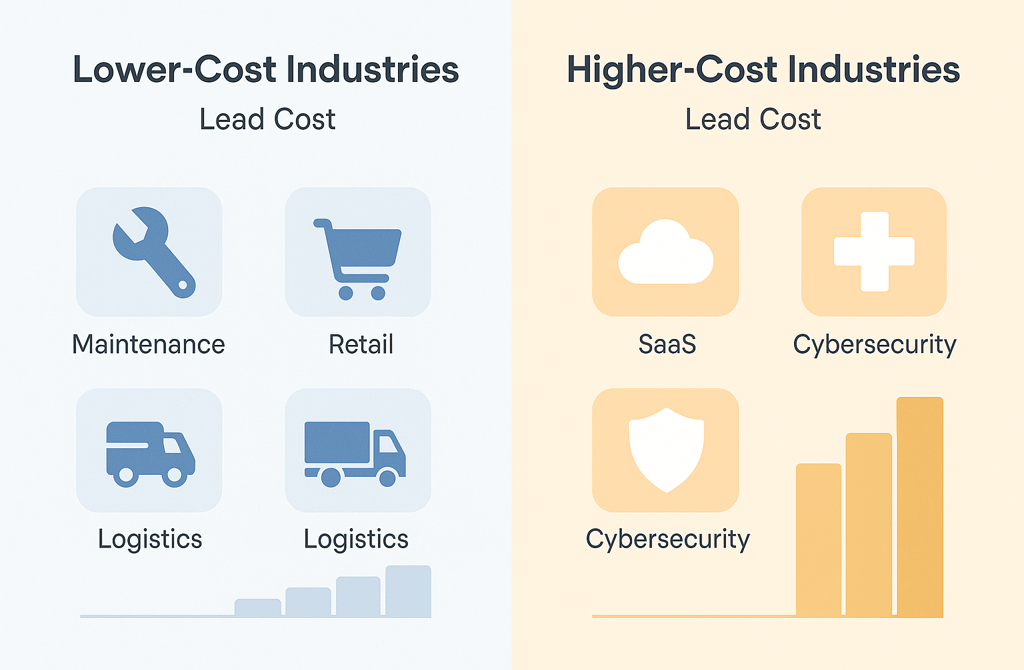
If you've ever wondered why one industry’s leads cost $0.15 while another costs $0.20 or more, you’re not alone.
Founders notice this gap fast — especially when they’re scaling outbound and buying lists regularly.
Lead prices don’t rise randomly.
They’re shaped by demand, competition, data freshness, validation difficulty, and how often people in that industry change roles.
In this breakdown, we’ll go over why some industries are naturally cheaper and why certain verticals require a higher price point to keep data accurate and usable.
1. Lower-Cost Industries Have Slower Change Cycles
Maintenance. Retail. Logistics.
These industries share one thing in common:
The data doesn’t change that fast.
People in these roles often stay longer in the same job, and the companies themselves have predictable structures. That means:
email addresses stay active longer
turnover is lower
validation passes at a higher rate
less data gets thrown away
Because the dataset is more stable, it costs less to maintain — which means a lower cost per lead.
Even better, these industries are typically massive, giving data providers a larger pool to work with.
More supply + stable data = lower price.
2. Higher-Cost Industries Change Fast — and Break Data Fast
Then you have the “premium” verticals:
SaaS
Cybersecurity
Healthcare
Fintech
AI-related sectors
These industries hit ALL the factors that make leads more expensive:
High turnover
People in these roles switch companies faster, meaning more emails go stale quicker.
Stricter mail server rules
Tech companies and healthcare organizations have aggressive spam filtering, requiring cleaner validation.
Smaller datasets
There are fewer cybersecurity managers in the world than retail store managers, so supply is limited.
More competition for the same prospects
Everyone is trying to sell to these industries — which pushes demand (and therefore price) upward.
If logistics leads decay slowly…
SaaS leads decay fast.
That difference is what causes the cost gap.
3. Validation Cost Is Not the Same Across Industries
Every dataset requires validation, but some industries burn more validation credits than others.
For example:
Cybersecurity domains block ping checks
Healthcare systems reject queries aggressively
High-tech companies rotate mail servers often
Startups change staff and roles constantly
This means a provider like CapLeads has to validate the same list more times, and throw away more emails to keep it clean.
More validation = more cost.
And cleaner data is what founders want — so the cost reflects that.
4. Some Industries Are Simply More “Valuable” to Buyers
Lead cost also reflects:
deal size
contract value
expected ROI
the industry’s willingness to buy tools or software
Example:
A retail store might use simple, low-cost SaaS tools.
A cybersecurity firm might spend $100k+ on software annually.
Naturally…
buyers are willing to pay more for industries that bring high-ticket deals.
This is why SaaS, cybersecurity, and medical roles always sit in the higher tier.
5. The Real Question: Should You Avoid Higher-Cost Industries?
Absolutely not.
Higher-cost industries often produce:
higher reply rates
more serious conversations
stronger budgets
longer retainers
higher customer lifetime value
Sometimes spending 20% more on leads gives you 200% better outcomes.
The key is knowing why the price is higher — not avoiding it.
6. How to Choose the Right Industry for Your Outreach
Here’s the simplest way to think about it:
Choose lower-cost industries when you want:
fast volume
wide testing
general outreach
broad ICP validation
lower budgets
Choose higher-cost industries when you want:
higher ticket sales
niche positioning
premium B2B conversations
predictable long-term deals
serious buyers
Both groups have value.
It depends on what you're trying to build.
Final Thought
Lead costs vary because some industries stay stable while others demand constant re-validation. Understanding this lets you choose your verticals more strategically — not emotionally.
Clean industry-matched data lowers your cost per conversation.
Outdated or misaligned industry data raises costs before your first email even leaves the inbox.
Related Posts
The Lifecycle of a High-Quality B2B Lead From Source to Inbox
How to Buy B2B Leads Without Getting Scammed in 2026
The Ultimate Lead Buyer’s Checklist: 15 Things to Audit Before Paying
10 Red Flags That Mean You Should Not Buy From a Lead Provider
How Buyers Can Protect Themselves From Fake or Recycled Data
Why Your Lead Provider Should Show Validation Proof — Not Promises
The Smartest Way to Evaluate a B2B Contact List Before Using It
What Buyers Overlook When Choosing a Lead Provider (But Shouldn’t)
How to Audit a B2B Lead List for Accuracy Before Sending Email
Why You Shouldn’t Buy “Unlimited Leads” Packages
The Truth About “Niche Email Lists” Sold Online — Are They Safe?
Why Industry-Specific B2B Leads Convert Better Than Generic Lists
The Most Requested B2B Industries for Lead Buying in 2026
High-Value Industries That Respond Best to Cold Email
Why Healthcare & Medical Leads Require More Validation
The Fastest-Growing B2B Markets for 2026 (Based on Lead Demand)
Why Construction Leads Are Hard to Validate — And How CapLeads Does It
Global Tech Leads: What Makes Them Expensive but Worth It
Professional Services Leads: Why They Deliver Better Conversations
Manufacturing & Industrial Leads: What Smart Buyers Look For
Why Global BPO Leads Are Exploding in Demand
Why Lead Prices Are Rising in 2026 (And How to Buy Smart)
Cost-Per-Lead vs Cost-Per-Reply: Which Metric Should You Track?
Connect
Get verified leads that drive real results for your business today.
www.capleads.org
© 2025. All rights reserved.
Serving clients worldwide.
CapLeads provides verified B2B datasets with accurate contacts and direct phone numbers. Our data helps startups and sales teams reach C-level executives in FinTech, SaaS, Consulting, and other industries.