
Why Email Volume Doesn't Fix Data Problems
Sending more emails won’t fix bad data. If your lists are outdated or inaccurate, higher volume only amplifies the problem. Here’s why more sends don’t solve data issues.
INDUSTRY INSIGHTSLEAD QUALITY & DATA ACCURACYOUTBOUND STRATEGYB2B DATA STRATEGY
CapLeads Team
12/9/20253 min read
When outreach underperforms, founders usually do one thing first:
send more emails.
More leads.
More sequences.
More domains.
More volume.
But the truth is uncomfortable:
Email volume doesn’t fix data problems — it amplifies them.
If your data is outdated, inaccurate, or misaligned, increasing volume simply multiplies the damage. You don’t scale opportunity — you scale mistakes.
Here’s why sending more emails never solves bad data.
1. Volume multiplies bounce issues, not results
Bounce rate is a data problem, not a volume problem.
If your list contains:
invalid emails
inactive mailboxes
stale contacts
spam-trap risks
misconfigured domains
Then sending more emails only increases:
domain damage
soft blocks
hard bounces
rate limiting
Your outreach looks “busy,” but your sender reputation collapses in silence.
Volume accelerates decay — it never fixes it.
2. Low-fit contacts don’t magically convert with scale
Founders often assume replies will appear at higher volumes.
But if your list lacks:
correct job roles
buying power
accurate company context
real pain alignment
Then you’re not increasing chances — you’re increasing noise.
You’re contacting more people who were never prospects in the first place.
Volume cannot compensate for poor ICP alignment.
Only better data can.
3. More emails = more flags, more complaints, more spam placement
When data is weak:
personalization feels off
intros feel irrelevant
angles miss the mark
messaging becomes generic
And when messaging feels irrelevant, prospects mark your emails as:
spam
promotional
unwanted content
A handful of spam complaints on high volume sends can tank an entire domain cluster.
Volume actually accelerates failure.
4. Tools scale your output — but also scale your mistakes
Every outreach tool today is built for speed and automation:
multi-domain warmup
auto-rotation
smart scheduling
advanced sequencing
But if the data layer underneath is wrong, every feature simply helps you fail faster.
Tools amplify the system you give them.
If the system is flawed, scaling it makes things worse.
Volume is not the solution — it’s an accelerant.
5. Low engagement at scale signals data issues, not email issues
Founders often blame:
subject lines
call-to-action
message framing
send time
frequency
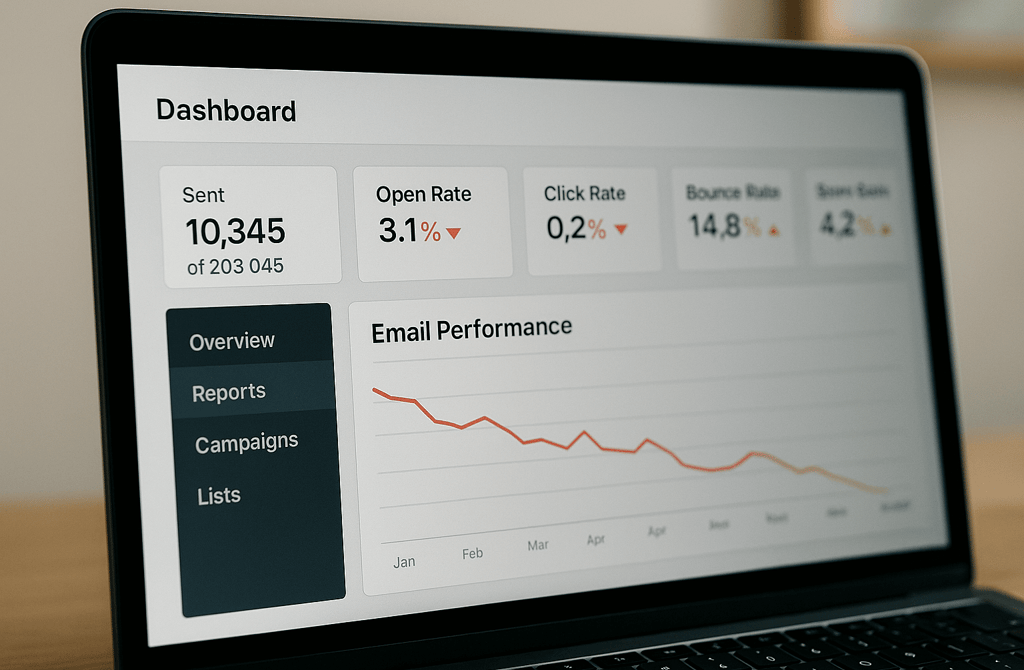
But when open rates sit below 10% and click rates below 1%, the problem is rarely copy.
It’s usually:
invalid contacts
wrong audience segment
outdated job roles
poor firmographic accuracy
enrichment gaps
missing metadata
Outreach doesn’t fail downstream —
it fails at the data source.
6. Scaling volume hides the real issue: your list isn’t trustworthy
Sending 200 emails a day vs. 2,000 emails a day doesn’t matter if both are being sent to the wrong people.
Volume hides data issues because it feels productive.
But behind the scenes:
deliverability worsens
inbox placement drops
reply intent collapses
domains burn out
Higher volume provides more output, not more outcomes.
The list is either right or it isn’t — scale doesn’t change that.
7. The strongest outbound systems scale precision, not volume
Founders often misunderstand what high-performing outbound teams actually do.
They don’t scale:
send rates
domain count
volume mechanics
They scale:
data integrity
list accuracy
segmentation
enrichment layers
validation
timing signals
Volume is the last lever — not the first.
They fix data before they increase output.
Final Thought
More emails don’t fix bad data.
They only make bad data more visible, more damaging, and more expensive.
Improve the data, and your volume starts working.
Ignore the data, and your volume works against you.
Clean data makes volume effective.
Outdated data makes volume destructive.
Related Posts
Why Agency Leads Produce Higher Spam Complaints
The Truth About Manufacturing Lead Data Accuracy
Why HR Recruiter Leads Require More Detailed Enrichment
Why Financial Services Leads Are Hard to Personalize
The Real Data Risks in Facility Management Leads
Why Logistics Leads Bounce More Than Other Verticals
The Industry Factors That Influence Data Freshness
Why the Right Industry List Beats General B2B Databases
The Deliverability Edge You Get From High-Integrity Data
How Data Preparation Changes Your Cold Email Outcome
Why Good Copy Fails When the Lead Data Isn't Prepared
The Data Filters Your Emails Pass Through Before Reaching Inboxes
Why Data Cleaning Should Happen Before Warming Up Domains
How Lead Quality Shapes Your Open Rate More Than Subject Lines
What Inbox Providers Infer About Your Lead List
Why Reply Rates Improve When Your Data Is Pre-Qualified
The Hidden Data Rules Behind Modern Spam Filters
Why Cold Email Isn't Working (And Why Data Is Usually the Reason)
How Data Enrichment Changes Your Cold Email Targeting
Why Bounce Rate Drops When You Source Better Data
The Data Layer Founders Forget When Running Outreach
Connect
Get verified leads that drive real results for your business today.
www.capleads.org
© 2025. All rights reserved.
Serving clients worldwide.
CapLeads provides verified B2B datasets with accurate contacts and direct phone numbers. Our data helps startups and sales teams reach C-level executives in FinTech, SaaS, Consulting, and other industries.