
What Pipeline-Ready Lead Data Actually Looks Like
Pipeline-ready lead data isn’t just clean — it’s structured, segmented, and immediately usable for outbound. Here’s what high-quality, ready-to-send data looks like.
INDUSTRY INSIGHTSLEAD QUALITY & DATA ACCURACYOUTBOUND STRATEGYB2B DATA STRATEGY
CapLeads Team
12/12/20252 min read
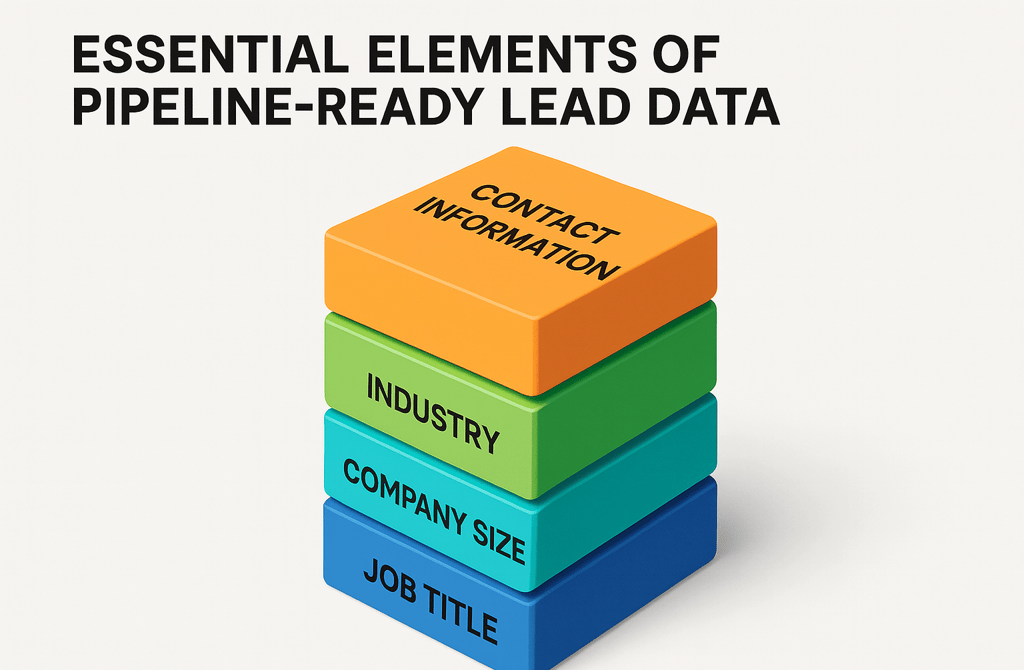
Most teams think “pipeline-ready data” just means no bounces.
But clean emails alone don’t build pipeline — context does.
Pipeline-ready data isn’t simply validated.
It’s structured, segmented, and aligned with the exact conditions your outbound needs to perform.
It removes friction before campaigns begin.
It makes your messaging sharper.
And it gives SDRs a list they can run immediately without repairing it first.
Here’s what pipeline-ready lead data actually looks like:
1. It’s Segmented by Industry, Not Just Dumped Into a Sheet
A list without industry segmentation forces your SDRs to guess relevance.
Pipeline-ready data always includes:
industry category
industry grouping logic
filters that separate high-fit and low-fit markets
Industry fit is one of the strongest predictors of reply rate.
Pipeline-ready data makes that separation clear.
2. It Contains Role-Accurate Decision-Makers
Roles that sound similar don’t always act similar.
Pipeline-ready data includes:
the true decision-maker
expansion roles
influencers in the buying path
department-level variations
No “Head of Miscellaneous.”
No “Senior Something.”
No ambiguous, outdated job titles.
The right role = the right conversation = the right pipeline.
3. Company Size & Capitalization Are Already Structured
Pipeline-ready data removes the guesswork by giving you:
the company’s operational scale
financial tier or capitalization range
growth indicators
realistic buying power
This helps your outbound:
match tone
adjust value props
prioritize segments
avoid low-fit companies
A good dataset eliminates high-effort, low-return accounts before you send a single email.
4. Verification Is Multi-Step, Not One-Click
Real pipeline-ready data passes through:
email validation
domain checks
role confirmation
formatting cleanup
deduplication
But more importantly:
It’s checked for real-world usability — not just whether the email technically accepts mail.
Outbound doesn’t fail because of validators.
It fails because of outdated or context-blind data.
Pipeline-ready data solves both.
5. The Dataset Is Ready to Send Today — Not 6 Months Ago
The best lists don’t sit in storage.
They’re fresh enough that organizational changes are still relevant when you run your sequences.
Pipeline-ready data should reflect:
current roles
recent team shifts
active initiatives
up-to-date structures
A 6-month-old dataset is already decaying.
Pipeline-ready means timely.
6. It Maps Directly Into Your Outbound System
Pipeline-ready data isn’t raw information.
It’s operational fuel.
It should drop cleanly into:
your cold email tool
your CRM
your sequence logic
your segmentation
your prioritization model
No reformatting.
No manual cleanup.
No “what do we do with this?” moments.
If your list needs repair before you send…
it’s not pipeline-ready.
Final Thought
Pipeline-ready data isn’t magic.
It’s the result of segmentation, accuracy, recency, and operational clarity.
When your dataset meets these conditions, outbound becomes predictable instead of chaotic — and campaigns stop failing for reasons that had nothing to do with your messaging.
Clean data makes outbound predictable.
Outdated data never makes it pipeline-ready.
Related Pos
The Hidden Data Rules Behind Modern Spam Filters
Why Cold Email Isn't Working (And Why Data Is Usually the Reason)
How Data Enrichment Changes Your Cold Email Targeting
Why Bounce Rate Drops When You Source Better Data
The Data Layer Founders Forget When Running Outreach
Why Email Volume Doesn't Fix Data Problems
How Data Scoring Boosts Deliverability
Why Domain Reputation Depends on Your Lead Data Quality
The Data-Driven Way to Increase Cold Email ROI
Why Your Inbox Placement Is Linked to Lead Validation
How Data Recency Improves Reply Intent
Why Clean Lists Outperform Personalization Tricks
Why Lead Segmentation Matters More Than List Size
The Real Science Behind Targeting the Right Decision-Maker
Why Role-Based Targeting Beats Mass Prospecting
How Company Health Signals Predict Your Cold Email Success
The Data Behind High-Intent Prospects Most People Miss
Why Industry Fit Decides Whether Your Cold Email Works
Connect
Get verified leads that drive real results for your business today.
www.capleads.org
© 2025. All rights reserved.
Serving clients worldwide.
CapLeads provides verified B2B datasets with accurate contacts and direct phone numbers. Our data helps startups and sales teams reach C-level executives in FinTech, SaaS, Consulting, and other industries.