
Why Domain Reputation Depends on Your Lead Data Quality
Your domain reputation doesn’t just depend on warmup—it depends on the quality of your lead data. Bad data triggers bounces, spam flags, and long-term reputation damage.
INDUSTRY INSIGHTSLEAD QUALITY & DATA ACCURACYOUTBOUND STRATEGYB2B DATA STRATEGY
CapLeads Team
12/10/20253 min read
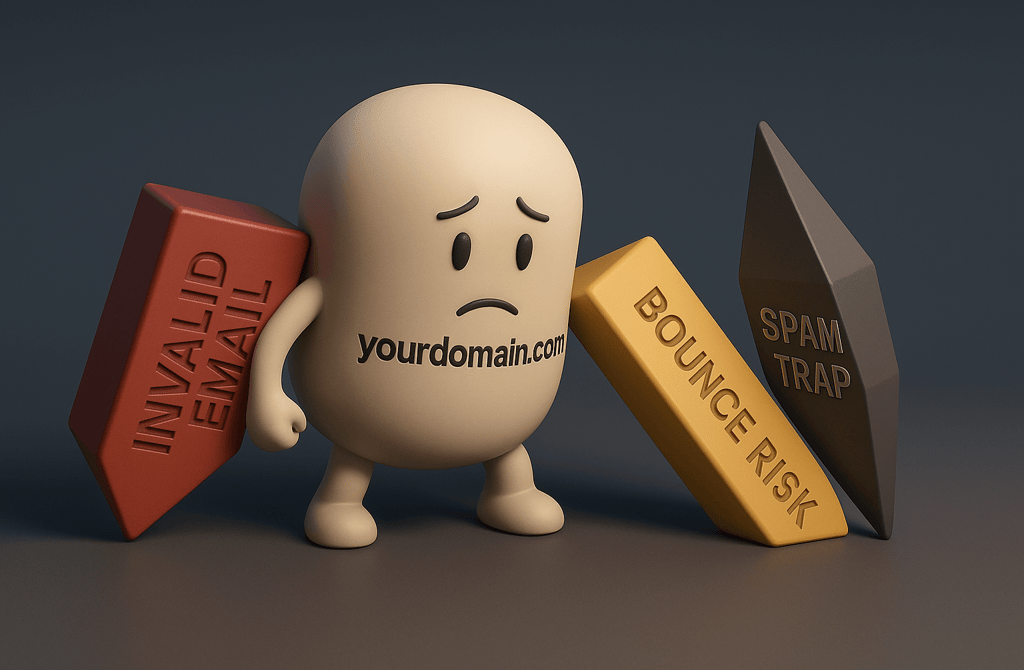

Most founders think domain reputation is controlled by warmup tools, sending volume, or DNS settings.
But the truth is far simpler — and far more painful:
Your domain reputation lives or dies based on the quality of the leads you send to.
You can have perfect warmup, perfect sequencing, and perfect infrastructure…
but if your lead data is bad, your domain will still get bullied into spam.
Your domain reputation isn’t a technical problem.
It’s a data problem.
Here’s why.
1. Bad data triggers the #1 domain reputation killer: bounces
Mailbox providers track bounce patterns aggressively.
When you hit:
invalid emails
dead inboxes
deactivated accounts
misconfigured servers
recycled spam traps
…you send a very clear message to Google and Microsoft:
“This sender doesn’t know who they’re emailing.”
And nothing destroys trust faster.
Even a small spike in bounce rate can tank your domain for weeks.
Better data = fewer bounces = stronger reputation.
2. Spam traps inside bad lists silently destroy domains
Cheap bulk lists often contain:
pristine spam traps
recycled traps
seeded traps
honey pot addresses
You can’t detect them manually.
Warmup tools can’t save you.
Verification tools often miss them.
But mailbox providers see EVERYTHING.
If you hit spam traps, your domain reputation plummets immediately — even if the rest of your list is valid.
The safer the data source, the lower the trap exposure.
3. Low-quality contacts create low engagement — which signals “spam”
Even if the email is technically valid, the contact may be:
the wrong role
wrong department
wrong seniority
wrong industry
wrong company size
This means:
no opens
no clicks
no replies
no positive signals
Mailbox providers treat low engagement the same way they treat spam.
Sending to the wrong people is just as damaging as sending to invalid emails.
Clean, targeted data protects your engagement rate — and your reputation.
4. High-risk domains multiply deliverability damage
Some domains are:
parked
inactive
misconfigured
restricted
catch-all
blacklisted
high-risk
Verification alone can’t catch all of these.
But these domains harm your sending reputation with every hit.
Quality lead data has already removed or deprioritized these domains, preventing unnecessary damage before you even start outreach.
5. Domain warmup CANNOT save you from bad data
Warmup tools:
improve consistency
raise sending volume gradually
build reputation over time
But warmup cannot fix:
hitting invalid contacts
hitting traps
low engagement
irrelevant targeting
risky domains
Warmup helps you climb,
but bad data kicks you right back down.
You are only as strong as the QUALITY of your leads.
6. Clean data creates the positive signals inboxes want
Mailbox providers reward:
high open rates
healthy engagement
consistent quality
stable behavior
low bounce rates
Clean data makes these signals predictable.
Bad data makes them impossible.
When your list is built from accurate, validated, and well-matched contacts, your domain reputation naturally rises — without hacks or tricks.
7. Your domain’s reputation is really a reflection of your list quality
Most founders believe reputation is a technical metric.
It isn’t.
It’s a behavior metric, measured by:
who you email
how often you bounce
how often you engage
how relevant your sends are
how risky your patterns look
And all of this comes from one source:
If your data is sloppy, your domain reputation collapses.
If your data is clean, your reputation becomes an asset.
This is why domain reputation is not an email problem — it’s a data-sourcing problem.
Final Thought
Domain reputation doesn’t fall because you sent too many emails — it falls because the data underneath your outreach was weak, outdated, or risky.
Fix the data, and deliverability becomes stable again.
Clean data keeps your domain trusted.
Outdated data gets your domain punished.
Related Posts
Why Agency Leads Produce Higher Spam Complaints
The Truth About Manufacturing Lead Data Accuracy
Why HR Recruiter Leads Require More Detailed Enrichment
Why Financial Services Leads Are Hard to Personalize
The Real Data Risks in Facility Management Leads
Why Logistics Leads Bounce More Than Other Verticals
The Industry Factors That Influence Data Freshness
Why the Right Industry List Beats General B2B Databases
The Deliverability Edge You Get From High-Integrity Data
How Data Preparation Changes Your Cold Email Outcome
Why Good Copy Fails When the Lead Data Isn't Prepared
The Data Filters Your Emails Pass Through Before Reaching Inboxes
Why Data Cleaning Should Happen Before Warming Up Domains
How Lead Quality Shapes Your Open Rate More Than Subject Lines
What Inbox Providers Infer About Your Lead List
Why Reply Rates Improve When Your Data Is Pre-Qualified
The Hidden Data Rules Behind Modern Spam Filters
Why Cold Email Isn't Working (And Why Data Is Usually the Reason)
How Data Enrichment Changes Your Cold Email Targeting
Why Bounce Rate Drops When You Source Better Data
The Data Layer Founders Forget When Running Outreach
Why Email Volume Doesn't Fix Data Problems
How Data Scoring Boosts Deliverability
Connect
Get verified leads that drive real results for your business today.
www.capleads.org
© 2025. All rights reserved.
Serving clients worldwide.
CapLeads provides verified B2B datasets with accurate contacts and direct phone numbers. Our data helps startups and sales teams reach C-level executives in FinTech, SaaS, Consulting, and other industries.