
Why Your Inbox Placement Is Linked to Lead Validation
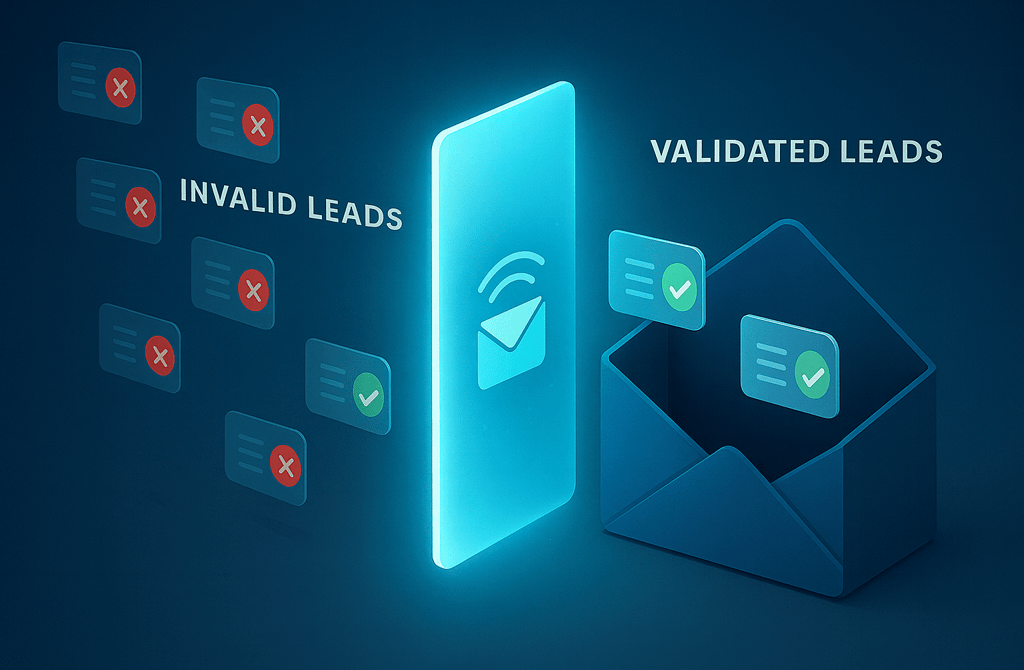
Inbox placement improves when your leads are properly validated. Clean, accurate contacts reduce bounces, spam signals, and domain risk—boosting deliverability.
INDUSTRY INSIGHTSLEAD QUALITY & DATA ACCURACYOUTBOUND STRATEGYB2B DATA STRATEGY
CapLeads Team
12/10/20253 min read

Most founders think inbox placement depends on warmup tools, sending volume, or domain age.
But the most powerful — and most ignored — factor behind inboxing is the one that happens before you even send a single email:
Lead validation.
Inbox placement is not just a deliverability issue.
It’s a data quality issue.
If the contacts you email are inaccurate, invalid, outdated, or risky, your domain reputation collapses — and inbox placement follows it straight down.
Here’s why your ability to land in the inbox is directly tied to how clean your lead data is.
1. Validation removes invalid emails before they destroy your domain reputation
Mailbox providers track bounce patterns instantly.
When you hit:
invalid addresses
disabled inboxes
recycled accounts
domain errors
…you send a massive signal that says:
“This sender does not maintain list quality.”
That single signal can push all future emails into spam.
Lead validation cuts out invalid contacts before they ever reach your sending platform — reducing bounce rates and stabilizing inbox placement.
2. Validation is the only defense against spam traps
You cannot detect spam traps manually.
Verification tools often miss them.
Cheap bulk lists contain them frequently.
Spam traps are the fastest way to destroy your sender reputation.
Hitting even a small number of traps can cause:
throttling
junk folder placement
persistent spam classification
domain-wide reputation drops
High-quality validated data dramatically lowers the likelihood of ever hitting one.
3. Validated leads improve engagement — and engagement determines inbox access
Inbox placement improves when:
more people open
more people click
more people reply
fewer people ignore
Mailbox providers track engagement at both the user level and the domain level.
Validated leads:
match the right roles
work at real, active companies
use clean domains
are more likely to engage
And better engagement = better inboxing.
Even one strong segment can “lift” your entire domain’s inbox placement.
4. Validation protects you from risky domains and low-quality servers
Not all domains are equal. Some are:
parked
expired
unconfigured
classified as high-risk
blocked
blacklisted
inactive
If your emails repeatedly hit dangerous or untrustworthy mail servers, your sending IP and domain lose reputation.
Lead validation filters out these dangerous domains long before they harm your sender identity.
5. Validation keeps your sending patterns consistent — which inbox algorithms reward
Inconsistent data creates inconsistent results:
sudden bounce spikes
unpredictable engagement
erratic user signals
Mailbox providers hate inconsistent senders.
Validated lists give:
stable bounce rates
predictable opens
smooth engagement curves
consistent inbox behavior
Consistency is a major factor in whether your emails land in inbox or spam.
6. Inbox placement is a downstream effect — validation is the upstream control
Warmup tools, DKIM, SPF, and DMARC all matter.
But none of them fix:
poor data sources
invalid contacts
role-based spam magnets
outdated roles
duplicates
recycled domains
low-quality segments
Inbox placement is simply the output.
If the data entering your system is clean, inbox placement improves.
If the data entering your system is sloppy, inbox placement collapses.
It’s not a mystery — it’s a pipeline.
Final Thought
Inbox placement isn’t luck — it’s the result of validating your leads before they ever reach your sequence.
Clean data keeps your emails landing where they should.
Outdated data keeps your emails trapped in spam.
Related Posts
Why Logistics Leads Bounce More Than Other Verticals
The Industry Factors That Influence Data Freshness
Why the Right Industry List Beats General B2B Databases
The Deliverability Edge You Get From High-Integrity Data
How Data Preparation Changes Your Cold Email Outcome
Why Good Copy Fails When the Lead Data Isn't Prepared
The Data Filters Your Emails Pass Through Before Reaching Inboxes
Why Data Cleaning Should Happen Before Warming Up Domains
How Lead Quality Shapes Your Open Rate More Than Subject Lines
What Inbox Providers Infer About Your Lead List
Why Reply Rates Improve When Your Data Is Pre-Qualified
The Hidden Data Rules Behind Modern Spam Filters
Why Cold Email Isn't Working (And Why Data Is Usually the Reason)
How Data Enrichment Changes Your Cold Email Targeting
Why Bounce Rate Drops When You Source Better Data
The Data Layer Founders Forget When Running Outreach
Why Email Volume Doesn't Fix Data Problems
How Data Scoring Boosts Deliverability
Why Domain Reputation Depends on Your Lead Data Quality
The Data-Driven Way to Increase Cold Email ROI
Connect
Get verified leads that drive real results for your business today.
www.capleads.org
© 2025. All rights reserved.
Serving clients worldwide.
CapLeads provides verified B2B datasets with accurate contacts and direct phone numbers. Our data helps startups and sales teams reach C-level executives in FinTech, SaaS, Consulting, and other industries.