
How One Bad Field Corrupts an Entire Outbound System
One inaccurate data field can quietly corrupt targeting, scoring, and deliverability across your outbound system before anyone notices.
INDUSTRY INSIGHTSLEAD QUALITY & DATA ACCURACYOUTBOUND STRATEGYB2B DATA STRATEGY
CapLeads Team
1/18/20263 min read
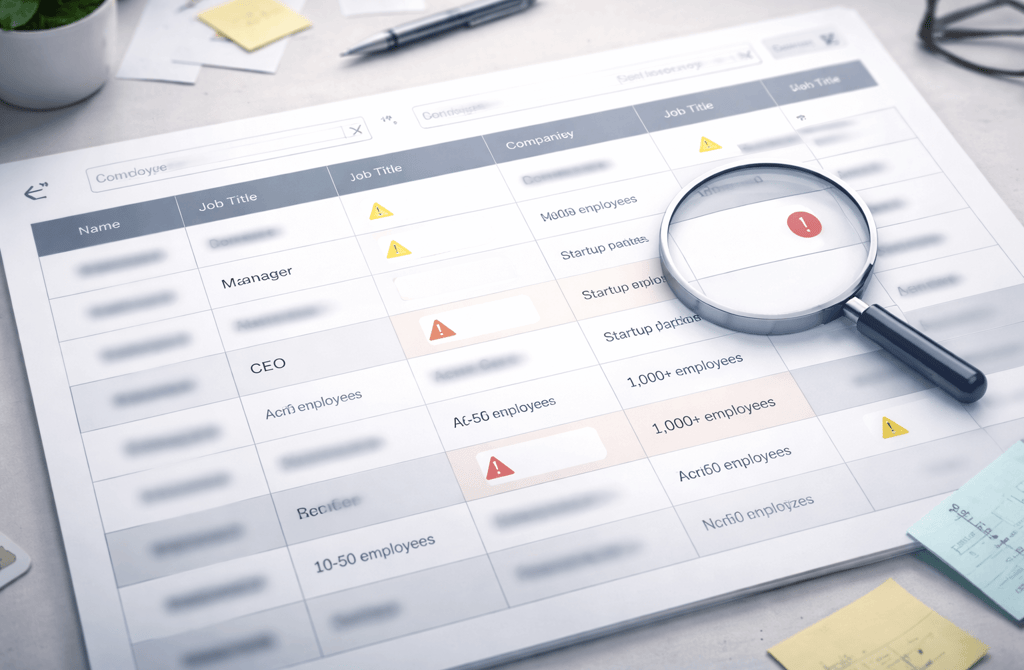

Most outbound teams assume failure comes from accumulation—too many bad records, too much decay, too little validation.
In reality, some of the worst breakdowns start with one field.
Not a missing dataset.
Not a completely broken list.
Just a single field that’s wrong in a way the system doesn’t know how to question.
That’s enough to quietly poison everything downstream.
One Field Is Never “Just One Field”
In outbound systems, fields don’t exist independently. Each one is referenced, relied on, or assumed by something else.
A single bad field often acts as a control variable:
company size determines segmentation
job title determines messaging logic
seniority determines routing and priority
When that field is wrong, every decision that touches it becomes wrong in the same direction. That consistency is what makes the corruption hard to detect.
Why the System Keeps Trusting the Bad Field
The most dangerous fields aren’t obviously broken. They:
look populated
pass formatting checks
fit expected value ranges
From the system’s perspective, nothing is wrong.
This creates a false sense of confidence. Automation keeps moving. Sequences keep enrolling. Scores keep calculating. The system trusts the field because it has no reason not to.
And that trust spreads.
How Corruption Spreads Without Errors
Here’s what typically happens:
A single field is outdated or misclassified
Personalization references the same faulty field
Engagement drops, but inconsistently
Deliverability absorbs negative signals gradually
No alert fires.
No dashboard turns red.
The system continues operating—just with corrupted logic.
By the time results are questioned, the bad field has already influenced weeks of activity.
Why Teams Fix the Wrong Thing
When performance dips, teams look where visibility is highest:
copy
subject lines
cadence
Those are the levers they can see and change quickly.
But none of those fix the corrupted assumption sitting quietly upstream. In fact, adjusting them often amplifies the damage by increasing exposure to the bad field.
This is why outbound can feel unpredictable even when changes are made thoughtfully.
One Bad Field Beats Ten Good Ones
Teams often assume good data averages out bad data.
It doesn’t—when the bad data sits in a decision-critical position.
Ten accurate fields won’t help if:
routing depends on the wrong one
messaging logic branches on the wrong one
scoring weights the wrong one
The system doesn’t vote on truth. It executes logic.
And logic is only as good as the field it references.
Automation Makes Single-Field Failures More Expensive
Manual outbound sometimes catches these issues by accident—SDRs notice patterns, spot inconsistencies, or adjust on the fly.
Automation removes that friction.
Once a bad field is embedded into:
rules
triggers
workflows
it stops being a data issue and becomes a system behavior.
That’s why single-field failures often feel sudden at scale, even though the field itself was wrong for a long time.
The Real Fix Is Dependency Awareness
Preventing this kind of corruption isn’t about validating everything equally. It’s about identifying which fields the system depends on most.
High-performing teams know:
which fields drive irreversible decisions
which fields influence multiple downstream steps
which fields must be fresher than others
They don’t just ask “is this field filled?”
They ask “what breaks if this field is wrong?”
What This Means
Outbound systems don’t collapse because data is broadly bad.
They collapse because one trusted field stops reflecting reality—and the system keeps believing it.
When critical fields stay aligned, outbound stays coherent.
When even one drifts, the system quietly works against itself long before anyone notices.
Related Post:
Why Multi-Source Data Blending Beats Single-Source Lists
The Conflicts That Arise When You Merge Multiple Lead Sources
How Cross-Source Validation Improves Data Reliability
Why Data Blending Fails When Metadata Isn’t Aligned
The Hidden Errors Inside Aggregated Lead Lists
Why Bad Data Creates Massive Hidden Operational Waste
The Outbound Tasks That Multiply When Data Is Wrong
How Weak Lead Quality Increases SDR Workload
Why Founders Waste Hours Fixing Data Problems
The Operational Drag Caused by Inconsistent Metadata
Why RevOps Fails Without Strong Data Foundations
The RevOps Data Flows That Predict Outbound Success
How Weak Data Breaks RevOps Alignment Across Teams
Why Revenue Models Collapse When Metadata Is Inaccurate
The Hidden RevOps Data Dependencies Embedded in Lead Quality
Why Automation Alone Can’t Run a Reliable Outbound System
The Decisions Automation Gets Wrong in Cold Email
How Human Judgment Fixes What Automated Tools Misread
Why Fully Automated Outreach Creates Hidden Risk
The Outbound Decisions That Still Require Human Logic
Why Outbound Systems Fail When Data Dependencies Break
The Chain Reactions Triggered by Weak Data Inputs
Connect
Get verified leads that drive real results for your business today.
www.capleads.org
© 2025. All rights reserved.
Serving clients worldwide.
CapLeads provides verified B2B datasets with accurate contacts and direct phone numbers. Our data helps startups and sales teams reach C-level executives in FinTech, SaaS, Consulting, and other industries.