
Why Outbound Behavior Differs Wildly Across Verticals
Outbound results vary by industry more than most teams expect. Learn how vertical dynamics shape reply behavior, timing, and engagement patterns.
INDUSTRY INSIGHTSLEAD QUALITY & DATA ACCURACYOUTBOUND STRATEGYB2B DATA STRATEGY
CapLeads Team
1/21/20263 min read
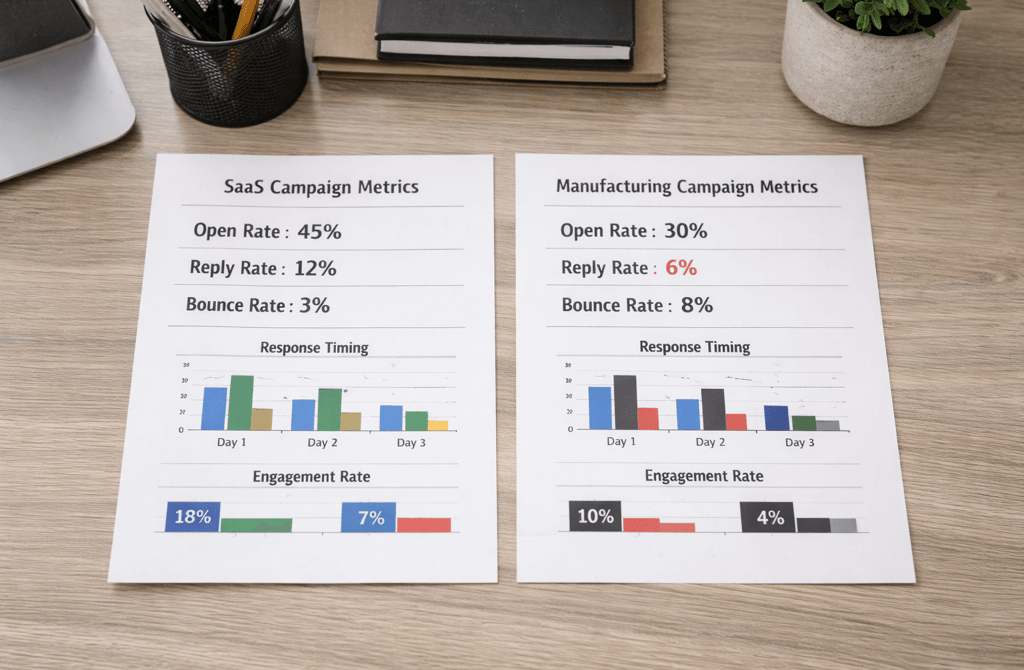
Two outbound campaigns can look identical on paper and still behave nothing alike.
Same email copy.
Same sender setup.
Same daily volume.
One vertical replies fast and clean. The other stalls, bounces more, and feels “cold” no matter what you tweak. This isn’t randomness — it’s vertical behavior showing up in the data.
Most teams assume outbound performance problems live in messaging, timing, or tooling. In reality, industry structure quietly dictates how prospects receive, process, and respond to outreach.
Verticals Don’t Just Buy Differently — They Communicate Differently
Every industry has its own communication norms, attention windows, and internal decision flow. Those patterns shape outbound behavior long before a prospect reads your copy.
For example:
Some industries check email constantly but reply selectively.
Others read slowly, forward internally, and respond days later.
Some prefer short, transactional messages.
Others require context before engaging at all.
When teams ignore this, they misinterpret normal vertical behavior as campaign failure.
Reply Timing Isn’t Universal
Reply speed varies wildly by industry.
Fast-moving sectors often show:
Early replies (Day 1–2)
Higher variance between contacts
Sharp drop-off after initial touches
More traditional or operational industries often show:
Delayed replies (Day 3–7)
Fewer early signals
Replies clustered later in the sequence
If you judge performance too early — or apply the same follow-up cadence everywhere — you end up cutting campaigns that simply hadn’t reached their natural response window yet.
Engagement Depth Changes by Vertical
Some industries reply briefly:
“Send info”
“Not interested”
“Talk to X instead”
Others respond with longer messages, clarifying questions, or internal referrals.
That difference affects how you should interpret metrics:
Short replies don’t mean low intent
Long replies don’t always mean buying readiness
Outbound behavior reflects how decisions are made inside that industry, not how interested someone is in isolation.
Bounce and Deliverability Patterns Aren’t Equal Either
Certain verticals naturally produce:
Higher role churn
More operational email changes
Faster contact decay
Others maintain stable titles and inboxes for years.
When bounce rates differ across industries, it’s not always a validation failure — it’s often a reflection of how volatile that sector’s workforce actually is. Treating all bounce behavior the same leads to wrong conclusions and unnecessary infrastructure changes.
Decision Structures Shape Responses
Industries with:
Buying committees
Layered approvals
Shared inbox culture
Behave very differently from founder-led or owner-operator sectors.
You might be emailing the right person but still get silence because the role is informational, not decisive. In another vertical, that same title would reply immediately.
Outbound behavior mirrors internal authority, not just job titles.
Why “One Playbook” Breaks at Scale
Teams run into trouble when they:
Expect identical reply curves across industries
Use the same send windows everywhere
Interpret silence as rejection instead of timing
Optimize copy before adjusting expectations
Vertical behavior doesn’t care about your benchmarks. It follows its own rhythm.
The most effective outbound systems adapt measurement, patience, and interpretation based on industry context — not generic averages.
What This Means Operationally
If outbound feels inconsistent across segments, that’s often a sign your data is telling the truth — not that your system is broken.
Understanding vertical behavior allows you to:
Set realistic reply-rate expectations
Adjust sequence timing intelligently
Interpret engagement signals correctly
Avoid over-correcting healthy campaigns
Outbound becomes more predictable when you stop forcing uniformity onto industries that never behave the same way.
The Real Takeaway
Outbound performance isn’t just about what you send — it’s about who you’re sending to and how their industry naturally operates.
When lead data reflects real vertical behavior, response patterns start to make sense instead of feeling random.
When data ignores industry context, even strong outbound systems feel unreliable.
Clean, industry-aware data doesn’t just improve results — it makes outbound behavior readable instead of confusing.
Related Post:
The RevOps Data Flows That Predict Outbound Success
How Weak Data Breaks RevOps Alignment Across Teams
Why Revenue Models Collapse When Metadata Is Inaccurate
The Hidden RevOps Data Dependencies Embedded in Lead Quality
Why Automation Alone Can’t Run a Reliable Outbound System
The Decisions Automation Gets Wrong in Cold Email
How Human Judgment Fixes What Automated Tools Misread
Why Fully Automated Outreach Creates Hidden Risk
The Outbound Decisions That Still Require Human Logic
Why Outbound Systems Fail When Data Dependencies Break
The Chain Reactions Triggered by Weak Data Inputs
How One Bad Field Corrupts an Entire Outbound System
Why Data Dependencies Matter More Than Individual Signals
The Upstream Errors That Create Downstream Pipeline Damage
Why Some Industries Naturally Produce Higher Bounce Rates
The Vertical Patterns Behind High-Bounce Lead Lists
How Industry Type Predicts Email Bounce Probability
Why Low-Bounce Verticals Offer More Stable Outreach
The Structural Reasons Certain Verticals Bounce More
Connect
Get verified leads that drive real results for your business today.
www.capleads.org
© 2025. All rights reserved.
Serving clients worldwide.
CapLeads provides verified B2B datasets with accurate contacts and direct phone numbers. Our data helps startups and sales teams reach C-level executives in FinTech, SaaS, Consulting, and other industries.