
Why Outbound Teams Misdiagnose ICP Problems as Copy Issues
Low replies aren’t always a copy problem. Learn why outbound teams often misdiagnose ICP misalignment as messaging failure—and how that mistake compounds performance issues.
INDUSTRY INSIGHTSLEAD QUALITY & DATA ACCURACYOUTBOUND STRATEGYB2B DATA STRATEGY
CapLeads Team
1/5/20263 min read
When outbound performance drops, teams instinctively open the editor.
Subject lines get rewritten. Intros get tightened. CTAs get softened. Sequences get rearranged. Weeks pass optimizing words—while reply rates barely move.
This happens because copy is visible.
ICP accuracy is not.
Copy Is the Most Obvious Variable—So It Gets Blamed First
Outbound teams interact with copy every day. They can read it, tweak it, and A/B test it quickly. When replies slow down, copy feels like the most controllable lever.
ICP issues, on the other hand, sit upstream:
Lists were built weeks ago
Buyer roles were assumed, not validated
By the time emails are being edited, the real problem is already baked in.
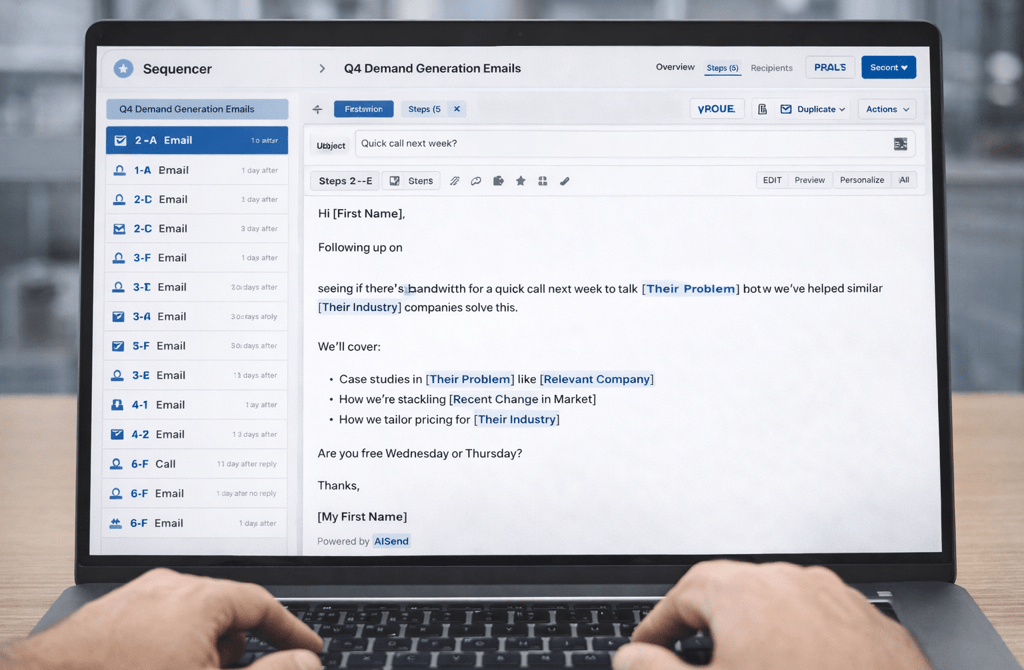
Sequencer Metrics Mask ICP Failures
Modern outbound tools reinforce this misdiagnosis.
Sequencers show:
Delivery success
Open rates
Step-by-step performance
When emails are being delivered and opened, teams assume the audience is right. But opens don’t confirm buyer fit. They only confirm visibility.
Low replies inside a healthy-looking sequencer usually mean the message reached the wrong person, not that the message was wrong.
Personalization Makes ICP Errors Harder to Detect
Personalization can temporarily hide ICP problems.
Even poorly targeted emails can earn opens and polite responses when they reference:
Company names
Recent news
Job titles
This creates false confidence. Teams see engagement and assume targeting is solid, when in reality they’re engaging non-buyers who can’t progress the deal.
Copy becomes the scapegoat when conversion doesn’t follow.
ICP Misalignment Produces “Almost Working” Campaigns
One of the most misleading signals in outbound is the “almost” campaign:
Replies come in, but slowly
Conversations start, then stall
Prospects say “interesting” but never commit
These campaigns feel fixable with better copy. In truth, they’re structurally misaligned.
Copy can spark interest. Only ICP accuracy creates momentum.
The Feedback Loop That Keeps Teams Stuck
When ICP problems are misdiagnosed:
Teams rewrite copy
Performance doesn’t improve
Teams assume more testing is needed
ICP assumptions remain untouched
This loop burns time, volume, and confidence. Outbound feels unpredictable because the root cause is never addressed.
Copy Optimization Has Diminishing Returns Without ICP Precision
Great copy amplifies good targeting.
It cannot compensate for bad targeting.
Once a campaign is “clear enough,” further gains depend almost entirely on:
Role accuracy
Buyer intent
Company fit
Teams that skip ICP review end up optimizing copy past the point of usefulness.
How High-Performing Teams Diagnose Correctly
Teams that scale outbound reliably ask different questions first:
Which roles are replying—and which aren’t?
Are replies coming from decision-makers or influencers?
Did this segment convert six months ago, or only open?
Has company size or buyer authority shifted since list creation?
Only after these checks do they touch copy.
ICP Diagnosis Requires Looking Away from the Editor
The hardest part of fixing outbound performance is stepping away from what’s familiar.
Copy is comfortable.
ICP diagnosis requires uncomfortable audits:
Removing segments that “feel close enough”
Dropping roles that reply but don’t buy
But this is where reply rates actually recover.
Final Thought
Copy problems are loud.
ICP problems are quiet.
When outbound teams misdiagnose the issue, they spend weeks fixing symptoms instead of causes. The fastest way to improve reply rates isn’t writing better emails—it’s making sure those emails are going to the right people in the first place.
Related Post:
How Domain Setup Shapes Your Entire Outbound Performance
Why Technical Architecture Matters More Than Copy Quality
The DNS Configuration Gaps That Hurt Cold Email Reach
Why Spam Filters Care More About Data Signals Than Copy
The Inbox Behavior Patterns Most Founders Misunderstand
How Spam Filters Score Your Sending Patterns in Real Time
Why Engagement History Shapes Inbox Placement More Than Content
The Hidden Signals That Push Your Emails Into Promotions
Why Domain Reputation Is the Real Gatekeeper of Cold Email
The Risk Signals ESPs Use to Judge Your Domain Instantly
How Domain Reputation Declines Long Before You Notice
Why Poor Data Quality Damages Your Domain’s Trust Profile
The Early Warning Signs Your Domain Reputation Is Slipping
Why Cold Email Frameworks Fail Without Clean Data
The Data Foundations Every “Winning” Framework Depends On
How Bad Data Makes Great Frameworks Look Broken
Why Segmentation Quality Determines Outbound Success
The Targeting Logic Mistakes That Break Cold Email Results
Why Accurate Targeting Beats Personalization Tricks
The Segmentation Rules High-Performing Teams Depend On
Why ICP Accuracy Determines Whether Outbound Scales
The Buyer Mapping Errors That Break Your Targeting
How ICP Drift Quietly Lowers Your Reply Rate
Connect
Get verified leads that drive real results for your business today.
www.capleads.org
© 2025. All rights reserved.
Serving clients worldwide.
CapLeads provides verified B2B datasets with accurate contacts and direct phone numbers. Our data helps startups and sales teams reach C-level executives in FinTech, SaaS, Consulting, and other industries.