
How Spam Filters Score Your Sending Patterns in Real Time
Spam filters track sending patterns in real time. Learn how cadence, bounce rates, and engagement trends influence inbox placement during live campaigns.
INDUSTRY INSIGHTSLEAD QUALITY & DATA ACCURACYOUTBOUND STRATEGYB2B DATA STRATEGY
CapLeads Team
1/1/20263 min read
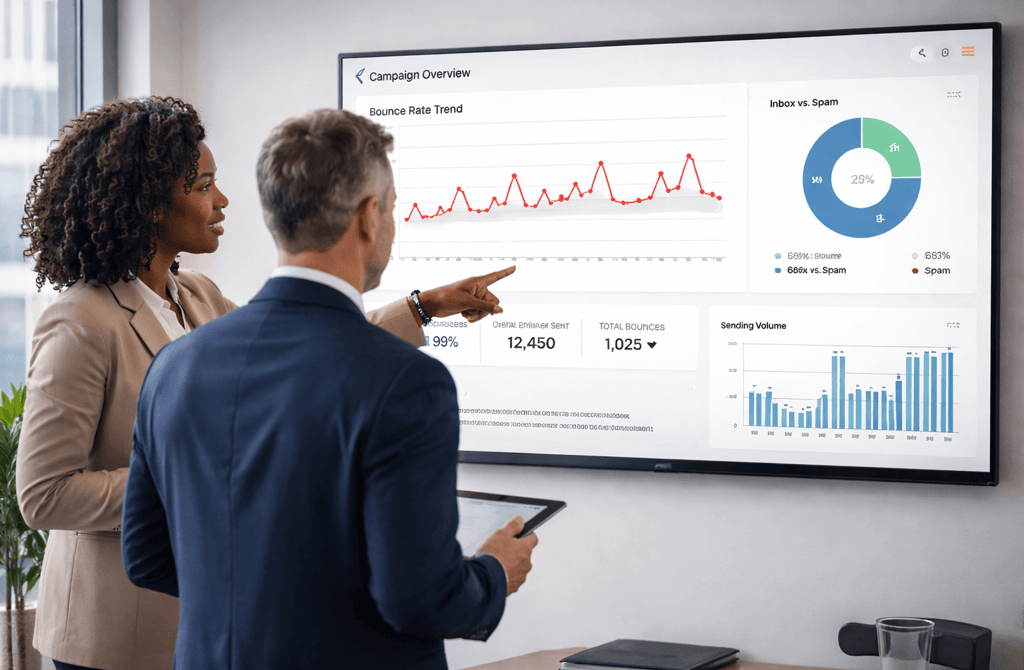
Most founders imagine spam filters as static gatekeepers. You send an email, it gets evaluated, and the verdict is delivered: inbox or spam. That mental model is outdated.
Modern spam filtering systems score behavior in motion, not messages in isolation. Your campaign isn’t judged email by email — it’s evaluated as a living stream of signals that updates continuously while you’re sending.
This is why campaigns can start strong and collapse mid-send, even when nothing “changed” on the surface.
Spam Filters Don’t Wait for Campaigns to Finish
Inbox providers score sending patterns as they unfold.
Every batch you send feeds into an evolving profile that answers questions like:
Is this sender behaving consistently?
Are engagement signals improving or deteriorating?
Are error rates staying within expected bounds?
Is recipient behavior aligning with historical norms?
If early signals look healthy, filters stay permissive. If patterns drift — even slightly — scoring tightens immediately.
This is why inbox placement is not something you “check later.” It’s something that can shift while emails are actively going out.
Cadence Is Scored More Than Volume
Founders often fixate on daily send limits. But spam filters care less about how much you send and more about how predictably you send.
Sudden changes in cadence trigger scrutiny:
A ramp that accelerates faster than historical behavior
Irregular pauses followed by bursts
Inconsistent spacing between sends
From a filter’s perspective, erratic cadence looks like automation instability — a common trait of abusive senders.
Even moderate volumes can get suppressed if timing patterns feel unnatural.
Bounce Clusters Are Evaluated as Events, Not Averages
Most people look at bounce rate as a percentage. Spam filters don’t.
They look at when bounces occur.
A campaign with a low overall bounce rate can still trigger risk if bounces cluster tightly in time. A spike of failures in a short window signals list quality problems or stale targeting, even if the final average looks acceptable.
This is why campaigns sometimes lose inbox placement after the “first few thousand” sends. Filters detect the cluster before you see the summary.
Engagement Velocity Matters More Than Engagement Volume
A handful of opens or replies isn’t enough to offset weak patterns if they arrive too late.
Spam filters track engagement velocity:
How soon recipients interact after delivery
Whether engagement keeps pace with sending volume
If interaction drops as volume increases
When sending outpaces engagement, filters interpret it as declining relevance. That shift affects placement immediately, not after the campaign ends.
This is one reason scaling volume too quickly often backfires — engagement rarely scales linearly with send speed.
Pattern Consistency Builds Trust Faster Than “Good Results”
Inbox providers reward stability.
Consistent sending windows, steady engagement ratios, predictable bounce behavior — these patterns build confidence even when raw metrics aren’t perfect. Conversely, volatile performance erodes trust even if occasional results look strong.
This explains why some founders with “worse numbers” maintain inbox placement while others with better-looking stats don’t. Filters trust the stable sender more than the volatile one.
Why Fixing Copy Rarely Fixes Real-Time Scoring Problems
When a campaign starts landing in spam mid-send, founders usually react by editing subject lines or messaging. But spam filters aren’t rescoring copy at that point — they’re reacting to behavioral trajectories.
If your sending pattern is already trending negatively, changing words doesn’t reset the score. Only stabilizing the underlying signals does:
Slowing cadence
Removing risky segments
Reducing bounce exposure
Restoring engagement balance
Until those patterns normalize, copy changes have limited impact.
The Real Takeaway for Founders
Spam filters don’t make a single decision about your campaign. They make thousands of small decisions, continuously, based on how your sending behavior evolves.
Inbox placement isn’t granted — it’s maintained.
Founders who understand this stop treating deliverability as a pre-flight checklist and start treating it as live system management. They design campaigns to behave predictably under scrutiny, not just look good on dashboards.
Because in modern outbound, the inbox isn’t earned by what you say — it’s earned by how you send.
Related Post:
How Industry Dynamics Affect Lead Verification Accuracy
Why Some Verticals Require Deeper Validation Than Others
The Validation Rules That Change Based on Industry Type
Why Company Size Errors Break Your Targeting Strategy
The Revenue Accuracy Problems Hidden Inside Most Lead Lists
How Incorrect Company Location Data Distorts Segmentation
Why HQ vs Branch Confusion Derails Cold Email Targeting
The Real Cost of Running Outbound on Mis-Sized Companies
Why Role Accuracy Matters More Than Personalization
The Title Errors That Break Your Buyer Targeting
How Incorrect Department Data Skews Segmentation
Why Job Seniority Precision Predicts Reply Probability
The Role Drift That Makes Outreach Hit the Wrong Person
Why Deliverability Architecture Decides Whether Your Emails Land
The Infrastructure Mistakes That Break Inbox Placement
How Domain Setup Shapes Your Entire Outbound Performance
Why Technical Architecture Matters More Than Copy Quality
The DNS Configuration Gaps That Hurt Cold Email Reach
Why Spam Filters Care More About Data Signals Than Copy
The Inbox Behavior Patterns Most Founders Misunderstand
Connect
Get verified leads that drive real results for your business today.
www.capleads.org
© 2025. All rights reserved.
Serving clients worldwide.
CapLeads provides verified B2B datasets with accurate contacts and direct phone numbers. Our data helps startups and sales teams reach C-level executives in FinTech, SaaS, Consulting, and other industries.