
Why Cold Email Frameworks Fail Without Clean Data
Cold email frameworks don’t fail because of copy or structure. They fail when the underlying lead data is outdated, incomplete, or misaligned with the ICP.
INDUSTRY INSIGHTSLEAD QUALITY & DATA ACCURACYOUTBOUND STRATEGYB2B DATA STRATEGY
CapLeads Team
1/3/20263 min read
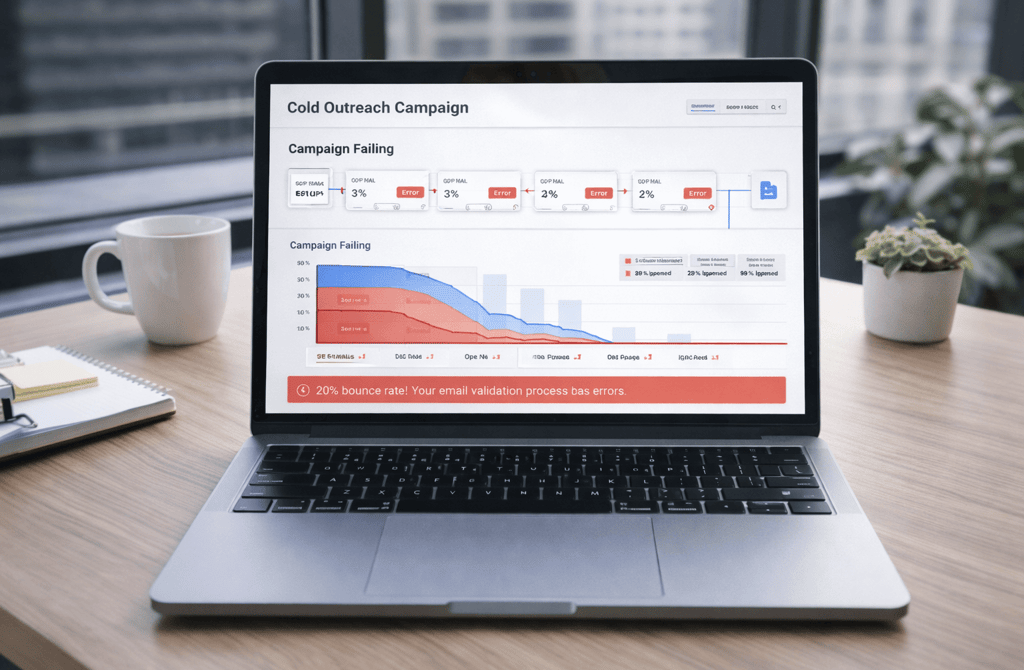
Cold email frameworks don’t usually fail the way people think they do.
When reply rates drop or campaigns stall, most teams assume the problem is messaging. They rewrite subject lines, adjust hooks, shorten paragraphs, or swap templates. When that doesn’t work, they try another framework.
But in most cases, the framework isn’t broken at all.
The real issue sits underneath it — in the data.
Frameworks are execution layers. Data is the foundation they stand on. If the foundation is unstable, no amount of copy refinement will produce consistent results.
Frameworks Assume the Inputs Are Sound
Every cold email framework is built on hidden assumptions:
The recipient is still at the company
The role is accurate
The department matches the problem being described
The email address is active and deliverable
The company still fits the intended ICP
Frameworks don’t verify any of this. They simply operate as if it’s already true.
When those assumptions break, the framework appears to fail — even though it’s doing exactly what it was designed to do.
Why Copy Tweaks Create False Signals
One of the most dangerous effects of weak data is misleading feedback.
When you send a strong framework to a poor-quality list, the results distort your decision-making:
Low replies look like weak messaging
High bounces look like infrastructure issues
No engagement feels like poor timing
Soft replies feel random
Teams then start iterating on the wrong variables.
They change copy when the issue is targeting.
They adjust cadence when the issue is recency.
They test frameworks when the issue is data decay.
This creates a loop where frameworks are blamed for failures they didn’t cause.
The Hidden Data Requirements Frameworks Depend On
For a framework to perform predictably, several data conditions need to be true at the same time:
Role accuracy: The message must reach someone who can recognize the problem
Recency: Job titles, departments, and company structure must reflect the current state
Completeness: Missing fields reduce relevance even if the copy is solid
Deliverability safety: Emails must be safe to send without damaging domain reputation
ICP alignment: The company must still fit the problem the framework is designed to address
If any one of these breaks, the framework’s performance collapses — quietly and unevenly.
That’s why frameworks often “work once” and then stop working. The framework didn’t decay. The data did.
Why Great Frameworks Look Broken on Bad Lists
Strong frameworks amplify both good and bad inputs.
On clean data, they feel effortless. Replies come quickly. Patterns emerge. Small tweaks produce measurable lifts.
On weak data, they magnify problems:
Role mismatch turns relevance into noise
Outdated titles break personalization logic
Incomplete records flatten engagement
Aged emails create bounce clusters
Misaligned ICPs confuse inbox providers
The framework becomes the messenger for problems that already existed upstream.
Data Problems Surface First in Framework Testing
Framework testing is often where data issues first reveal themselves.
If you notice:
Sudden drops in reply rate across multiple frameworks
Inconsistent results between similar campaigns
Strong open rates with zero replies
“Random” engagement that doesn’t scale
Those aren’t framework signals. They’re data signals.
Frameworks don’t fail gracefully. They fail diagnostically. They expose weak foundations faster than most metrics do.
Fix the Foundation Before You Change the Framework
The fastest way to improve cold email results is rarely a new framework.
It’s tightening the data inputs that frameworks rely on:
Refresh role and title accuracy
Close completeness gaps in key fields
Remove risky or aged contacts
Reconfirm ICP assumptions
Once those are stable, frameworks start behaving predictably again — often without changing a single word of copy.
Final Thought
Cold email frameworks are not magic formulas. They are delivery systems that assume your data is already trustworthy.
When the foundation is clean, frameworks reveal real buyer behavior.
When the foundation is outdated, frameworks simply expose the cracks faster.
Related Post:
How Incorrect Department Data Skews Segmentation
Why Job Seniority Precision Predicts Reply Probability
The Role Drift That Makes Outreach Hit the Wrong Person
Why Deliverability Architecture Decides Whether Your Emails Land
The Infrastructure Mistakes That Break Inbox Placement
How Domain Setup Shapes Your Entire Outbound Performance
Why Technical Architecture Matters More Than Copy Quality
The DNS Configuration Gaps That Hurt Cold Email Reach
Why Spam Filters Care More About Data Signals Than Copy
The Inbox Behavior Patterns Most Founders Misunderstand
How Spam Filters Score Your Sending Patterns in Real Time
Why Engagement History Shapes Inbox Placement More Than Content
The Hidden Signals That Push Your Emails Into Promotions
Why Domain Reputation Is the Real Gatekeeper of Cold Email
The Risk Signals ESPs Use to Judge Your Domain Instantly
How Domain Reputation Declines Long Before You Notice
Why Poor Data Quality Damages Your Domain’s Trust Profile
The Early Warning Signs Your Domain Reputation Is Slipping
Connect
Get verified leads that drive real results for your business today.
www.capleads.org
© 2025. All rights reserved.
Serving clients worldwide.
CapLeads provides verified B2B datasets with accurate contacts and direct phone numbers. Our data helps startups and sales teams reach C-level executives in FinTech, SaaS, Consulting, and other industries.