
Why HQ vs Branch Confusion Derails Cold Email Targeting
Confusing headquarters with branch locations leads to misdirected cold emails, wrong decision-makers, and wasted outbound effort. Here’s why it breaks targeting.
INDUSTRY INSIGHTSLEAD QUALITY & DATA ACCURACYOUTBOUND STRATEGYB2B DATA STRATEGY
CapLeads Team
12/29/20253 min read

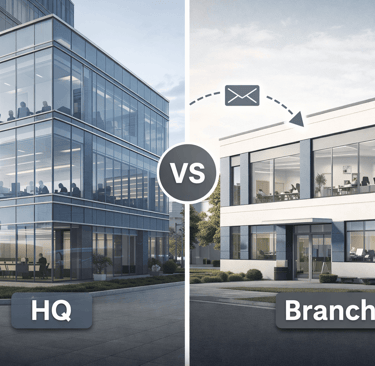
Most cold email failures blamed on “bad copy” are actually caused by a quieter, more structural problem: messaging is sent to the wrong part of the company.
Not the wrong person.
The wrong location.
When lead data fails to clearly distinguish headquarters vs branch offices, outbound systems start making assumptions that break targeting logic long before an email is written. The result is outreach that looks relevant on paper but feels off to the recipient.
This isn’t a size problem.
It isn’t a revenue problem.
It’s a decision-location problem.
The Hidden Difference Between HQ and Branch Data
In most B2B organizations, decision authority is geographically uneven.
Strategy, budgeting, vendor evaluation, and tooling decisions usually live at HQ
Execution, operations, and localized buying may happen at branches
Some roles exist in both locations—but only one side actually controls spend
When your data collapses HQ and branch records into a single “company location,” your outreach starts mixing decision intent with execution roles.
That’s when targeting breaks.
How HQ vs Branch Errors Show Up in Cold Email
1. You Email the Right Title — at the Wrong Office
A “Head of Operations” at a regional branch may sound senior, but their authority is often limited to local execution.
When cold emails reference:
company-wide initiatives
platform decisions
budget ownership
…they immediately feel misaligned.
The prospect doesn’t push back — they just ignore it.
From your dashboard, it looks like low interest.
In reality, the message never reached the decision center.
2. Personalization Becomes Structurally Wrong
Good personalization depends on organizational context.
If your data doesn’t clarify whether a contact is based at HQ or a branch, personalization engines assume:
global ownership
centralized responsibility
strategic influence
That leads to messages that feel overreaching or out of scope to branch-based contacts.
This is why some emails get polite deflections like:
“This is handled by our head office.”
That reply isn’t a soft no — it’s a data failure.
3. Buying Committees Get Mapped Incorrectly
HQ vs branch confusion also breaks multi-contact targeting.
Outbound systems often attempt to:
map buying committees
layer multiple roles
sequence across departments
But when branch contacts are incorrectly treated as HQ decision-makers, committee mapping becomes distorted.
You end up with:
duplicated roles
missing budget owners
fragmented conversations across locations
Instead of coordinated outreach, you create internal confusion inside the account.
4. Pipeline Metrics Become Misleading
HQ vs branch errors don’t just hurt replies — they corrupt analytics.
When branch contacts are logged as strategic stakeholders:
“no interest” is misattributed to messaging
ICP assumptions start drifting
Teams then iterate on copy, cadence, and offers — while the real issue remains untouched.
This is how outbound teams burn months optimizing the wrong layer.
Why This Problem Is Getting Worse
Modern companies are more geographically distributed than ever.
Remote-first structures
Regional hubs
Shared service centers
Local offices with senior titles but limited authority
At the same time, many data sources flatten location metadata to simplify records.
That convenience comes at a cost:
decision authority becomes ambiguous
outbound becomes noisier, not smarter
How Smart Teams Fix HQ vs Branch Confusion
High-performing outbound teams treat decision location as a first-class data attribute.
They:
distinguish HQ records from branch records explicitly
align messaging intent with organizational authority
adjust personalization depth based on location context
avoid assigning global narratives to local roles
This doesn’t require more volume.
It requires cleaner structural data.
Final Thought
Cold email doesn’t fail because prospects hate outreach.
It fails because messages are sent to the wrong place inside the company.
When headquarters and branch data are blurred together, even well-written emails land in the wrong context — and context decides relevance.
Accurate location data aligns messages with real decision centers.
When location data is wrong, outbound conversations fail before they begin.
Related Post:
Why Incomplete Lead Fields Create Hidden Outbound Waste
The Role Field Enrichment Plays in High-Precision Outreach
How Incomplete Company Data Skews Your Segmentation Logic
Why Enriched Leads Outperform Basic Lists Every Time
The Validation Errors Only Humans Can Catch
Why Automated Checks Miss Critical Lead Risks
The Human Review Advantage Most Providers Ignore
How Manual Validation Fixes What Automation Misreads
Why Blending Human and Automated Validation Wins
The Silent Damage Duplicate Emails Create in Outbound
Why Duplicate Contacts Inflate Your Metrics and Hide Problems
How Spam Traps Enter Lead Lists Without Anyone Noticing
The Hidden Risks Inside “Clean-Looking” Email Lists
Why Risky Emails Ruin Performance Across Multiple Campaigns
Why Industry-Specific Data Validates Very Differently
The Validation Obstacles Unique to High-Churn Industries
How Industry Dynamics Affect Lead Verification Accuracy
Why Some Verticals Require Deeper Validation Than Others
The Validation Rules That Change Based on Industry Type
Why Company Size Errors Break Your Targeting Strategy
The Revenue Accuracy Problems Hidden Inside Most Lead Lists
How Incorrect Company Location Data Distorts Segmentation
Connect
Get verified leads that drive real results for your business today.
www.capleads.org
© 2025. All rights reserved.
Serving clients worldwide.
CapLeads provides verified B2B datasets with accurate contacts and direct phone numbers. Our data helps startups and sales teams reach C-level executives in FinTech, SaaS, Consulting, and other industries.