
Why Company Size Errors Break Your Targeting Strategy
Company size errors quietly derail outbound targeting, segmentation, and reply rates. Learn how mis-sized companies distort ICP fit and waste campaign spend.
INDUSTRY INSIGHTSLEAD QUALITY & DATA ACCURACYOUTBOUND STRATEGYB2B DATA STRATEGY
CapLeads Team
12/29/20253 min read
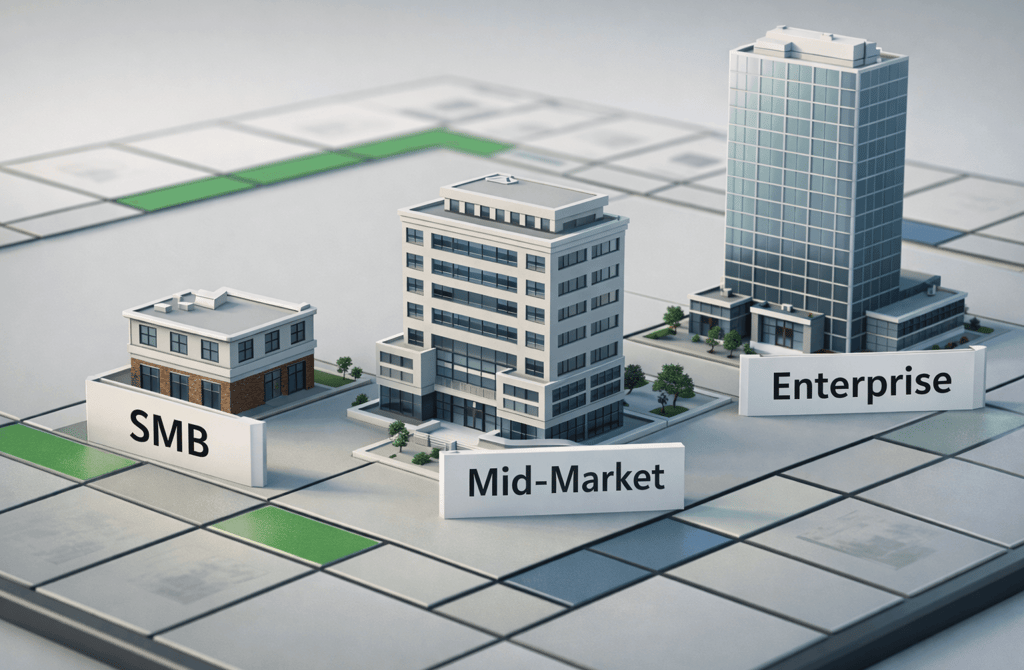
Company size looks like a simple filter. Small, mid-market, enterprise. Three buckets. Easy to select. Easy to move on.
In reality, company size is one of the most fragile inputs in outbound—and when it’s wrong, it quietly breaks everything downstream.
Most teams don’t notice the damage right away because the campaign still sends, emails still deliver, and dashboards still populate. But response quality drops, conversations stall, and pipeline feels “off” in ways that are hard to diagnose.
That’s usually a size problem hiding in plain sight.
1. Company Size Dictates Buying Behavior More Than Messaging
An SMB, a mid-market company, and an enterprise don’t buy the same way—even when they need the same solution.
SMBs prioritize speed, simplicity, and price sensitivity
Mid-market teams care about integration, ROI justification, and operational fit
Enterprise buyers require consensus, procurement processes, and risk mitigation
When a company is mis-sized, your message lands in the wrong buying context. What sounds “clear and helpful” to an SMB feels naïve to an enterprise buyer. What feels appropriately detailed for mid-market sounds bloated to a small team.
No copy tweak can fix a message aimed at the wrong buying environment.
2. Size Errors Break Segmentation Logic First
Segmentation rules almost always rely on company size:
Cadence length
Follow-up frequency
Seniority targeting
Value framing
If a 40-person company is labeled as 400 employees, it gets enterprise treatment it never asked for. If a 1,200-person company is tagged as mid-market, it receives messaging that ignores internal complexity.
The result isn’t outright rejection—it’s indifference.
The campaign looks active, but replies slow down because the outreach doesn’t feel “for them.”
3. Company Size Errors Cascade Into Role Targeting
Size determines who matters inside the company.
In smaller companies, titles are fluid. One person may own multiple decisions. In larger organizations, titles are specialized and authority is distributed.
When size data is wrong:
You target the wrong seniority
You miss key stakeholders
You over-or under-personalize
A VP at a 50-person company behaves very differently from a VP at a 5,000-person company—even if the title is identical. Size misclassification turns correct titles into incorrect targets.
4. Mis-Sized Companies Inflate or Deflate Pipeline Illusions
Size errors distort performance metrics without making noise.
Campaigns aimed at “enterprise” might show low reply rates—not because enterprise doesn’t work, but because many targets are actually mid-market companies miscategorized as large accounts.
On the flip side, SMB campaigns may look artificially successful if larger companies are incorrectly pulled into smaller segments and respond out of curiosity rather than fit.
Both scenarios create false learning. Teams optimize based on bad signals and double down on the wrong conclusions.
5. Revenue, Headcount, and Size Drift Over Time
Company size isn’t static.
Hiring surges, layoffs, acquisitions, and restructures all change size profiles faster than most datasets update them. A company that fit your ICP six months ago may now behave very differently.
When size data isn’t refreshed:
ICP definitions drift
Account prioritization breaks
Sales expectations become unreliable
Outbound systems depend on stability. Size drift removes that stability quietly.
6. Size Errors Hurt Trust More Than Relevance
Prospects may not reply when something feels off—but they notice.
Messaging that assumes budget, structure, or scale incorrectly signals that the sender doesn’t understand their reality. That erodes trust before a conversation even starts.
It’s not that the offer is bad. It’s that the context feels wrong.
Final Thought
Company size isn’t just a demographic field—it’s a behavioral signal. When it’s wrong, targeting logic collapses before copy, personalization, or sequencing even get a chance to work.
Outbound becomes unpredictable not because the strategy failed, but because the foundation was mis-sized.
When size data reflects how companies actually operate, outreach aligns naturally with expectations.
When size data drifts or inflates, campaigns keep running—but results quietly slip away.
Related Post:
Why Incomplete Lead Fields Create Hidden Outbound Waste
The Role Field Enrichment Plays in High-Precision Outreach
How Incomplete Company Data Skews Your Segmentation Logic
Why Enriched Leads Outperform Basic Lists Every Time
The Validation Errors Only Humans Can Catch
Why Automated Checks Miss Critical Lead Risks
The Human Review Advantage Most Providers Ignore
How Manual Validation Fixes What Automation Misreads
Why Blending Human and Automated Validation Wins
The Silent Damage Duplicate Emails Create in Outbound
Why Duplicate Contacts Inflate Your Metrics and Hide Problems
How Spam Traps Enter Lead Lists Without Anyone Noticing
The Hidden Risks Inside “Clean-Looking” Email Lists
Why Risky Emails Ruin Performance Across Multiple Campaigns
Why Industry-Specific Data Validates Very Differently
The Validation Obstacles Unique to High-Churn Industries
How Industry Dynamics Affect Lead Verification Accuracy
Why Some Verticals Require Deeper Validation Than Others
The Validation Rules That Change Based on Industry Type
Connect
Get verified leads that drive real results for your business today.
www.capleads.org
© 2025. All rights reserved.
Serving clients worldwide.
CapLeads provides verified B2B datasets with accurate contacts and direct phone numbers. Our data helps startups and sales teams reach C-level executives in FinTech, SaaS, Consulting, and other industries.