
How Spam Traps Enter Lead Lists Without Anyone Noticing
Spam traps don’t appear overnight. Learn how they quietly enter B2B lead lists through common sourcing and hygiene mistakes before campaigns get paused.
INDUSTRY INSIGHTSLEAD QUALITY & DATA ACCURACYOUTBOUND STRATEGYB2B DATA STRATEGY
CapLeads Team
12/27/20253 min read
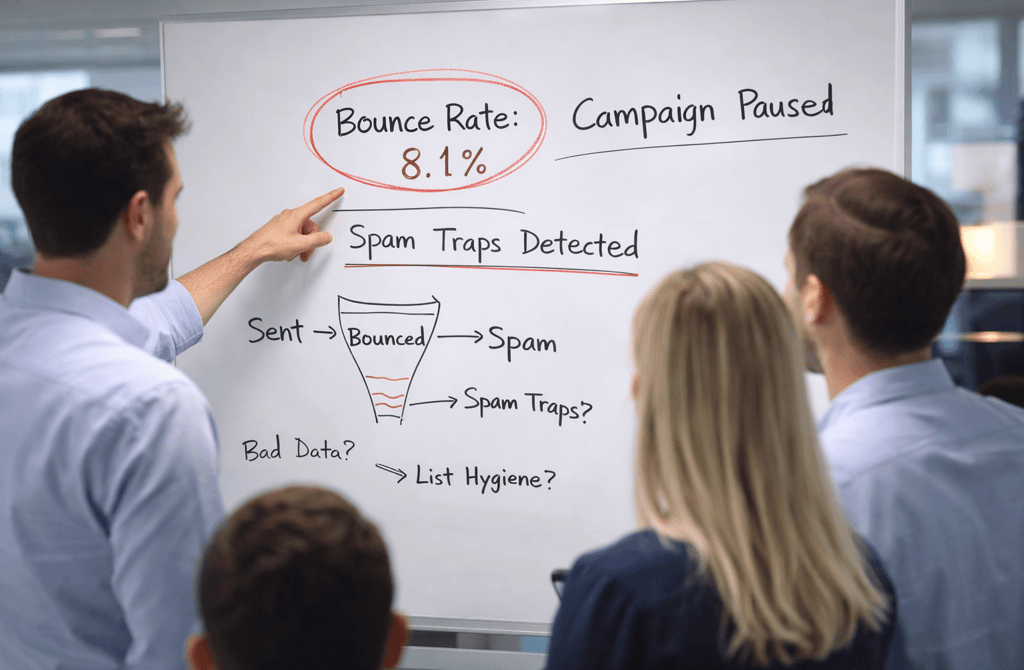
Spam traps rarely enter lead lists through obvious mistakes. They don’t announce themselves. They don’t break campaigns immediately. Most of the time, teams only realize something is wrong after bounce rates spike or campaigns get paused.
That’s what makes spam traps so dangerous in outbound — they slip in quietly through normal, well-intentioned workflows.
Spam Traps Don’t Come From “Bad Actors” Alone
There’s a common assumption that spam traps only exist in shady or low-quality lists. In reality, many spam traps enter systems through standard outbound processes that teams trust.
No one intentionally adds spam traps. They arrive as a byproduct of data aging, reuse, and automation.
This is why even experienced teams get hit.
The Most Common Entry Point: Old Data Recycling
One of the biggest sources of spam traps is recycled data.
Email addresses that were once valid can be repurposed over time. Inactive inboxes may be converted into traps by mailbox providers. When teams re-upload older lists, re-enrich past contacts, or reuse legacy CRM exports, those addresses come back into circulation.
From the team’s perspective, the contact looks familiar.
From the inbox provider’s perspective, it’s a trap.
Nothing about the list looks risky — until the damage shows up.
List Merging Without True Suppression
Another silent entry point is list merging.
When teams combine multiple sources — vendors, internal databases, scraped data, and enrichment outputs — suppression often focuses on email validity, not historical risk.
If a contact existed in the system years ago and was removed, but later reappears through another source, it can slip past filters. The system treats it as “new” even though it carries historical baggage.
This is how spam traps re-enter lists without triggering alarms.
Automation Masks the Warning Signs
Automation speeds up outbound — but it also hides early signals.
When campaigns are running at scale, small warning signs get buried:
A slight increase in hard bounces
Subtle drops in inbox placement
Individually, these don’t feel urgent. Together, they signal that risky addresses are already being contacted.
By the time automation systems react — pausing campaigns or throttling sends — the spam traps have already done their job.
Why Validation Alone Doesn’t Stop Spam Traps
This is where many teams get caught off guard.
Spam traps can pass basic validation.
Validation checks whether an email exists, not whether it should be contacted. A trap inbox can technically receive mail, respond to SMTP checks, and still be designed to penalize senders.
Teams trust validation as a safety net, assuming it blocks risky addresses. In reality, validation only handles one layer of risk — not reputation or intent.
The Role of Data Freshness (or Lack of It)
Spam traps thrive in stale systems.
The longer a contact sits unused, the higher the chance it becomes unsafe. When freshness isn’t enforced — and contacts aren’t aged out or removed — risk accumulates silently.
Outbound teams often measure success by list size and throughput. Spam traps exploit that mindset by hiding inside “big” lists that haven’t been aggressively cleaned.
Why Teams Only Notice After Campaigns Pause
Inbox providers don’t issue warnings. They enforce limits.
When spam traps are hit repeatedly, the response is mechanical:
higher bounce penalties, reduced trust, campaign throttling, or outright pauses.
To the team, it feels sudden.
In reality, the issue started weeks earlier.
The delay between cause and effect is what makes spam traps so hard to trace back to their source.
The Real Problem Isn’t Detection — It’s Prevention
Most teams focus on detecting spam traps after damage occurs. By then, the list is compromised and sender reputation is already affected.
Prevention requires uncomfortable discipline:
Retiring old contacts instead of recycling them
Treating list age as a risk factor
Prioritizing suppression history, not just validation
Accepting smaller lists in exchange for safer sending
This isn’t flashy, but it’s what keeps outbound stable.
Final Thought
Spam traps don’t sneak into lead lists through negligence. They enter through normal workflows that lack guardrails.
When data reuse goes unchecked, risk builds quietly until enforcement happens without warning.
Outbound stays predictable when contacts reflect current reality.
When stale or recycled data lingers, spam traps become invisible passengers — and campaigns pay the price.
Related Post:
Why Bounce Rate Spikes Usually Point to Data, Not Domains
The Silent Infrastructure Issues Behind Rising Bounce Rates
How Poor Lead Quality Damages Your Domain at Scale
Why Bounce Reduction Begins Long Before You Hit Send
The Slow Data Drift That Quietly Breaks Your Targeting
Why Aging Data Distorts Your ICP More Than You Realize
The Decay Patterns That Predict When a List Stops Performing
How Data Drift Creates Hidden Misalignment in Outbound
Why Old Company Records Lead to Wrong-Person Outreach
The Missing Data Points That Break Your Targeting Strategy
Why Incomplete Lead Fields Create Hidden Outbound Waste
The Role Field Enrichment Plays in High-Precision Outreach
How Incomplete Company Data Skews Your Segmentation Logic
Why Enriched Leads Outperform Basic Lists Every Time
The Validation Errors Only Humans Can Catch
Why Automated Checks Miss Critical Lead Risks
The Human Review Advantage Most Providers Ignore
How Manual Validation Fixes What Automation Misreads
Why Blending Human and Automated Validation Wins
The Silent Damage Duplicate Emails Create in Outbound
Why Duplicate Contacts Inflate Your Metrics and Hide Problems
Connect
Get verified leads that drive real results for your business today.
www.capleads.org
© 2025. All rights reserved.
Serving clients worldwide.
CapLeads provides verified B2B datasets with accurate contacts and direct phone numbers. Our data helps startups and sales teams reach C-level executives in FinTech, SaaS, Consulting, and other industries.