
The Real Consequences of Using “Almost Valid” Emails
Using “almost valid” emails looks harmless, but it damages deliverability, raises bounce rates, and hurts domain reputation. Here’s why near-valid data is risky.
COLD EMAIL FUNDAMENTALSOUTBOUND STRATEGY & OPTIMIZATIONB2B LEAD VERIFICATIONDELIVERABILITY & TECHNICAL SETUP
CapLeads Team
11/28/20253 min read
Every founder knows to avoid invalid emails.
But almost nobody talks about something far more dangerous:
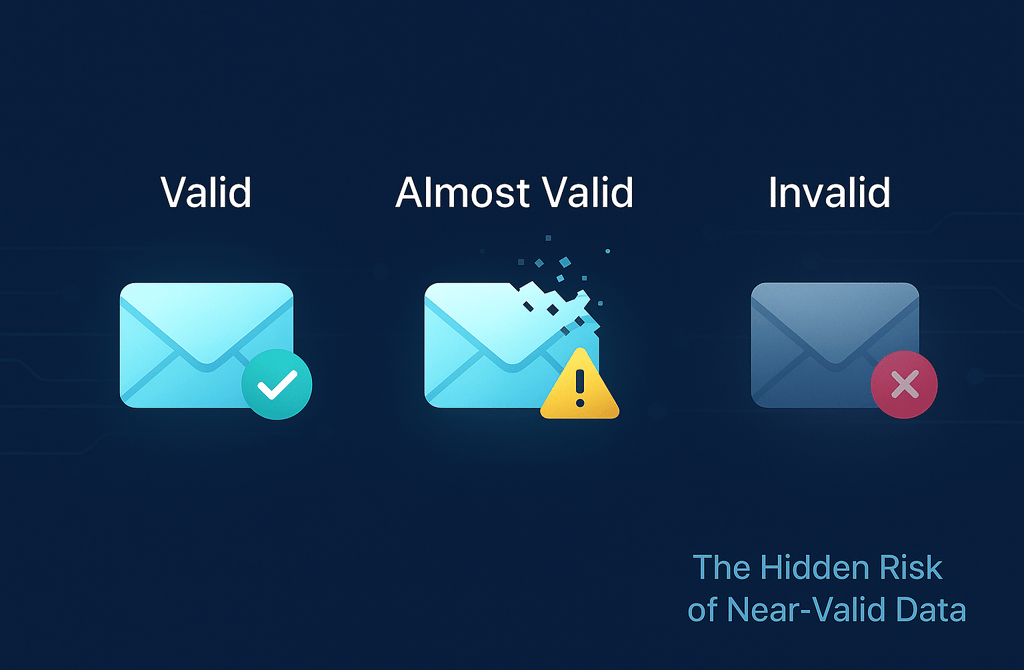
“Almost valid” emails — the ones that look safe, but quietly wreck your deliverability.
These are the addresses that pass basic checks, don’t bounce immediately, and seem usable at first glance.
But behind the scenes, they behave unpredictably and create problems that founders only notice when it’s already too late.
If invalid emails are the obvious threat, “almost valid” emails are the silent killer.
Here’s why.
1. They Inflate Bounce Risk Even If They Don’t Bounce Immediately
Almost valid emails often belong to inboxes that are:
inactive
abandoned
rarely checked
about to be shut down
forwarding somewhere else
So they may not bounce today — but they bounce later, or bounce for someone else who targets the same inbox.
Inbox providers track this collective behavior.
Even if you escape the bounce, the risk score still applies to you.
That risk becomes part of your domain’s history.
2. They Trigger Low-Engagement Signals That Hurt Deliverability
Inbox algorithms monitor how recipients behave with cold email.
Almost valid emails have almost one outcome:
they ignore you.
Ignored emails send a negative engagement signal that looks like:
no opens
no clicks
no scrolls
no interaction
A list full of “almost valid” contacts trains Gmail/Outlook to assume your future emails are unwanted too — even when the contacts are valid.
3. They Often Come From Catch-All or Misconfigured Domains
Catch-all servers accept everything.
But internally, they might:
suppress messages
auto-delete
forward to nowhere
fail silently
To validation tools, these emails appear “risky but maybe okay.”
To inbox providers, they look like you’re targeting random mailboxes.
And that uncertainty gets assigned directly to your sender reputation.
4. They Worsen Placement for Your Real Leads
This is the part most founders never see:
When you send to risky or semi-valid inboxes, inbox providers downgrade your “trust” score.
That downgrade affects:
your engaged prospects
your domain’s next campaign
your warm-up score
your inbox placement tomorrow
This is why cold email sometimes works for a few weeks and then suddenly collapses.
It’s not the copy.
It’s not the domain.
It’s not the volume.
It’s the quietly toxic data inside the list.
5. They Reduce Your Inbox Placement Before the First Campaign Even Finishes
Almost valid emails typically sit in a grey zone:
not inactive enough to bounce
not active enough to engage
not fresh enough to trust
That grey zone is where inbox providers apply harsher filtering.
When too many emails land there, inboxing declines across your entire domain. The scary part?
It happens silently.
No warnings.
No errors.
No alerts.
Just slowly declining open rates until everything falls off a cliff.
6. They Make Scaling Impossible
You can scale only when your list supports it.
With almost valid emails:
reply rates flatten
bounces increase over time
opens drop steadily
campaigns fatigue faster
domain warm-up becomes useless
Founders often think the solution is:
“Let’s write better copy.”
But the real solution is:
Stop sending to borderline emails.
Final Thought
“Almost valid” emails are worse than invalid ones.
Invalid emails bounce immediately — you see the damage.
Almost valid emails don’t bounce — they poison your sender reputation slowly.
Success in cold email doesn’t come from frameworks.
It comes from the structure under the framework:
fresh, verified, fully valid lead data.
Clean, verified, fresh data keeps your inbox placement strong.
Borderline, almost-valid data quietly destroys it before you notice.
Related Posts
The Real Cost of Data Validation: What Providers Don’t Tell You
The Economics of B2B Lead Buying (Explained Simply)
Are You Overpaying for B2B Leads? Signs You’re Getting Ripped Off
The Hidden Costs Inside “Cheap Lead Providers”
Why Price Shouldn’t Be Your First Filter When Buying Leads
Lead Pricing Models Explained: Per Lead, Per Batch, Per Role
Why Verified Leads Can Still Be Affordable If You Know Where to Look
Apollo vs Verified Lead Providers: What Most Buyers Miss
ZoomInfo Alternatives for 2026: Verified Data Without Annual Contracts
How CapLeads Compares to Bulk Data Providers (Fair Breakdown)
What Free Email Finders Get Wrong About B2B Leads
Why “All-In-One Tools” Can’t Replace Real Human-Verified Data
Why Verified Leads Are the #1 Factor Behind Cold Email Success
How Targeting Improves When You Start With Clean, Validated Data
Deliverability 101: How Clean Data Keeps You Out of Spam
Why Your Cold Email Framework Fails Without Fresh Leads
The Data Side of Cold Email No One Teaches (But Everyone Should Know)
The Hidden Data Signals That Decide If Your Email Gets Seen
Why B2B Lead Lists Age Faster Than Founders Expect
Connect
Get verified leads that drive real results for your business today.
www.capleads.org
© 2025. All rights reserved.
Serving clients worldwide.
CapLeads provides verified B2B datasets with accurate contacts and direct phone numbers. Our data helps startups and sales teams reach C-level executives in FinTech, SaaS, Consulting, and other industries.