
Why Bounce Rate Spikes Usually Point to Data, Not Domains
When bounce rates spike, domains get blamed first. This article explains why bad data is usually the real cause—and how bounce patterns expose upstream list failures.
INDUSTRY INSIGHTSLEAD QUALITY & DATA ACCURACYOUTBOUND STRATEGYB2B DATA STRATEGY
CapLeads Team
12/23/20253 min read
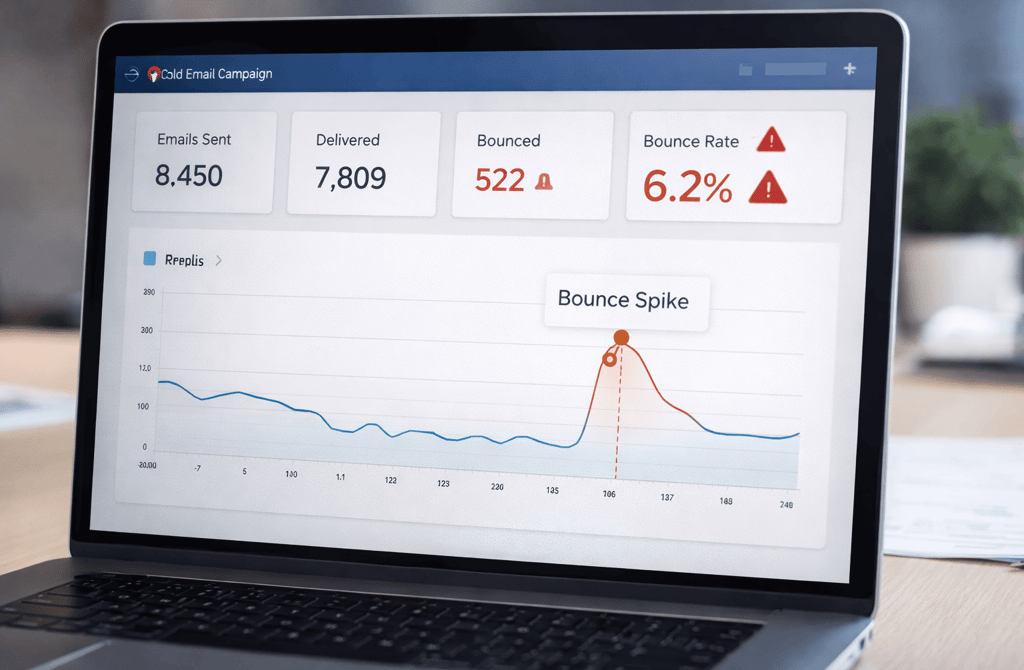
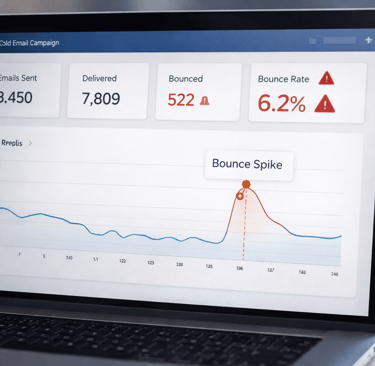
When bounce rates jump, most teams panic in the wrong direction. Domains get blamed. Sending tools get swapped. Warmup settings get tweaked. Infrastructure becomes the immediate suspect.
In reality, bounce spikes are rarely caused by domains first. They’re almost always exposing a data problem that finally reached a breaking point.
Understanding this distinction matters, because fixing infrastructure when the real issue is data only delays the next failure.
Bounce Spikes Are Sudden Because Data Failures Accumulate Quietly
Domains don’t usually fail overnight. They degrade gradually as negative signals stack up. Bounce spikes, on the other hand, tend to appear suddenly because data quality problems compound invisibly until one send crosses the threshold inbox providers tolerate.
Common triggers include:
Reintroducing previously paused or “leftover” lead batches
Expanding volume using leads validated months ago
Mixing new and old lists without isolating performance
The spike feels abrupt, but the cause wasn’t. The data was decaying long before the domain reacted.
Why Domains Get Blamed (and Why That’s Misleading)
Domains are easy to see and easy to change. Data isn’t.
When bounce rates jump, teams often assume:
The domain is burned
Warmup failed
Sending velocity was too aggressive
But if domains were the root cause, you’d usually see:
Gradual deliverability decline before bounces
Open rates collapsing first
Inbox placement deteriorating across all campaigns
Instead, bounce spikes often hit specific sends, specific segments, or specific batches. That’s a data fingerprint, not a domain one.
Bounce Spikes Follow Data Boundaries
Look closely at when spikes happen. They almost always align with a boundary crossing:
A new role included
A new source blended in
An old list reused
Domains don’t care about boundaries. Data does.
Inbox providers evaluate every send based on recipient validity. When a batch crosses from mostly valid to meaningfully invalid, bounces jump immediately—even if the domain was healthy minutes earlier.
Infrastructure Only Amplifies Data Mistakes
Infrastructure matters, but it’s an amplifier, not the origin.
Clean data can survive imperfect infrastructure longer. Dirty data breaks even well-warmed domains quickly. When bounce rates spike, infrastructure didn’t “cause” the issue—it simply failed to absorb bad inputs.
This is why teams sometimes:
Switch domains and see temporary relief
Lower volume and see bounces normalize
Pause sending and think the issue is solved
The problem wasn’t removed. It was deferred.
The Real Test: Does the Spike Follow the Data or the Domain?
Here’s the simplest diagnostic:
If bounce spikes follow lists, segments, or sources, it’s data
If bounce spikes follow domains regardless of input, it’s infrastructure
In most real cases, bounces track data boundaries precisely. Domains just react.
What Teams That Fix This Do Differently
Teams that stop bounce spikes at the source don’t chase domain tweaks. They change how data enters the system:
Leads are revalidated immediately before sending
Old data is never reintroduced quietly
New segments are isolated and tested
Performance is tracked by data batch, not just by campaign
As a result, bounce spikes become rare—and when they happen, they’re explainable.
Final Thought
Domains don’t decide who bounces. Data does.
When lead inputs are clean and current, domains remain stable under pressure.
When outdated or mismatched data sneaks in, bounce spikes expose the problem instantly—long before infrastructure changes can save the campaign.
Related Post
Why Lead Prices Differ Dramatically Across Industries
The Industry Pricing Patterns Most Buyers Don’t Notice
How Sector Dynamics Shape Lead Cost Structures
Why Some Verticals Produce Higher Cost-Per-Lead Rates
The Price Mechanics Behind Expensive B2B Verticals
The Recency Gaps That Quietly Kill Cold Email Performance
The Age Signals That Predict Whether a Lead Will Ever Respond
How Data Staleness Creates Invisible Pipeline Delays
Why Old Contacts Tank Your Reply Rate Long Before You Noticest
The Simple Recency Rule That Separates High-Intent Prospects from Dead Leads
The Verification Gaps That Create Hidden Bounce Risk
Why “Validated” Isn’t Always Valid: The Pitfalls in Modern Data Checks
The Role True Verification Plays in Protecting Domain Reputation
How Weak Validation Layers Inflate Your Deliverability Metrics
Why You Should Never Trust Email Lists Without Proof-of-Validation
The Bounce Patterns That Reveal Weak Data Hygiene
Connect
Get verified leads that drive real results for your business today.
www.capleads.org
© 2025. All rights reserved.
Serving clients worldwide.
CapLeads provides verified B2B datasets with accurate contacts and direct phone numbers. Our data helps startups and sales teams reach C-level executives in FinTech, SaaS, Consulting, and other industries.