
Why Aging Data Distorts Your ICP More Than You Realize
Aging B2B data quietly warps ICP accuracy, leading teams to target the wrong companies and roles long before performance drops become obvious.
INDUSTRY INSIGHTSLEAD QUALITY & DATA ACCURACYOUTBOUND STRATEGYB2B DATA STRATEGY
CapLeads Team
12/24/20253 min read
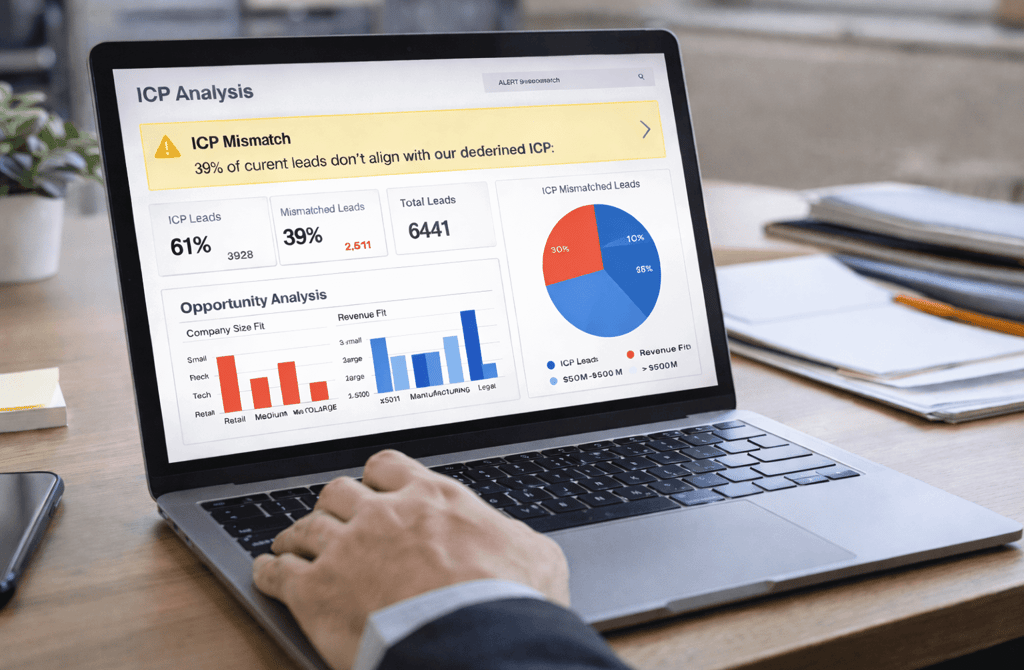
Most teams believe their ICP only changes when they decide to change it.
A new market.
A new product tier.
A strategic shift.
In reality, ICP distortion often happens without any deliberate decision at all. It happens when the data underpinning your targeting quietly ages — and your definition of the “ideal customer” drifts away from who actually buys.
The most dangerous part? Teams rarely notice it happening.
ICP Distortion Isn’t a Strategy Problem — It’s a Data Problem
When teams revisit ICP, they usually ask high-level questions:
Are we focused on the right company sizes?
Are we messaging the right personas?
What they don’t ask is whether the data feeding those assumptions still reflects reality.
As data ages:
Company size bands become inaccurate
Roles no longer map cleanly to buying authority
Departments reorganize while titles stay the same
Revenue and maturity signals lag behind real changes
The ICP document may look unchanged, but the inputs that enforce it are no longer aligned.
That’s how distortion starts.
How Aging Data Warps ICP Fit at Scale
ICP distortion doesn’t flip a switch. It bends gradually.
At first, you still hit companies in the right category — but the internal structure has changed. The buyer isn’t where your data says they are anymore. Influence has shifted. Budget ownership has moved.
Then, over time:
Accounts that look like strong fits stop responding
Smaller or larger companies slip into the same segment unnoticed
Outreach starts attracting “almost right” conversations
Sales cycles get longer with more internal handoffs
Your ICP hasn’t expanded — it’s become blurred.
Why Teams Misread the Warning Signs
When ICP distortion sets in, teams usually blame execution.
Sales says marketing is sourcing weaker leads.
Marketing says sales isn’t converting what they’re given.
Founders assume the market is getting more competitive.
What’s actually happening is simpler:
You’re no longer targeting who you think you’re targeting.
Because the data hasn’t fully broken, reporting still looks passable. Open rates exist. Replies still come in. Pipelines don’t collapse — they just stop progressing cleanly.
That’s why ICP distortion survives internal reviews.
The Hidden Cost of Running on a Distorted ICP
A distorted ICP doesn’t just reduce reply rates. It creates structural inefficiencies across the funnel:
SDRs add manual judgment to correct targeting errors
Sales qualification gets stricter to filter noise
Forecasting becomes less reliable due to inconsistent deal quality
Teams think they’re optimizing. In reality, they’re patching around a broken foundation.
The longer this continues, the harder it becomes to tell whether performance issues are market-driven or data-driven.
Why ICP Distortion Gets Worse Over Time
The real danger is compounding.
When aging data feeds ICP definitions:
New segments are built on top of flawed assumptions
Past campaign performance trains future targeting logic
CRM data reinforces incorrect fit signals
Lookalike models amplify the distortion
By the time teams formally “revisit” ICP, they’re often diagnosing symptoms — not causes.
How Strong Teams Prevent ICP Drift Before It Shows Up
High-performing teams treat ICP as data-dependent, not static.
They don’t just ask:
“Who should we target?”
They ask:
Does our data still reflect how these companies operate today?
Are role definitions aligned with current buying behavior?
Has company maturity shifted inside our core segments?
Are we enforcing ICP with fresh signals — or historical ones?
This approach doesn’t require constant reinvention. It requires continuous alignment between data reality and ICP intent.
ICP Accuracy Lives or Dies With Data Age
ICP distortion doesn’t announce itself.
It shows up quietly in deal quality, sales friction, and lost momentum.
When data ages, ICP becomes a snapshot of the past — not a map of the present.
Final thought
Aging data doesn’t just reduce accuracy — it reshapes how you define your ideal customer.
When ICP is enforced with outdated signals, targeting becomes confident but wrong.
When your data reflects current company structure and buying behavior, ICP stays sharp and outbound stays focused.
When aging data sets the rules, teams chase fit that no longer exists — and wonder why progress feels harder than it should.
Related Post
Why Lead Prices Differ Dramatically Across Industries
The Industry Pricing Patterns Most Buyers Don’t Notice
How Sector Dynamics Shape Lead Cost Structures
Why Some Verticals Produce Higher Cost-Per-Lead Rates
The Price Mechanics Behind Expensive B2B Verticals
The Recency Gaps That Quietly Kill Cold Email Performance
The Age Signals That Predict Whether a Lead Will Ever Respond
How Data Staleness Creates Invisible Pipeline Delays
Why Old Contacts Tank Your Reply Rate Long Before You Noticest
The Simple Recency Rule That Separates High-Intent Prospects from Dead Leads
The Verification Gaps That Create Hidden Bounce Risk
Why “Validated” Isn’t Always Valid: The Pitfalls in Modern Data Checks
The Role True Verification Plays in Protecting Domain Reputation
How Weak Validation Layers Inflate Your Deliverability Metrics
Why You Should Never Trust Email Lists Without Proof-of-Validation
The Bounce Patterns That Reveal Weak Data Hygiene
Why Bounce Rate Spikes Usually Point to Data, Not Domains
The Silent Infrastructure Issues Behind Rising Bounce Rates
How Poor Lead Quality Damages Your Domain at Scale
Why Bounce Reduction Begins Long Before You Hit Send
The Slow Data Drift That Quietly Breaks Your Targeting
Connect
Get verified leads that drive real results for your business today.
www.capleads.org
© 2025. All rights reserved.
Serving clients worldwide.
CapLeads provides verified B2B datasets with accurate contacts and direct phone numbers. Our data helps startups and sales teams reach C-level executives in FinTech, SaaS, Consulting, and other industries.