
How Data Drift Creates False Confidence in Pipeline Health
Data drift doesn’t just lower reply rates — it quietly distorts your pipeline metrics. Learn how aging lead data creates false confidence in revenue forecasts and how to prevent it before it costs you deals.
INDUSTRY INSIGHTSLEAD QUALITY & DATA ACCURACYOUTBOUND STRATEGYB2B DATA STRATEGY
CapLeads Team
2/20/20263 min read
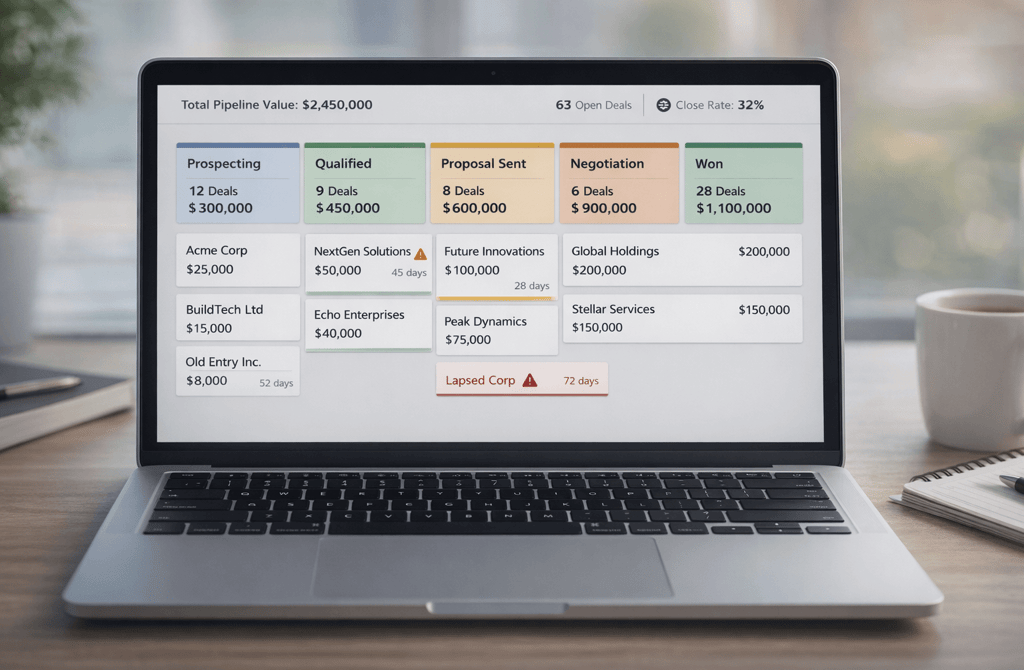
A pipeline can look full and still be fragile.
The numbers may show strong deal value. Stages may appear balanced. Forecast charts may trend upward. But underneath that surface stability, something quieter can be happening: your underlying data is drifting.
Data drift doesn’t usually announce itself with bounce spikes or obvious deliverability issues. Instead, it slowly reshapes your pipeline in ways that create artificial confidence. The dashboard says you’re healthy. The reality says you’re misaligned.
And most teams don’t notice until revenue stalls.
The Subtle Way Drift Distorts Your Pipeline
Data drift happens when contact, role, company, or segmentation fields change over time without being revalidated. Titles evolve. Departments reorganize. Companies shift priorities. Buying committees expand or shrink.
But your CRM doesn’t automatically update that context.
What starts as accurate targeting gradually becomes misclassification. Deals that look “Qualified” may no longer match your ICP. Contacts marked as decision-makers may have moved into advisory roles. Accounts tagged as growth-stage may have entered contraction.
Your pipeline value stays visible. Your pipeline integrity quietly declines.
How False Confidence Forms
Drift creates confidence illusions in three major ways:
1. Inflated Qualification Signals
When roles drift but aren’t updated, opportunities remain in mid-stage columns. They appear engaged, but the contact may no longer have buying authority. Forecasts remain optimistic because the stage never regressed.
2. Misleading Stage Velocity
Aged data creates stalled deals that don’t immediately disappear. They sit in “Proposal Sent” or “Negotiation” longer than they should. Instead of signaling misalignment, they artificially stabilize pipeline volume.
3. Corrupted ICP Fit Indicators
If company size, revenue, or lifecycle stage shifts, your ICP filter becomes outdated. Deals that look like strong fits are now weak matches. The dashboard doesn’t flag that change — it simply reflects outdated assumptions.
This is where false confidence becomes dangerous. You’re not operating on wrong numbers. You’re operating on outdated context.
The Compounding Effect on Revenue Forecasting
Drift doesn’t just distort visibility — it compounds forecasting errors.
When buyer roles change and titles age, your probability weighting becomes unreliable. When segmentation shifts but tags remain static, conversion assumptions break.
Over time, this creates pipeline inflation. Your CRM suggests depth. Your outreach performance suggests friction. The mismatch creates confusion.
Teams often blame messaging or cadence.
But messaging didn’t suddenly stop working.
Your underlying data evolved without you.
In verticals like B2B SaaS leads, where hiring cycles and role mobility move quickly, drift accelerates faster than teams expect. Without active recency controls, pipeline stages begin reflecting historical alignment rather than current buying reality.
That’s when false confidence becomes systemic.
Why Drift Is Hard to Detect
Unlike bounce spikes or spam placement, drift rarely creates immediate alarms.
Instead, you’ll notice subtle indicators:
Deals sitting longer in mid-stages
Response rates declining despite similar targeting
More “not the right person anymore” replies
These signals are often interpreted as copy fatigue.
In reality, they are structural decay signals.
Your system is stable. Your data inputs are not.
The Psychological Trap
Pipeline dashboards are persuasive. When you see consistent deal counts and strong stage distribution, it feels stable.
This creates inertia.
Teams hesitate to revisit ICP definitions because the numbers look fine. They avoid revalidating roles because open deals still exist. They push harder on follow-ups instead of questioning whether the original contact still fits.
Drift exploits that inertia.
It hides inside continuity.
Structural Corrections That Prevent Illusion
To prevent false confidence from forming, pipeline integrity must be treated as dynamic — not static.
That means:
Revalidating roles before mid-stage progression
Auditing lifecycle tags quarterly
Reviewing company growth or contraction signals
Monitoring stage age distributions for abnormal clustering
Separating historical deal performance from current fit indicators
The goal is not to shrink the pipeline.
The goal is to remove inflated confidence.
A smaller, accurate pipeline beats a large, decaying one every time.
Conclusion
Pipeline health is not defined by how full your CRM looks. It’s defined by how accurate your data remains over time.
Data drift doesn’t collapse your pipeline overnight. It slowly changes the meaning of your stages until your forecast becomes disconnected from reality.
When data ages, your pipeline tells yesterday’s story.
When data stays aligned, your revenue projections stay grounded in today’s buying truth.
Related Post:
The Hidden Problems Caused by Outdated Job Roles
How Poor Infrastructure Amplifies Minor Data Issues
Why Weak Architecture Triggers Spam Filters Faster
The Domain Reputation Mechanics Founders Should Understand
How Spam Algorithms Interpret Sudden Send Volume Changes
Why Inconsistent Targeting Raises Spam Filter Suspicion
The Inbox Sorting Logic ESPs Never Explain Publicly
How Risky Sending Patterns Trigger Domain-Level Penalties
Why Domain Reputation Is Built on Consistency, Not Volume
The Hidden Domain Factors That Influence Inbox Placement
Why Copy Tweaks Don’t Fix Underlying Data Problems
The Hidden Data Requirements Behind High-Performing Frameworks
Why Framework Experiments Fail When Lists Aren’t Fresh
How Overly Broad Segments Lower Reply Probability
Why Weak Targeting Logic Confuses Inbox Providers
The Real Cost of Using “Catch-All” Segments in Outbound
How Weak ICP Definitions Inflate Your Pipeline With Noise
Why Buyer Fit Accuracy Matters More Than Industry Fit
The Hidden ICP Mistakes That Make Outreach Unpredictable
How Poor Data Creates Blind Spots in Committee Mapping
Why Buying Committees Prefer Consistent Messaging Across Roles
The Contact Layering Strategy Behind Multi-Threaded Sequences
How Engagement Timing Predicts Buying Motivation
Why Intent Data Works Only When the Inputs Are Clean
The Multi-Signal Indicators Behind Strong Reply Rates
How ICP Precision Improves Reply Rate Fast
Why Bad Data Creates False Low-Reply Signals
The Underestimated Variables Behind Reply Probability
Connect
Get verified leads that drive real results for your business today.
www.capleads.org
© 2025. All rights reserved.
Serving clients worldwide.
CapLeads provides verified B2B datasets with accurate contacts and direct phone numbers. Our data helps startups and sales teams reach C-level executives in FinTech, SaaS, Consulting, and other industries.