
How Clean Data Lowers Your Email Infrastructure Costs
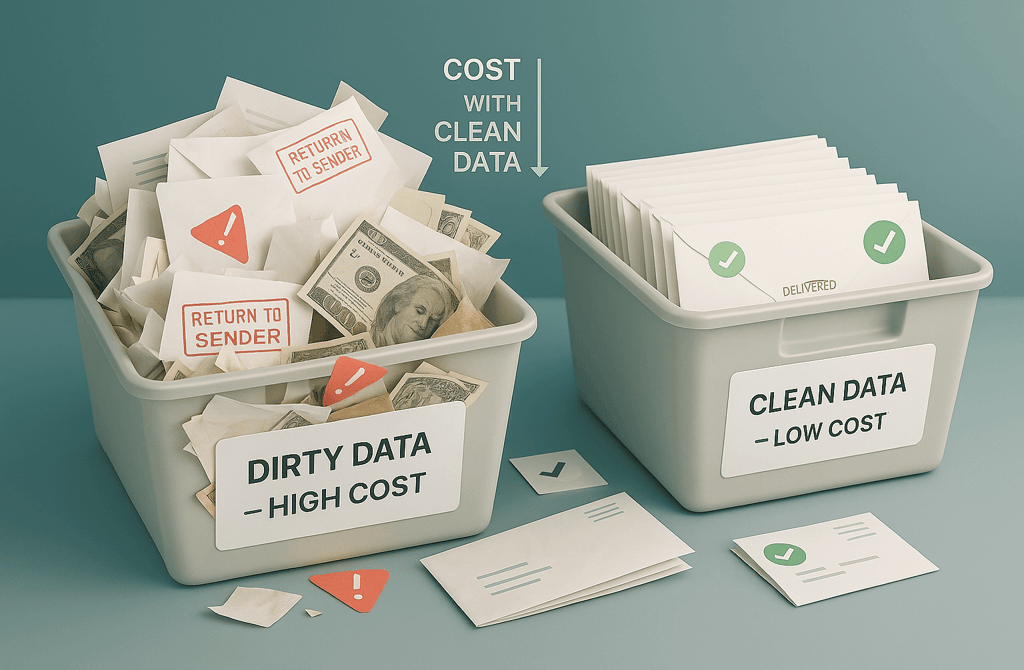
Clean, accurate data reduces your email infrastructure costs by protecting deliverability, lowering validation waste, and improving sending efficiency.
B2B LEAD QUALITYDATA VALIDATIONOUTBOUND STRATEGYEMAIL DELIVERABILITY & VALIDATION
CapLeads Team
12/1/20253 min read
Most founders think email infrastructure cost is all about the tools — the sending platform, the warm-up service, the inbox rotation, the domains.
But the truth is simpler:
Your data quality determines how expensive your email infrastructure becomes.
Dirty data makes your system work hardsigurer, burn more credits, stress the servers, raise bounce rates, and force you to buy more tools just to stay afloat.
Here’s the breakdown.
1. Dirty Data Burns Through Sending Credits Fast
Every invalid or abandoned email address still costs you:
one credit
one send
one spot in your daily sending limit
one slot that could’ve gone to a real prospect
Founders rarely calculate it, but if even 20–30% of your list is bad:
You’re wasting up to a third of your entire infrastructure capacity.
Clean data gives you more output from the same system — which means lower cost for the same volume of sends.
2. Bounce Spikes Force You to Buy More Domains and Warmups
High bounce rates come from:
old roles
dead inboxes
inactive domains
recycled emails
When your bounce rate increases, your deliverability suffers.
When deliverability suffers, founders panic and buy:
more domains
more mailboxes
more warmup tools
more credit packs
more sending slots
All because the data was dirty.
Clean data slows down or eliminates this entire cost spiral.
3. Dirty Data Overloads Your Server and Damages Reputation
Think of your email infrastructure like a physical machine.
Bad data makes it:
strain harder
process more errors
handle more bounces
deal with more retries
manage more blocked sends
Servers become inefficient when they’re busy processing failures.
Clean data reduces load.
Less strain means fewer errors, fewer retries, and fewer hidden costs.
4. Clean Data Improves Inbox Placement (Which Reduces Hidden Costs)
Long-term cost doesn’t just come from tools — it comes from pipeline performance.
Dirty data → bad signals → worse inbox placement → fewer opens → more volume needed to hit the same results.
That means:
more domains
more senders
more data
more time
more tools
more costs
Clean data improves inbox placement, which increases reply rate, which reduces how many emails you need to send to get a meeting.
Less volume = lower infrastructure cost.
5. Clean Data Lets You Run a Smaller, Cheaper Setup
Founders with clean data don’t need:
20 domains
50 inboxes
3 warmup tools
massive sending rotation
expensive validators
They get better results with:
fewer mailboxes
fewer domains
fewer tools
fewer credits
fewer headaches
Clean data keeps the entire system lightweight.
Lightweight systems are cheaper systems.
6. Your Biggest Cost: Time and Maintenance
Dirty data doesn’t just cost money — it costs hours of your life.
Cleaning, validating, rewriting, reprocessing, re-uploading, fixing bounce issues, monitoring deliverability… it all adds up.
Clean data gives you:
fewer issues
fewer fixes
fewer re-runs
fewer replacements
fewer failed campaigns
That means you spend time sending, not repairing.
And that is the strongest cost reduction of all.
Final Thought
Email infrastructure becomes expensive when the system is constantly fighting bad data.
Every bounce, every retry, every blocked inbox, every new domain you’re forced to buy — it all traces back to data quality.
Clean data makes your system cheaper, lighter, and more predictable.
Dirty data makes everything harder, more expensive, and less effective.
Clean data lowers your costs.
Bad data raises them — quietly and relentlessly.
Related Posts
The Hidden Data Signals That Decide If Your Email Gets Seen
Why B2B Lead Lists Age Faster Than Founders Expect
The Real Consequences of Using “Almost Valid” Emails
How Data Drift Quietly Destroys Cold Outreach
Why Lead Quality Has Become the New Outbound Currency
The Unspoken Rules of Modern B2B Data Hygiene
What Clean Data Actually Looks Like (Most Founders Get This Wrong)
How Data Freshness Shapes Your Entire Sales Funnel
The Silent Role Data Recency Plays in Outbound Wins
Why Accurate Contact Data Beats Personalization Hacks
How Premium Data Reduces Cold Email Stress
The Invisible Math Behind Validated Lead Lists
The Data Mistakes That Kill Pipeline Before It Starts
Why Job-Change Tracking Matters More Than You Think
The Difference Between Clean Data and Conversion-Ready Data
How to Build a Lead List That Stays Fresh for Months
The Data Foundations Every Outbound System Should Have
Why Bad Data Feels Like A Bad Copy (But It Isn't)
How to Stop Wasting Time on Weak Prospect Data
Why Data Verification Is Now the First Step in Outbound
The Real Cost of Using Cheap, Unvetted Lead Sources
The Data Integrity Framework Smart Founders Use
Connect
Get verified leads that drive real results for your business today.
www.capleads.org
© 2025. All rights reserved.
Serving clients worldwide.
CapLeads provides verified B2B datasets with accurate contacts and direct phone numbers. Our data helps startups and sales teams reach C-level executives in FinTech, SaaS, Consulting, and other industries.