
The Real Cost of Using Cheap, Unvetted Lead Sources
Cheap, unvetted lead sources look like a bargain—until hidden costs destroy your deliverability, time, and pipeline. Here’s the real cost buyers don’t see.
LEAD QUALITY & ACCURACYB2B LEAD QUALITYDATA VALIDATIONBUYING GUIDES
CapLeads Team
12/1/20253 min read
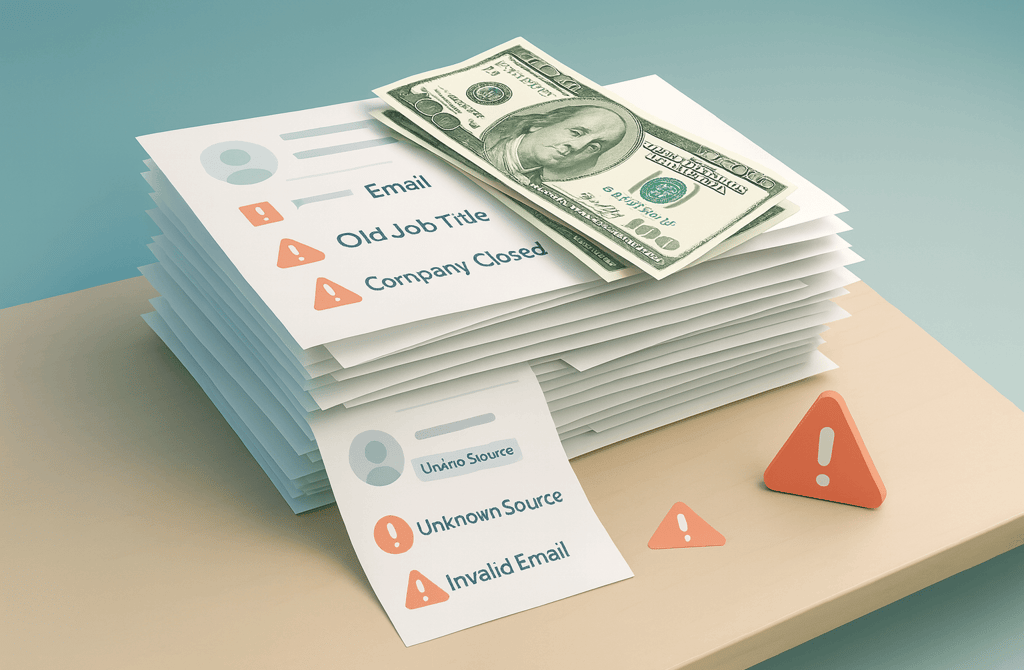
Everyone loves the idea of getting a “big list for cheap.”
A thousand contacts for $20 sounds like a lucky break — until you plug that list into your outreach and watch it quietly wreck your results.
Cheap, unvetted lead sources don’t look dangerous up front.
The damage shows up later — in your bounce rates, your domain reputation, your wasted time, and your burned-out pipeline.
Here’s the part most buyers don’t realize:
Cheap data almost always ends up costing more than buying clean, verified leads from the start.
Let’s break down why.
1. Cheap Leads Trigger Bounce Rates That Hurt You for Weeks
You won’t see the impact immediately.
But the moment your cold emails hit a batch of abandoned inboxes or invalid addresses, your bounce rate spikes.
Once that happens:
inbox providers start downgrading your domain
messages stop landing in the primary inbox
future campaigns get weaker, even with good copy
your sender reputation takes weeks to recover
What looked like a $10 bargain becomes a deliverability problem that can cost you thousands in missed deals.
2. Outdated Roles Make Your Copy Useless
Cheap lists rarely include fresh job titles.
People move roles, change companies, or get promoted all the time.
When you send:
personalization lands wrong
pitches feel irrelevant
prospects ignore you because the context is off
This doesn’t just hurt your replies — it wastes hours crafting messages for people who aren’t even in the role you’re targeting anymore.
3. “Unknown Sources” Means Hidden Risk
No one says where the data came from.
No one says when it was collected.
No one says how it was validated.
That’s the danger.
Blind data puts you at risk for:
emailing the wrong person
contacting closed companies
getting flagged for spam
running campaigns based on bad assumptions
When you don’t know the source, you can’t trust the output.
4. You Waste More Time Cleaning Than Outreaching
Cheap lists shift the burden to you.
Instead of focusing on:
writing
targeting
personalization
follow-ups
booking meetings
…you’re busy fixing someone else’s mess.
Buyers don’t factor in:
manual validation
cross-checking companies
verifying job titles
checking for duplicates
deleting fake entries
Time is the most expensive cost in outbound — and cheap lists drain it fast.
5. Cheap Leads Make Your Pipeline Look Healthy but Deliver Nothing
A big CSV file looks impressive.
Hundreds or thousands of contacts feel like momentum.
But what good is a full database if:
half the emails bounce
a quarter aren’t the right role
another segment belongs to closed companies
only a handful are actually qualified
You end up with a pipeline that looks busy on paper but performs like a dead engine.
6. The Real Cost Isn’t the Price — It’s the Damage
The painful truth is simple:
Cheap, unvetted data damages your outbound more than it helps.
It slows you down.
It ruins deliverability.
It wastes your effort.
It drops your morale.
It sends you after the wrong people.
And it forces you to rebuild your sender reputation from scratch.
Clean, validated leads feel more expensive up front —
but they protect everything that actually matters:
your time
your domain
your pipeline
your results
That’s the real cost equation most buyers miss.
Final Thought
Cheap lead lists don’t look harmful at first, but they create problems that take much longer to fix than they do to buy.
A few dollars saved upfront often turn into hours of cleanup, damaged deliverability, and a pipeline full of dead ends.
Clean data makes outbound predictable.
Cheap, unvetted data makes outbound unpredictable — and unpredictability kills performance.
Related Posts
The Hidden Data Signals That Decide If Your Email Gets Seen
Why B2B Lead Lists Age Faster Than Founders Expect
The Real Consequences of Using “Almost Valid” Emails
How Data Drift Quietly Destroys Cold Outreach
Why Lead Quality Has Become the New Outbound Currency
The Unspoken Rules of Modern B2B Data Hygiene
What Clean Data Actually Looks Like (Most Founders Get This Wrong)
How Data Freshness Shapes Your Entire Sales Funnel
The Silent Role Data Recency Plays in Outbound Wins
Why Accurate Contact Data Beats Personalization Hacks
How Premium Data Reduces Cold Email Stress
The Invisible Math Behind Validated Lead Lists
The Data Mistakes That Kill Pipeline Before It Starts
Why Job-Change Tracking Matters More Than You Think
The Difference Between Clean Data and Conversion-Ready Data
How to Build a Lead List That Stays Fresh for Months
The Data Foundations Every Outbound System Should Have
Why Bad Data Feels Like A Bad Copy (But It Isn't)
How to Stop Wasting Time on Weak Prospect Data
Why Data Verification Is Now the First Step in Outbound
Connect
Get verified leads that drive real results for your business today.
www.capleads.org
© 2025. All rights reserved.
Serving clients worldwide.
CapLeads provides verified B2B datasets with accurate contacts and direct phone numbers. Our data helps startups and sales teams reach C-level executives in FinTech, SaaS, Consulting, and other industries.