
Why SaaS Lead Data Requires a Different Validation Approach
SaaS lead data behaves differently from traditional industries. Rapid role changes, evolving teams, and complex org structures demand a unique validation approach.
B2B LEAD QUALITYDATA VALIDATIONSAAS LEADSINDUSTRY-SPECIFIC LEADS
CapLeads Team
12/1/20253 min read

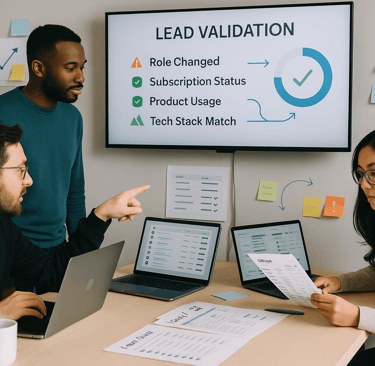
Most industries change slowly.
SaaS does not.
Teams shift every quarter.
Roles evolve.
Tech stacks update.
Budgets get reassigned overnight.
This makes SaaS one of the fastest-moving B2B environments—and because of that, SaaS lead data can’t be validated the same way as leads from traditional industries.
If you treat SaaS leads like normal B2B data, you’ll end up with:
outdated decision-makers
inactive domains
churned companies
wrong titles
misaligned ICP matches
SaaS requires a different validation approach because the landscape itself moves faster than standard databases can keep up.
Let’s break down what makes SaaS validation unique.
1. Roles Change Faster Than Any Other Industry
In SaaS, it’s normal for:
SDRs to churn every 6–12 months
growth teams to restructure quarterly
PMs to shift into new roles
leadership to change after funding rounds
A lead validated six months ago may already be wrong today.
Traditional validation cycles can’t keep up.
SaaS data requires high-frequency validation, filtered by role stability and seniority signals.
Freshness is everything.
2. SaaS Companies Die, Merge, or Rebrand Constantly
Unlike manufacturing or construction, SaaS companies can disappear overnight.
Common scenarios:
pre-seed startup shuts down
acqui-hire closes the domain
product pivots into a new category
funding dries up
team size drops dramatically
This means:
Company status validation matters as much as email validation.
If the domain is inactive, the whole dataset is trash—no matter how good the email looks.
3. SaaS Teams Buy Based on Tech Stack Compatibility
Other industries don’t do this.
In SaaS, a lead is only valid if:
they actually use the tools your product integrates with
their stack matches your ICP
they’re in the right maturity stage
Validation must include tech stack enrichment, not just contact accuracy.
A perfect email is useless if they’ll never be a buyer.
4. SaaS Buying Committees Are Larger
Most SaaS deals involve:
product
engineering
marketing
sales
finance
IT / security
This means you can’t stop at validating one contact.
SaaS requires multi-contact validation:
verify the economic buyer
verify the technical buyer
verify the end user
verify procurement involvement
More accuracy = higher close rate.
5. SaaS Emails Bounce More if You Don’t Validate Often
SaaS companies love:
alias emails
shared inboxes
group addresses
auto-deactivated accounts
“catch-all” settings
This causes bounce spikes unless you validate:
catch-all risk
server response
role-based inboxes
temporary emails
Fast-changing environments = fast-changing email accuracy.
6. Usage Signals Matter More Than Firmographics
In SaaS, these signals matter more than company size:
hiring velocity
website traffic direction
product adoption
budget cycles
churn risk indicators
category growth
A lead might be accurate but not ready to buy if usage signals aren’t in your favor.
Traditional industries don’t rely on signals like this—but SaaS runs on them.
7. SaaS Validation Requires Shorter Refresh Cycles
Manufacturing = validate every 12 months
Professional services = validate every 6–9 months
SaaS = validate every 2–3 months
Why?
Because roles, tools, budgets, and team structures change CONSTANTLY.
If you refresh SaaS data too slowly, your outreach collapses.
Final Thought
SaaS is fast.
Chaotic.
Always changing.
That’s why SaaS lead data requires a special validation approach built around:
fast refresh cycles
role-change tracking
tech stack enrichment
domain health checks
multi-contact validation
intent and usage signals
This is the only way to keep your outreach accurate, deliverable, and profitable in such a fast-moving industry.
Clean data grows SaaS.
Outdated data slows SaaS
Related Posts
The Unspoken Rules of Modern B2B Data Hygiene
What Clean Data Actually Looks Like (Most Founders Get This Wrong)
How Data Freshness Shapes Your Entire Sales Funnel
The Silent Role Data Recency Plays in Outbound Wins
Why Accurate Contact Data Beats Personalization Hacks
How Premium Data Reduces Cold Email Stress
The Invisible Math Behind Validated Lead Lists
The Data Mistakes That Kill Pipeline Before It Starts
Why Job-Change Tracking Matters More Than You Think
The Difference Between Clean Data and Conversion-Ready Data
How to Build a Lead List That Stays Fresh for Months
The Data Foundations Every Outbound System Should Have
Why Bad Data Feels Like A Bad Copy (But It Isn't)
How to Stop Wasting Time on Weak Prospect Data
Why Data Verification Is Now the First Step in Outbound
The Real Cost of Using Cheap, Unvetted Lead Sources
The Data Integrity Framework Smart Founders Use
How Clean Data Lowers Your Email Infrastructure Costs
Why Outbound Performance Is 80% Data, 20% Everything Else
Connect
Get verified leads that drive real results for your business today.
www.capleads.org
© 2025. All rights reserved.
Serving clients worldwide.
CapLeads provides verified B2B datasets with accurate contacts and direct phone numbers. Our data helps startups and sales teams reach C-level executives in FinTech, SaaS, Consulting, and other industries.